Chicago warehouses were once built with architectural flair, but today’s industrial structures don’t come close.


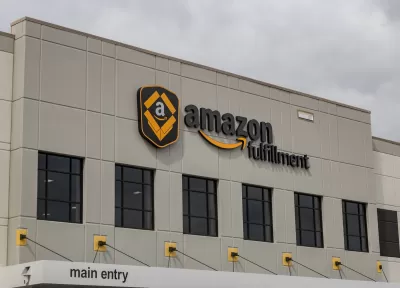
"The next time an Amazon package arrives at your door, think of where it came from: A sprawling warehouse that’s a miracle of logistics and a piece of architecture with as much personality as a cardboard box," writes Blair Kamin.
Kamin looks back at Chicago’s long history of architecturally significant warehouses and other industrial buildings, including the Marshall Field Wholesale Store from 1887. "Designed by Boston architect Henry Hobson Richardson to sell wholesale goods, the Field store projected the austere authority of a Renaissance palace. Graceful Romanesque arches punctuated its load-bearing exterior walls, which were made of huge pieces of highly textured Missouri red granite and red sandstone from Massachusetts."
Such a commitment to quality design and materials no longer exists, Kamin laments. "The problem is that Amazon’s architects are designing cookie-cutter buildings that are the very opposite of the Chicago warehouses that engaged the streets around them, combined efficient function with powerful form, and reflected the pride of their local owners."

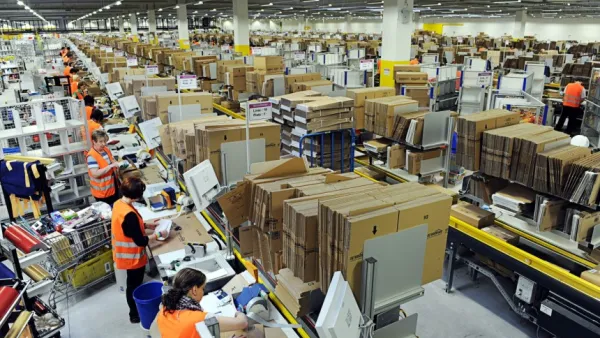
Amazon’s Largest Warehouse Ever Under Construction in Southern California
Twice as big as Downtown L.A.’s tallest skyscraper and bigger than Disney’s California Adventure Park with room to spare, the largest Amazon warehouse in the world is under construction in Southern California’s Inland Empire.
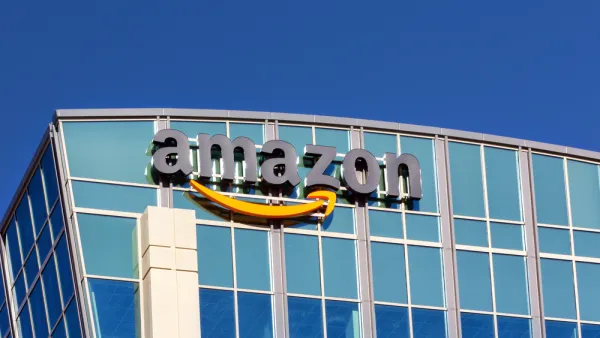
Amazon Plans Further Expansion
On the heels of building its HQ2 facility in Arlington, Amazon continues to expand its hubs in cities spread out across the country.
The Impact of Amazon Warehouses on Communities
Often located in low-income communities of color, Amazon's warehouses contribute to public health impacts like poor air quality, noise pollution, and traffic congestion.

The state-sanctioned urbicide of Austin
People don’t kill cities. Freeways do.

US to reduce Colorado River water deliveries to Mexico
A new Colorado Treaty amendment reduces Mexico’s Colorado River water allocation by 250,000 acre feet.

New Jersey’s second-largest city bans standalone data centers
Jersey City will continue to allow co-location facilities, such as those meant for research institutions that store their own data.

Amtrak not solely to blame for New Jersey commuter rail's unreliability, report finds
A new study from the Garden State Initiative found that NJ Transit’s budget grew 20% across a 4 year period, but reliability declined significantly over the same period.

EPA erases limits on planet-warming pollution from power plants
Under Monday’s plan, power plants would still have some limits on how much mercury, arsenic and other contaminants they can emit.

Phoenix announces new on-demand transit service, more frequent RAPID buses
Both new services will launch in October, and are part of Phoenix's Project Effective Access Solutions for Easing Congestion.

FREE Course: Walkable City 1: Why Walkability?
After describing his path towards focusing on walkability as the essence of good planning, Jeff Speck marches through his five principal reasons for making more walkable places.
Reinventing Malls: Planning Alchemy—Turning Gray Fields Into Gold
The course focuses on the opportunities and imperatives that shape reinvention of mall sites.

Eagle County Government
Harvard University Graduate School of Design
Nashville Planning Department
The Architects Foundation
University of Cincinnati Online
The Pocatello Development Authority
The Urban Renewal Agency of the City of Pocatello
Journal of the American Planning Association