Anchorage's People Mover transit system reports ridership has increased for the first time in a decade. Ridership increased 5.7% in annual ridership as compared to 2018.


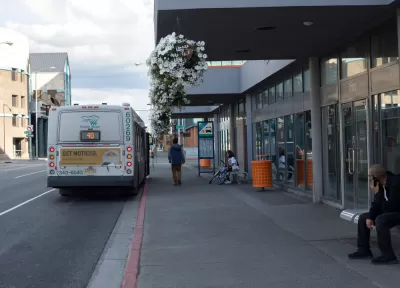
Anchorage Public Transportation officials recently released a "2019 System Report Card" that noted ridership increases every month in 2019 over 2018, with ridership growing 5.7%. It's the biggest increase for People Mover ridership in a decade. KTUU Channel 2 reporter Kristen Durand reports:
Planning Manager Bart Rudolph says one of the focal changes that impacted ridership was a shift from covering a larger span of the city, to focusing on serving areas where ridership is more concentrated-- with more frequent bus service. "So we put a lot of service where the most people are living and working in the most dense parts of town where buses are coming every 15 minutes," said Rudolph. "You don't need a schedule to catch a bus that comes every 15 minutes, and it really opens up your opportunities on where you can go, what jobs you can access, when you have that flexibility.
According to Rudolph, 2019 saw about 200,000 more rides than 2018. He says weekend ridership particularly saw a steep increase."
Read the full story: Transit officials say People Mover ridership saw significant increases in 2019

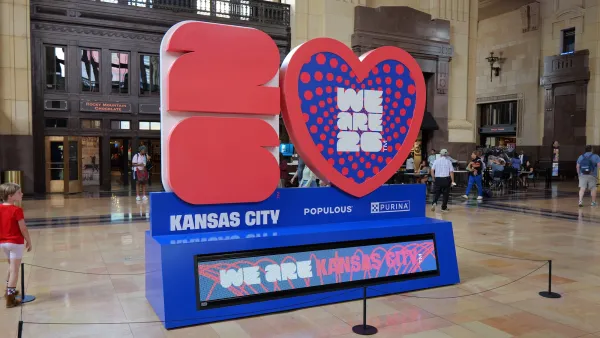
World Cup crowds offer 'stress test' for Kansas City transit planners
Transportation officials are closely monitoring travel patterns during the World Cup to understand how the city's transit system can be improved as the population grows.
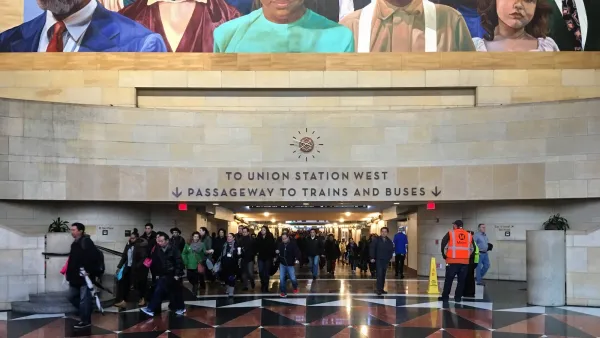
Weekend ridership on LA's D Line surged 80% after extension opened
World Cup attendees took roughly 45,000 rides to and from the first two games at the Los Angeles Stadium.
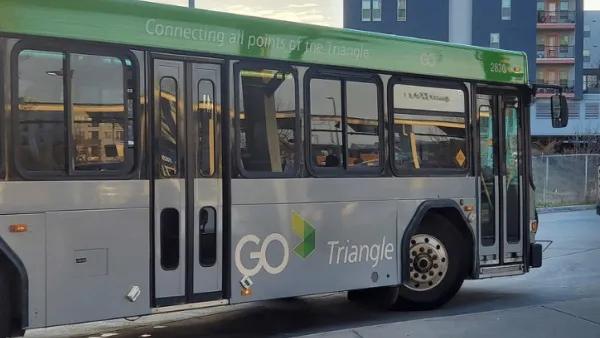
North Carolina Triangle transit ridership jumped 32% in April
Rising gas prices are prompting more Americans to consider public transit, where it's available.

Planetizen Federal Action Tracker
A weekly monitor of how Trump’s orders and actions are impacting planners and planning in America.

The state-sanctioned urbicide of Austin
People don’t kill cities. Freeways do.

Colorado’s Largest Data Center Could Rise Next to Homes — Without a Public Hearing
The proposed campus would consume 11 times the power of Denver International Airport; as it has across the country, opposition mounts.

Nation's most wind-powered state turns to coal as data centers increase energy demand
For the first time in decades, Iowa has increased its generation of coal power.

NYC cools commuters with city's first rain garden above a bus stop
New York City officials say the plants in the rain garden can absorb 16 gallons of rainwater during heavy storms.

Brightline West’s future may rely on $6 billion federal loan
The company has until Nov. 2 to make a $400 million equity investment into its proposed high-speed rail line.

FREE Course: Walkable City 1: Why Walkability?
After describing his path towards focusing on walkability as the essence of good planning, Jeff Speck marches through his five principal reasons for making more walkable places.
Reinventing Malls: Planning Alchemy—Turning Gray Fields Into Gold
The course focuses on the opportunities and imperatives that shape reinvention of mall sites.

Greater Baltimore Committee
Eagle County Government
Harvard University Graduate School of Design
The Architects Foundation
University of Cincinnati Online
The Pocatello Development Authority
The Urban Renewal Agency of the City of Pocatello
Journal of the American Planning Association