Street food vendors are an integral part of the Bangkok urban landscape, but city planners want to see them gone.


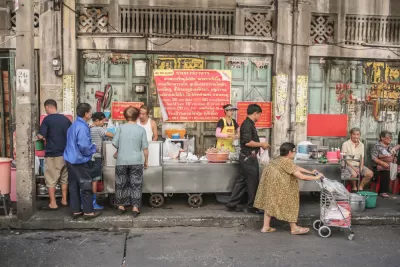
Although street food vendors in Bangkok are an important part of urban life, city planners are taking aim at them, reports Hannah Beech. "To [city officials], this metropolis of 10 million residents suffers from an excess of crowds, clutter and health hazards. The floods, the heat, the stench of clogged canals and rotting fruit, the pok pok pok of that pestle — it’s all too much."
The number of areas designated for street food vending is down from almost 700 three years ago to 175 today, says Beech. Advocates say the vendors not only make city streets vibrant and lively spaces. They also provide access to inexpensive food for a large cross-section of city residents—from office workers to tourists to poor people living on the margins of society.
In addition, 80 percent of Thai street food vendors are women, many of whom are supporting their households, and any attempts to shut down operations would disproportionately affect them, notes Beech.
She profiles a number of these vendors, describing their backgrounds and what food vending means for their survival. While some Bangkok officials say there are not plans to clear the streets, street vendors say they are worried their time is limited and their futures are uncertain.
FULL STORY: In Bangkok’s Fragrant Street Food, City Planners See a Mess to Clean

The World's Best City for Street Food Bans Street Food
The city of Bangkok, Thailand, is famous for its cheap and flavorful street food. City leaders, however, have decided that the city would be less appealing without street vendors.
New on Netflix: How Street Vendors Create Vibrant Cities
Street vending has been a contentious issue in many places, but this part of the informal economy is important to the social and economic well-being of cities.
Formalizing Street Vending: A Los Angeles Case Study
The ongoing efforts to reform street vending laws in Los Angeles gained national media attention recently. Can local officials find a way to overcome controversy and complexity to legalize street vending this year?

Planetizen Federal Action Tracker
A weekly monitor of how Trump’s orders and actions are impacting planners and planning in America.

The state-sanctioned urbicide of Austin
People don’t kill cities. Freeways do.

US to reduce Colorado River water deliveries to Mexico
A new Colorado Treaty amendment reduces Mexico’s Colorado River water allocation by 250,000 acre feet.

Mamdani overhauls NYC's Vision Zero plan with 100 new policy goals
The overhaul aims to reduce traffic deaths and make streets safer for pedestrians, cyclists and drivers through lower speed limits, new safety infrastructure and more.

Amtrak not solely to blame for New Jersey commuter rail's unreliability, report finds
A new study from the Garden State Initiative found that NJ Transit’s budget grew 20% across a 4 year period, but reliability declined significantly over the same period.

EPA erases limits on planet-warming pollution from power plants
Under Monday’s plan, power plants would still have some limits on how much mercury, arsenic and other contaminants they can emit.

FREE Course: Walkable City 1: Why Walkability?
After describing his path towards focusing on walkability as the essence of good planning, Jeff Speck marches through his five principal reasons for making more walkable places.
Reinventing Malls: Planning Alchemy—Turning Gray Fields Into Gold
The course focuses on the opportunities and imperatives that shape reinvention of mall sites.

Eagle County Government
Harvard University Graduate School of Design
Nashville Planning Department
The Architects Foundation
University of Cincinnati Online
The Pocatello Development Authority
The Urban Renewal Agency of the City of Pocatello
Journal of the American Planning Association