A building under construction at the former site of J.L. Hudson's department store in Detroit will no longer reach 900 feet, as once planned.


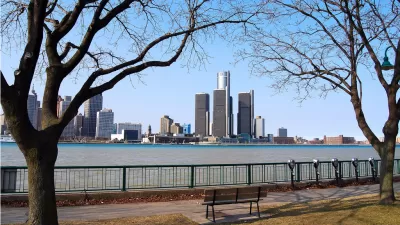
"Detroit's planned tallest new building may no longer in fact be the city's tallest when it opens on the old Hudson's site in a few years," reports John Gallagher.
The planned height of the tower has fluctuated between 734 feet and 900 feet in the past. Now it's unclear what heights the building will end up reaching. Joe Guziewicz, vice president of construction for Bedrock LLC, the developer of the site, says the final height is dependent on the project eventually landing a hotel operator.
The height is likely lowering because of the developer's plans to "[switch] the programming of the planned skyscraper tower on the Hudson's site from all residential to partly a hotel […] depending on the needs of whatever hotel operator is chosen."
The changes also mean the building will no longer include an observation tower. The project is already under construction, and is now expected to open in 2023.
FULL STORY: Hudson's site tower may not be the city's tallest after all, Bedrock says


Potential Height of Dan Gilbert's Detroit Skyscraper Rises Again
The final height of the tower that will become Detroit's tallest building may exceed 900 feet. The tower and its complex are expected to include retail, office, residential, exhibit, and event space.
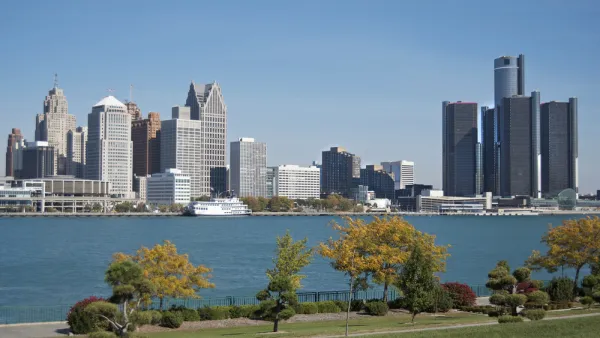
Detroit to Break Ground on a New Tallest Building
A new 800-foot tower is rising from the ashes of the demolished Hudson's store site. Noted Detroit patron Dan Gilbert is developing the new building.
On Detroit's Proposed Tallest Skyscraper
Slated for the site of the late Hudson's department store, Dan Gilbert's mixed-use mecca and its glassy 734-foot tower would symbolize Detroit's rebirth, in downtown at least.

Planetizen Federal Action Tracker
A weekly monitor of how Trump’s orders and actions are impacting planners and planning in America.

The state-sanctioned urbicide of Austin
People don’t kill cities. Freeways do.

US to reduce Colorado River water deliveries to Mexico
A new Colorado Treaty amendment reduces Mexico’s Colorado River water allocation by 250,000 acre feet.

5 New England states march closer to 800 megawatt wind energy project
Securing federal approval for the project may be complicated under the Trump administration, which has historically been hostile towards domestic wind power.

Baltimore to break ground on $50 million Transit Priority Project
The project will bring faster bus trips, safer streets and better bike connections to Baltimore.

Airbnb launches $250 million 'last-dollar financing' housing accelerator, makes first investment in Austin
The company will put $6.4 million towards affordable housing development in Texas’ capital.

FREE Course: Walkable City 1: Why Walkability?
After describing his path towards focusing on walkability as the essence of good planning, Jeff Speck marches through his five principal reasons for making more walkable places.
Reinventing Malls: Planning Alchemy—Turning Gray Fields Into Gold
The course focuses on the opportunities and imperatives that shape reinvention of mall sites.

Eagle County Government
Harvard University Graduate School of Design
Nashville Planning Department
The Architects Foundation
University of Cincinnati Online
The Pocatello Development Authority
The Urban Renewal Agency of the City of Pocatello
Journal of the American Planning Association