The potential benefits of building tall buildings with wood are numerous.


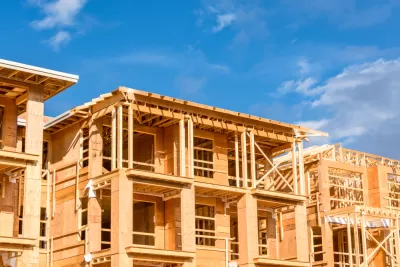
Vancouver urbanists are calling for the city to make greater use of wood in high-rise buildings.
An article by Leyland Cecco chooses a prominent example to kick of an examination of the potential benefits of wood high rises:
Already, Vancouver’s 18-storey Brock Commons tower stands as a testament to the vast possibilities of wood. Once the world’s tallest timber building, it was built cheaper, faster and with less environmental impact than a comparable steel and concrete structure would have been – offsetting an estimated 2,432 metric tonnes of carbon.
Vancouver's province, British Columbia, has changed the provincial building codes to double the height limit for wood-frame buildings. Now the maximum height for a wood-framed building is 12 stories. The Canadian government could soon follow suite and set the same building height nationwide.
Vancouver isn't stopping at 12 stories, however. Cecco explains the next step in the evolution of wood-framed high rises:
Vancouver is now pushing even those limits by unveiling plans for the Canada Earth Tower, an ambitious 40-storey tower that would be the world’s tallest wooden building. The design includes around 200 homes, with an outdoor garden for every three floors as well as premium office space and retail.
The innovations occurring in Vancouver are also having a ripple effect around the world, according to the article.
FULL STORY: Canadian cities take wooden skyscrapers to new heights

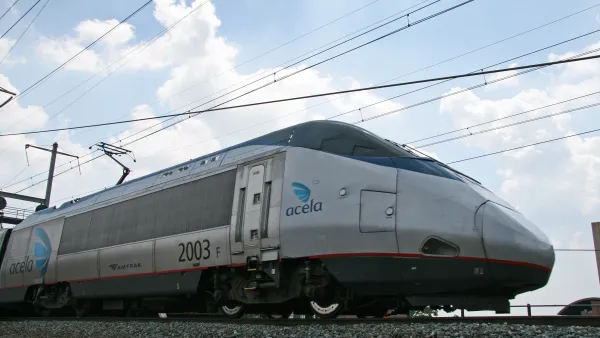
Report Makes Business Case for Vancouver-to-Portland High Speed Rail
Washington State released a report detailing the business case for connecting Seattle to Portland and Vancouver by high-speed rail.
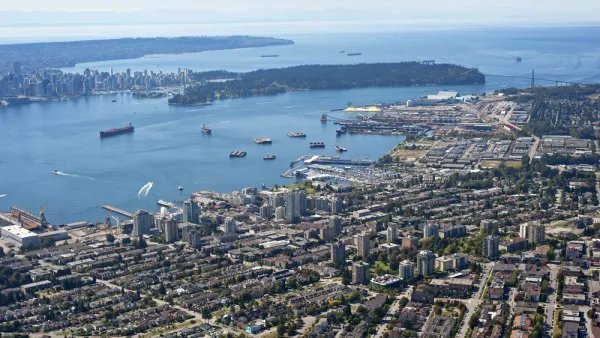
For Vancouver’s Carbon Footprint Reduction Plan, 2030 is the New 2040
Four months after formally recognizing climate change as an emergency, the Vancouver City Council considers six large-scale changes to dramatically reduce city-wide carbon emissions.
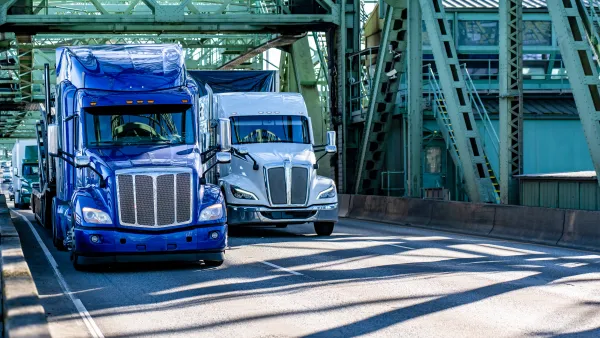
Budget constraints threaten light rail for Oregon, Washington’s new bridge
The current proposal includes only the infrastructure for the light rail, without funding for the train and tracks.

Planetizen Federal Action Tracker
A weekly monitor of how Trump’s orders and actions are impacting planners and planning in America.

The state-sanctioned urbicide of Austin
People don’t kill cities. Freeways do.

US to reduce Colorado River water deliveries to Mexico
A new Colorado Treaty amendment reduces Mexico’s Colorado River water allocation by 250,000 acre feet.

5 New England states march closer to 800 megawatt wind energy project
Securing federal approval for the project may be complicated under the Trump administration, which has historically been hostile towards domestic wind power.

Baltimore to break ground on $50 million Transit Priority Project
The project will bring faster bus trips, safer streets and better bike connections to Baltimore.

Airbnb launches $250 million 'last-dollar financing' housing accelerator, makes first investment in Austin
The company will put $6.4 million towards affordable housing development in Texas’ capital.

FREE Course: Walkable City 1: Why Walkability?
After describing his path towards focusing on walkability as the essence of good planning, Jeff Speck marches through his five principal reasons for making more walkable places.
Reinventing Malls: Planning Alchemy—Turning Gray Fields Into Gold
The course focuses on the opportunities and imperatives that shape reinvention of mall sites.

Eagle County Government
Harvard University Graduate School of Design
Nashville Planning Department
The Architects Foundation
University of Cincinnati Online
The Pocatello Development Authority
The Urban Renewal Agency of the City of Pocatello
Journal of the American Planning Association