House Bill 2001 didn't ban single-family houses altogether, just single-family zoning, so change will take time, and money. There are a lot of unknowns for residents to grapple with when it comes to statewide upzoning.



YIMBYs, urbanists, and other pro-development forces celebrated Oregon's approval of House Bill 2001, which will end single-family zoning in most Oregon cities. Planetizen called the decision history-making and other media outlets analyzed just how the State Legislature was able to negotiate such a game-changing piece of land use reform.
As Jasmine Masalmeh reports, however, many residents of Oregon are left grappling with the prospect of change coming to their neighborhoods, starting with examples from the city of Corvallis.
Proponents of House Bill 2001 said places such as Corvallis, which has the smallest percentage of affordable housing of any Oregon city, could particularly benefit. The bill aims to increase the supply of affordable homes by allowing more kinds of houses in more neighborhoods.
But residents such as Wershow, president of his neighborhood association, say that won’t necessarily solve the housing shortage. They also worry about more traffic, noise and strain on city services.
As explained by Masalmeh, Corvallis has until 2022 to update its zoning code in accordance with the new state law. The question left open ended by the is how much change, and when, cities like Covallis can expect once the new land use regime takes effect.
Read the full story: Oregonians worry new zoning law may change neighborhoods

Seattle’s Upzoning Plan is Ambitious, Light on Details
The city passed a ‘bare-bones’ framework to comply with state housing laws that paves the way for more middle housing, but the debate over how and where to build is just getting started.
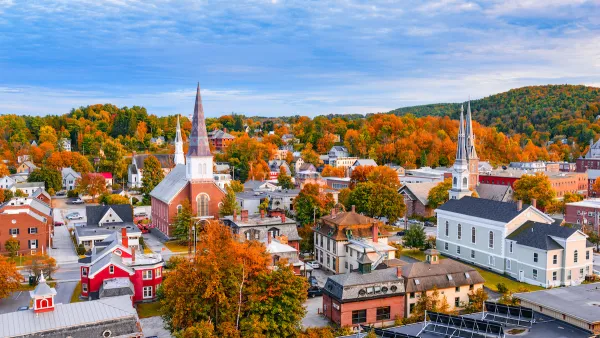
Burlington Approves Middle Housing Zoning Reform
The Vermont city will allow larger residential buildings and adjust other requirements to spur more ‘missing middle housing’ development.

Sacramento Council Approves Upzoning Proposal
If given final approval, the plan would increase the allowable floor area ratio to permit denser housing development in single-family neighborhoods and near transit.

Planetizen Federal Action Tracker
A weekly monitor of how Trump’s orders and actions are impacting planners and planning in America.

California plans to bury El Niño’s downpour
If the state plays its cards right, it may be able to store a billion acre-feet of El Niño’s water in aquifers.

Desperate measures: Advocates weigh draining Lake Powell to fill Colorado River
Draining the reservoir could reduce evaporation losses by a couple hundred thousand acre-feet.

Housing is the top priority of Seattle’s sole new councilmember
Jenks campaigned on building 1,000 new units of affordable housing.

New tax cuts may slash $1.5 billion in funding for Miami transit, public parks
Amendment 3 will save Miami-Dade homeowners $2,700 in 2028.

Arizona, Wisconsin, Pennsylvania hope to finally advance climate goals post-midterms
The three states have spent years under Republican or divided control.

FREE Course: Walkable City 1: Why Walkability?
After describing his path towards focusing on walkability as the essence of good planning, Jeff Speck marches through his five principal reasons for making more walkable places.
Reinventing Malls: Planning Alchemy—Turning Gray Fields Into Gold
The course focuses on the opportunities and imperatives that shape reinvention of mall sites.

City of Rosemead
Rutgers University, Edward J. Bloustein School of Planning and Public Policy
One Hundred Miles
University of Michigan School for Environment and Sustainability (SEAS)
Hunter College, City University of New York (CUNY)
The Architects Foundation
City of Cambridge
Montrose County
The Pocatello Development Authority