Ontario and Toronto keep finding ways to disagree.


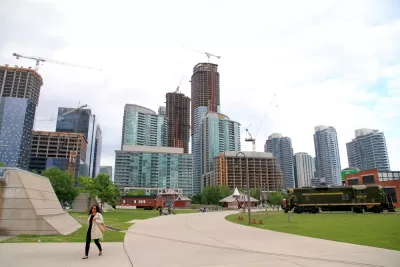
"Toronto is moving forward with plans to implement inclusionary zoning — a tool the city is counting on to meet its affordable housing goals," reports Emily Mathieu.
The news comes after the Progressive Conservative government announced Bill 108 earlier this month, proposing "changes to the planning act that could result in inclusionary zoning only applying to buildings close to major transit hubs unless special clearance is granted by the province."
The former Liberal government proposed inclusionary zoning regulations two years ago, "after years of debate and consultation, and municipalities were told local governments would have a strong hand in crafting local policies."
Deputy Mayor Ana Bailao is on the record in the article saying the new proposal could set back the process another two years, and the city can't afford any more delays.
The local government of Toronto and the provincial government of Ontario have been feuding on governance structures, urban growth boundaries, and transit planning since Ontario Premier Doug Ford and the Progressive Government took office in 2018.
FULL STORY: Toronto moves forward with inclusionary zoning plans despite province’s pledge to change rules

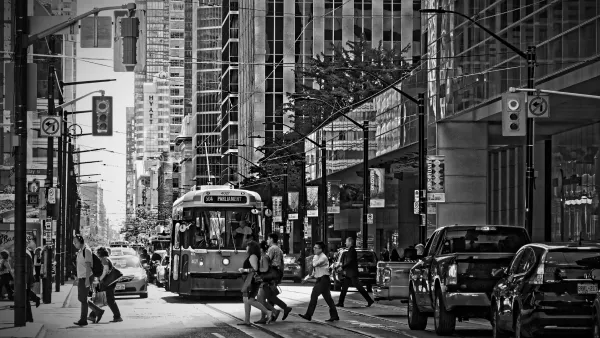
Toronto Adopts Inclusionary Zoning to Spur Affordable Housing Development
Inclusionary zoning, a policy tool designed to ensure new developments include a required number of affordable housing units, will soon be the land of the land in Toronto, Ontario. Not everyone is a fan of the new policy.

Portland's Inclusionary Zoning Effect Measured, Criticized
It's been over four years since the city of Portland implemented an inclusionary zoning policy that required all new apartment developments to set aside a portion of units for low- and moderate-income housing.
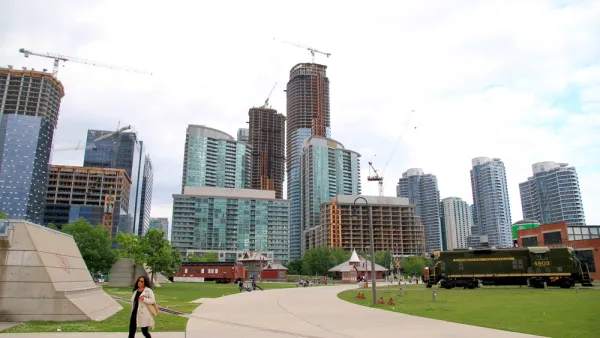
Inclusionary Zoning Sought by Toronto's Chief Planner
Gregg Lintern, chief planner and executive director of the City Planning Division for Toronto, went before a city committee this week to press for a new inclusionary zoning scheme to ensure the construction of affordable housing.

Planetizen Federal Action Tracker
A weekly monitor of how Trump’s orders and actions are impacting planners and planning in America.

The state-sanctioned urbicide of Austin
People don’t kill cities. Freeways do.

US to reduce Colorado River water deliveries to Mexico
A new Colorado Treaty amendment reduces Mexico’s Colorado River water allocation by 250,000 acre feet.

Mamdani overhauls NYC's Vision Zero plan with 100 new policy goals
The overhaul aims to reduce traffic deaths and make streets safer for pedestrians, cyclists and drivers through lower speed limits, new safety infrastructure and more.

Amtrak not solely to blame for New Jersey commuter rail's unreliability, report finds
A new study from the Garden State Initiative found that NJ Transit’s budget grew 20% across a 4 year period, but reliability declined significantly over the same period.

EPA erases limits on planet-warming pollution from power plants
Under Monday’s plan, power plants would still have some limits on how much mercury, arsenic and other contaminants they can emit.

FREE Course: Walkable City 1: Why Walkability?
After describing his path towards focusing on walkability as the essence of good planning, Jeff Speck marches through his five principal reasons for making more walkable places.
Reinventing Malls: Planning Alchemy—Turning Gray Fields Into Gold
The course focuses on the opportunities and imperatives that shape reinvention of mall sites.

Eagle County Government
Harvard University Graduate School of Design
Nashville Planning Department
The Architects Foundation
University of Cincinnati Online
The Pocatello Development Authority
The Urban Renewal Agency of the City of Pocatello
Journal of the American Planning Association