The e-commerce behemoth has its hand in everything from warehouse development to renewable energy.


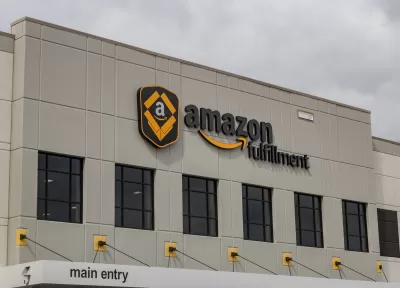
Patrick Sisson takes a closer look at Amazon's operations and logistics. Amazon already has a huge stake in industrial real estate, reports Sisson:
The company’s footprint is pretty wild. According to Amazon, the company now operates more than 75 fulfillment centers and 25 sortation centers across North America, which it leases, and employs 125,000 full-time hourly associates in the U.S. During the previous holiday season, the company hired an additional 120,000 workers across its logistics and warehouse network.
Globally, Amazon owns and leases more than 250 million square feet of space. Its continued growth and expansion have highlighted the potential of investment in warehouses and fulfillment centers.
Sisson reports that while the U.S. Postal Service now handles 40 percent of Amazon packages, a plan to launch its own delivery service has been in the works. In addition, Amazon is moving into the renewable energy sector. Last year, it opened a massive wind farm in Texas and construction continues on wind and solar projects across the country.
Read the full story: 9 facts about Amazon's unprecedented warehouse empire
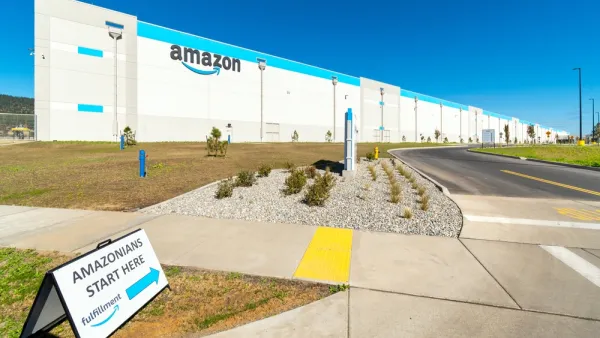
Amazon Plans for More Massive Warehouses
The company is building its biggest-ever distribution centers in New York, Colorado, and California.
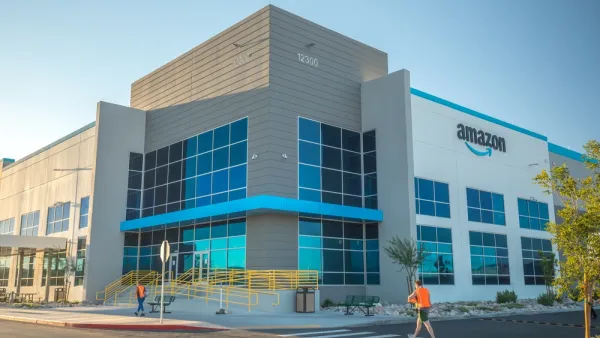
Amazon Shifting From Land Lessee to Land Owner
Amazon has been tending to buy when previously it would have leased, and the trend has massive implications for the industrial real estate market.
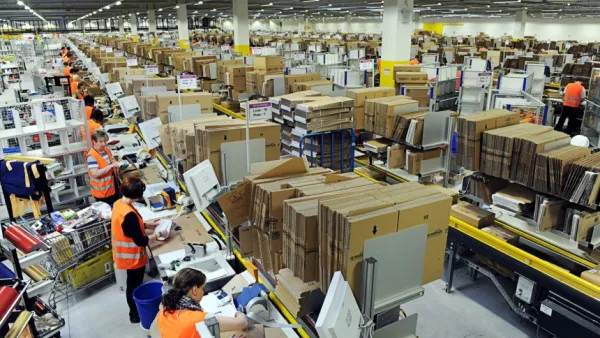
Amazon’s Growing Real Estate Empire
The e-commerce giant has been quietly buying up massive swaths of property as the company works to reduce shipping times as dramatically as possible.

Planetizen Federal Action Tracker
A weekly monitor of how Trump’s orders and actions are impacting planners and planning in America.

Eastern Nebraska is running out of electricity
Data centers and electrification are straining eastern Nebraska’s grid, throttling economic development.

Move over, LA: St. Louis gears up for Olympics, invests millions in downtown redevelopment
The Missouri city will host the 2028 Olympic soccer group stage and knockout matches.

Dallas releases zoning code overhaul to officials
The drafted overhaul is over 400 pages long.

NYC renovations for dangerous, ‘mercilessly crammed’ street delayed until 2027
Construction was supposed to begin this fall.

San Diego’s Midway Rising project gets greenlight from city council
The project looks to become the largest affordable housing development in California's history.

FREE Course: Walkable City 1: Why Walkability?
After describing his path towards focusing on walkability as the essence of good planning, Jeff Speck marches through his five principal reasons for making more walkable places.
Reinventing Malls: Planning Alchemy—Turning Gray Fields Into Gold
The course focuses on the opportunities and imperatives that shape reinvention of mall sites.

City of Rosemead
Rutgers University, Edward J. Bloustein School of Planning and Public Policy
One Hundred Miles
University of Michigan School for Environment and Sustainability (SEAS)
Hunter College, City University of New York (CUNY)
The Architects Foundation
City of Cambridge
The Pocatello Development Authority
The Urban Renewal Agency of the City of Pocatello