A diverse Boston community alliance initially came together to maintain stability in neighborhoods affected by foreclosures. It has changed focus as its work has continued.


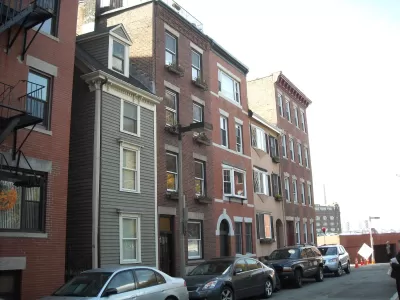
Zoe Sullivan traces the history of the Coalition for Occupied Homes in Foreclosure (COHIF), a group in Boston that started in the wake of the subprime housing crisis. As foreclosures spread throughout the city, both homeowners and tenants were left in precarious and unstable situations. The coalition is a diverse group – housing and policy advocates, developers, financiers, and government agencies – that came together to ensure people in lower-income neighborhoods would not be displaced.
In responding to community needs over time, COHIF shifted its work away from advocacy and became an affordable housing developer. This move had its challenges, says Sullivan, and understanding the different perspectives of members was crucial to the coalition’s success. “This capacity to engage in real discussions has helped the group evolve and cultivate the trust that has been essential to its survival and success so far,” reports Sullivan.
More recently, COHIF’s work changed direction again, and it became a community land trust. Members see this as an important step in fostering long-term housing affordability in Boston.
FULL STORY: An Unusual Coalition in Boston Helps Save Homes from Foreclosure

Land Trusts Preserve Affordability, but for Whom?
An analysis of buildings bought by the city for a community land trust in Boston reveals that many prior residents were evicted just before the sales.

Boston's Seaport District Still Lacking Diversity
The glitzy new neighborhood doesn’t cater to all Boston residents, according to a new survey.
Boston Plans to Put $26 Million Toward Affordable Housing Projects
A new initiative will fund 10 new developments as the city works to increase available affordable housing.

The state-sanctioned urbicide of Austin
People don’t kill cities. Freeways do.

US to reduce Colorado River water deliveries to Mexico
A new Colorado Treaty amendment reduces Mexico’s Colorado River water allocation by 250,000 acre feet.

New Jersey’s second-largest city bans standalone data centers
Jersey City will continue to allow co-location facilities, such as those meant for research institutions that store their own data.

Amtrak not solely to blame for New Jersey commuter rail's unreliability, report finds
A new study from the Garden State Initiative found that NJ Transit’s budget grew 20% across a 4 year period, but reliability declined significantly over the same period.

EPA erases limits on planet-warming pollution from power plants
Under Monday’s plan, power plants would still have some limits on how much mercury, arsenic and other contaminants they can emit.

Phoenix announces new on-demand transit service, more frequent RAPID buses
Both new services will launch in October, and are part of Phoenix's Project Effective Access Solutions for Easing Congestion.

FREE Course: Walkable City 1: Why Walkability?
After describing his path towards focusing on walkability as the essence of good planning, Jeff Speck marches through his five principal reasons for making more walkable places.
Reinventing Malls: Planning Alchemy—Turning Gray Fields Into Gold
The course focuses on the opportunities and imperatives that shape reinvention of mall sites.

Eagle County Government
Harvard University Graduate School of Design
Nashville Planning Department
The Architects Foundation
University of Cincinnati Online
The Pocatello Development Authority
The Urban Renewal Agency of the City of Pocatello
Journal of the American Planning Association