Despite LA’s housing shortage, developers say the city’s "mansion-tax" and pandemic-era policies make it an unappealing place to build housing.



Los Angeles has seemingly “infinite demand” for housing, but housing development has slowed to a crawl, Jack Flemming writes for the LA Times. The housing developers the LA Times spoke with said skyrocketing interest rates and ripple effects from pandemic-era policies complicate efforts to build new developments in L.A.
During the pandemic, “the city and the county instituted tenant protections such as rent freezes and eviction moratoriums for years, a vital aid for renters during an uncertain time. But developers claim the moves flattened revenues by keeping rents lower than what the market demanded and also creating a backlog of eviction cases. Even though the protections have expired, their ripple effects continue today, at the same time that expenses, such as construction costs, have shot up,” The LA Times reports.
Developer Yoni Chriqui also said L.A.’s “mansion tax,” which puts a 4% or 5.5% tax on L.A. property sales over $5.4 million, had led many developers to build smaller projects to avoid the extra tax, rather than the dense developments LA needs. The LA Times reports:
“People are building two or three stories on parcels that could hold six or seven stories,” Chriqui said.
Read the full story: Why L.A. developers aren’t building more apartments, despite epic housing shortage
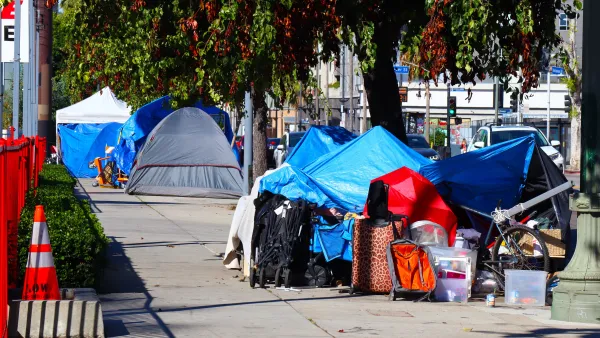
Los Angeles rescinds twelve 'anti-camping zones'
The zones previously prohibited unhoused people from camping in parts of Hollywood.
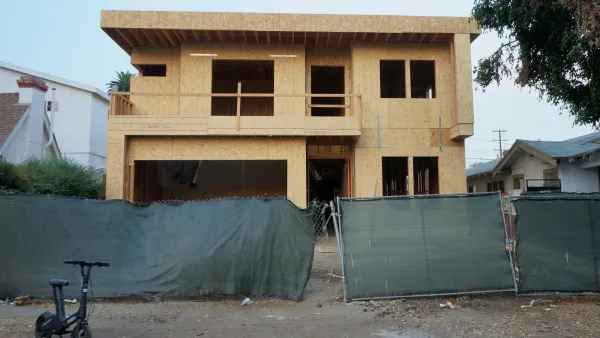
Report: LA Construction Permits Fell 40% After ‘Mansion Tax’
New housing permits fell sharply for both single-family homes and multifamily buildings after the city enacted a tax on property sales over $5 million.
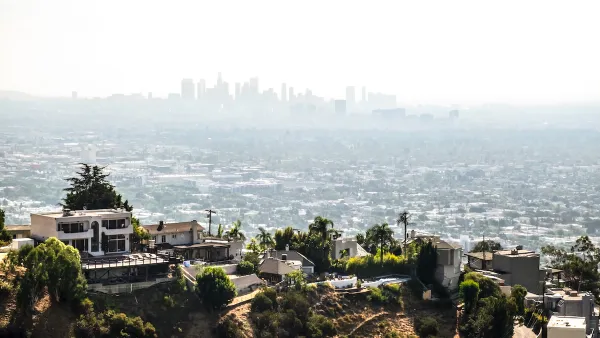
LA ‘Mansion Tax’ Yielding Less Revenue Than Predicted
The tax on property sales above $5 million has brought in less revenue last year than experts projected, but the measure could still become a significant contributor to affordable housing funds.

Planetizen Federal Action Tracker
A weekly monitor of how Trump’s orders and actions are impacting planners and planning in America.

California plans to bury El Niño’s downpour
If the state plays its cards right, it may be able to store a billion acre-feet of El Niño’s water in aquifers.

Desperate measures: Advocates weigh draining Lake Powell to fill Colorado River
Draining the reservoir could reduce evaporation losses by a couple hundred thousand acre-feet.

Los Angeles just elected an urban planner as its mayor
Transportation analysts are optimistic that Raman will be more aggressive in addressing transit issues than Bass.

Mamdani’s pied-à-terre tax survives legal challenge
A panel of judges found that the plaintiffs failed to demonstrate injury as a result of New York City's implementation of the tax.

Eastern Nebraska is running out of electricity
Data centers and electrification are straining eastern Nebraska’s grid, throttling economic development.

FREE Course: Walkable City 1: Why Walkability?
After describing his path towards focusing on walkability as the essence of good planning, Jeff Speck marches through his five principal reasons for making more walkable places.
Reinventing Malls: Planning Alchemy—Turning Gray Fields Into Gold
The course focuses on the opportunities and imperatives that shape reinvention of mall sites.

City of Rosemead
Rutgers University, Edward J. Bloustein School of Planning and Public Policy
One Hundred Miles
University of Michigan School for Environment and Sustainability (SEAS)
Hunter College, City University of New York (CUNY)
The Architects Foundation
City of Cambridge
Montrose County
The Pocatello Development Authority