The Clear Lake hitch, a fish only found in Clear Lake, must contend with mercury contamination, algal blooms and predatory invasive fish in the watershed.


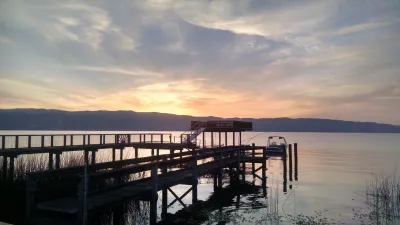
Seven Native American tribes signed an agreement with state agencies and local government on Sept. 11 to formally co-manage Clear Lake, California’s biggest lake. The lake is battling mercury contamination, algal blooms and predatory invasive fish, putting the fish unique to the watershed — including the Clear Lake hitch, a vital animal for the region’s Indigenous people — in danger of extinction.
The tribes around the lake have spent years advocating for the Clear Lake hitch, and hope the agreement “will turn their ad hoc emergency work — which has coincided with an increase of [Clear Lake hitch] in the lake — into a lasting strategy to protect the fish,” Noah Haggerty writes for the LA Times.
California launched an initiative in 2026 to bring 7% of California's lands and waters under the care of tribes. The Sept. 11 agreement is the first one governing a watershed.
Read the full story: California’s biggest lake is in crisis. Now tribes are coming back to save its sacred fish


Trump Administration Wants to Remove Conservation From Approved 'Uses' of Public Land
The Department of the Interior moved to officially rescind the Public Lands Rule passed in 2024, which elevates the conservation of public lands to the same level of protection as other uses.
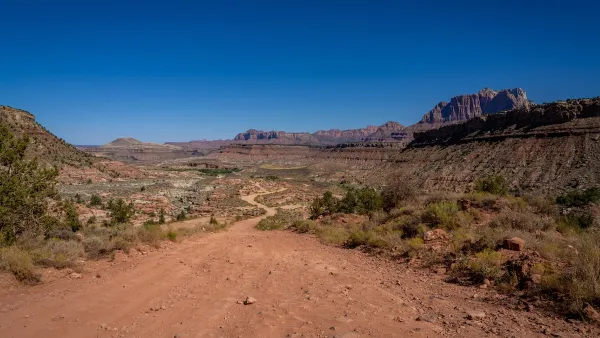
Supreme Court Declines to Hear Utah’s Case Against the BLM
The state wants more local control of public lands not designated as national parks or monuments.
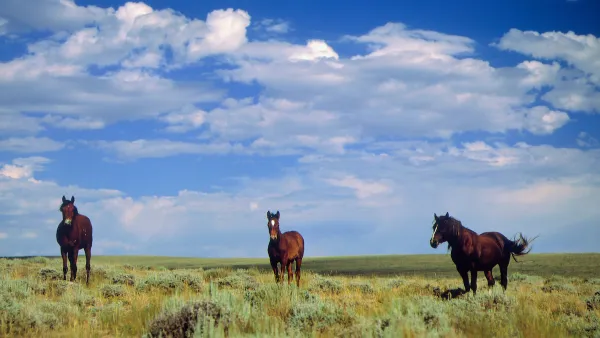
Utah and Wyoming Sue BLM Over Conservation Rule
The states allege the agency overstepped federal regulations in its attempt to boost conservation efforts on public lands.

Planetizen Federal Action Tracker
A weekly monitor of how Trump’s orders and actions are impacting planners and planning in America.

California plans to bury El Niño’s downpour
If the state plays its cards right, it may be able to store a billion acre-feet of El Niño’s water in aquifers.

Chicago breaks ground on $3 billion megadevelopment
The new neighborhood, titled Foundry Park, will one day host 3,700 residences.

Satanic Place Names
From streams and lakes to valleys and canyons, I mapped more than 1,000 places named after the Devil.

California High-Speed Rail Authority CEO resigns after $600,000 scandal
Under Ian Choudri, the authority used taxpayer dollars to fund first class flights and trips to nightclubs.

Want to study the Missouri River? Soon, you may need unanimous approval from 10 states
Legislation would require 10 governors’ permission to study or build projects moving water outside the basin.

FREE Course: Walkable City 1: Why Walkability?
After describing his path towards focusing on walkability as the essence of good planning, Jeff Speck marches through his five principal reasons for making more walkable places.
Reinventing Malls: Planning Alchemy—Turning Gray Fields Into Gold
The course focuses on the opportunities and imperatives that shape reinvention of mall sites.

City of Rosemead
Rutgers University, Edward J. Bloustein School of Planning and Public Policy
One Hundred Miles
Hunter College, City University of New York (CUNY)
The Architects Foundation
University of Cincinnati Online
City of Cambridge
Montrose County
The Pocatello Development Authority