City officials hope the move will bring more grocery stores to towns with limited access.


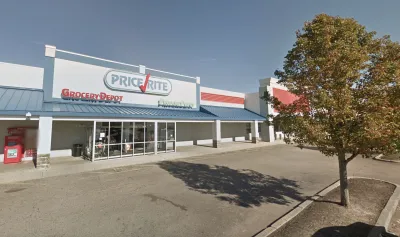
In a move to bring more grocery stores to its cities, Rhode Island has become the second state to ban restrictive covenants. The July legislation is a part of Lieutenant Governor Sabina Matos’s Fair Price Grocery Agenda. It comes after Matos realized that restrictive covenants were hindering new grocery stores coming to Woonsocket, Rhode Island, which currently has just one for its 45,000residents.
Restrictive or “scorched-earth” covenants allow grocers to vacate stores but disallow future owners from selling food there, sometimes for decades, Lela Nagi writes for the Guardian. Woonsocket has at least three restrictive covenants that severely limit grocery access: Walmart has one in the town that dates back to 2011 and Stop & Shop has had a restrictive covenant on a property since 2004.
The ban lacks a retroactive provision, meaning current covenants will remain in place until they expire. While supportive of the ban, some affordability experts worry that it alone won’t do much to make groceries more affordable.
Read the full story: This US city only has one supermarket for 45,000 people. New legislation seeks to fix that


Mapping Injustice Project Receives Grant to Fight Housing Inequality
A 'transformative' grant will help a University of Minnesota think tank foster conversations to address structural housing inequality in Minneapolis.

One Berkeley Resident's Fight to Desegregate the City
Dorothy Walker has spent decades working to eliminate housing discrimination. In February, the city council finally agreed.
New Mexico Communities Reflect on Racial Restrictive Covenants
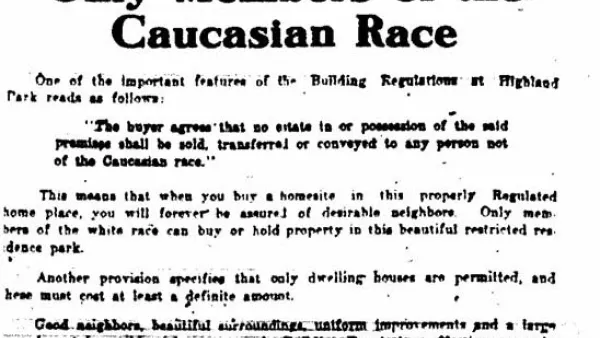
Explicitly racist and exclusionary language remains embedded in many communities' restrictive covenants. State legislators and local leaders want to change that.

Planetizen Federal Action Tracker
A weekly monitor of how Trump’s orders and actions are impacting planners and planning in America.

Data reveals that NYC’s bet on congestion pricing has paid off
After almost two years of the program, reports show positive impacts on traffic and air quality and no disruptions to parking.

Denver is solving homelessness. Why aren't the rest of us?
Since 2023, Denver's street homeless population has decreased by 64%, proving that effective tools exist to support those in need of housing.

Chicago's streets are littered with dead birds. Will the city protect them?
Chicago sits in the route of migratory birds traveling south. Its abundance of glass buildings and bright lights make it particularly disorienting for the animals.

CA city to shut down airport, transform it into utopian park
The western side of the 200-acre park will feature a dog park, nature education center and arboretum.

NYC to vote on supporting outdoor dining, streamlining bus and bike lane creation
The city has five proposed amendments to its municipal constitution on the ballot this November.

FREE Course: Walkable City 1: Why Walkability?
After describing his path towards focusing on walkability as the essence of good planning, Jeff Speck marches through his five principal reasons for making more walkable places.
Reinventing Malls: Planning Alchemy—Turning Gray Fields Into Gold
The course focuses on the opportunities and imperatives that shape reinvention of mall sites.

City of Rosemead
Rutgers University, Edward J. Bloustein School of Planning and Public Policy
One Hundred Miles
The Architects Foundation
University of Cincinnati Online
Montrose County
Northern Illinois Transit Authority (NITA)
The Pocatello Development Authority