HUD’s changes included asking applicants how their award would advance the Administration’s priorities on “gender ideology,” “faith-based activities” and immigration.


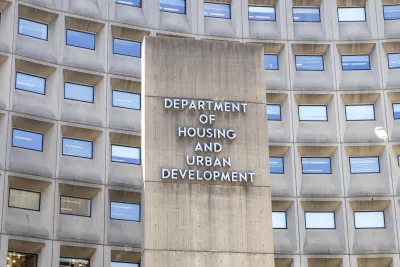
The U.S. District Court of Massachusetts paused changes to how the U.S. Department of Housing and Urban Development awarded Fair Housing Initiative Program grants via a temporary restraining order on Aug. 26, writes Ryan Kushner for Smart Cities Dive.
HUD announced in June that it was limiting fair housing grants to five housing groups per year, down from the over 100 previously funded, and that only groups with a budget over $5 million would qualify. According to the complaint, most fair housing groups have budgets between $400,000 and $2 million. In the ruling, Judge Myong Joun wrote that HUD’s justification for these changes lacked “informed reasoning or explanation.”
HUD’s changes also added a question to the “merit and risk review” section of the application, asking applicants how their award would advance the Administration’s priorities on “gender ideology,” “faith-based activities,” and immigration. Joun said that HUD offered “no real justification” for these questions, and must reinstate the prior funding structure.
Read the full story: HUD fair housing funding changes blocked in court


HUD modernizes 50-year-old manufactured housing framework
The Next Generation Manufactured Housing Action Plan establishes new energy-efficiency standards for manufactured homes, and new guidelines for anchoring them.

HUD, USDA agree on framework to simplify housing environmental review standards
Their agreement is a requirement of the 21st Century ROAD to Housing Act.
HUD sets new time limit on Fair Housing accessibility complaints
Previously, complaints could be filed as long as the violation remained.

Planetizen Federal Action Tracker
A weekly monitor of how Trump’s orders and actions are impacting planners and planning in America.

‘Going backwards:’ Baltimore mayor, students rally against state's transit funding plan
Maryland's proposed six-year plan provides no funding for Baltimore’s BMORE bus program and reduces its road maintenance funding.

Detroit to transform waterfront with $2.2 billion investment
Developers will convert about 18 acres of unused parking lot space into civic spaces.

After $600,000 wasted, CA high-speed rail board limits CEO’s power
Ian Choudri will no longer be able to sign, change or manage contracts.

Lithium mines leech water from surrounding communities. Soon, they’ll run dry
Researchers concluded that most lithium mines won't have enough water to meet industry demands by 2050.

El Niño takes lives, infrastructure as U.S. storm systems prove ill-prepared
About two-thirds of America's culverts are in states with outdated design standards.

FREE Course: Walkable City 1: Why Walkability?
After describing his path towards focusing on walkability as the essence of good planning, Jeff Speck marches through his five principal reasons for making more walkable places.
Reinventing Malls: Planning Alchemy—Turning Gray Fields Into Gold
The course focuses on the opportunities and imperatives that shape reinvention of mall sites.

One Hundred Miles
County of Mendocino
planning NEXT
The Architects Foundation
University of Cincinnati Online
Montrose County
Northern Illinois Transit Authority (NITA)
The Pocatello Development Authority