Land disputes between tribes and the federal government often take much longer to resolve.


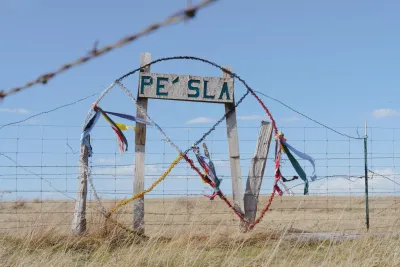
In May, South Dakota tribes achieved a rare win: driving a rapidly-advancing mining project out of their ancestral land within days.
On Feb. 27, the U.S. Forest Service approved exploratory graphite drilling on Pe' Sla, which holds a sacred place in the world of the Great Sioux Nation.
When the company, Pete Lien & Sons, began drilling, a coalition of tribe members and organizers went to the drill site. There, 40 organizers blocked the road to the drill site and stationed themselves on the drill pads so no work could be done. They remained for seven days, until Pete Lien & Sons wrote to the Forest Service rescinding its plan.
Native Americans' fight to protect ancestral land from mining is a common one, and the struggles are often lost, Shilpi Chhotray writes for Yahoo News. Tribes in Arizona and Minnesota are currently fighting legal battles to protect their land from the federal government.
"We're just not used to winning," Dr. Valeriah Big Eagle, who directs the Black Hills work of NDN Collective, an Indigenous-led advocacy nonprofit based in Rapid City, told Yahoo News. "We're people used to being screwed over by the government at every level."
Read the full story: A rare win in Indian country: how tribes drove out a mining company in one week
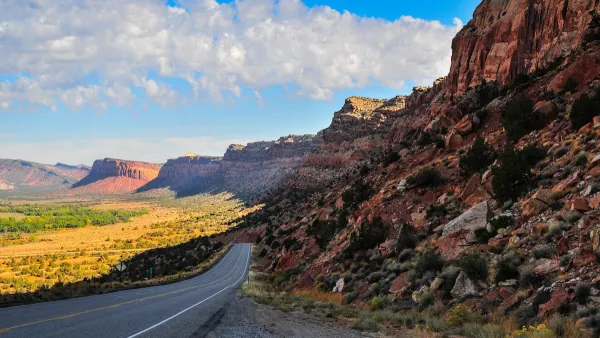
New Executive Order Renews Attack on Public Lands
An order issued late last week pushes for increased mineral extraction on federally owned public lands.
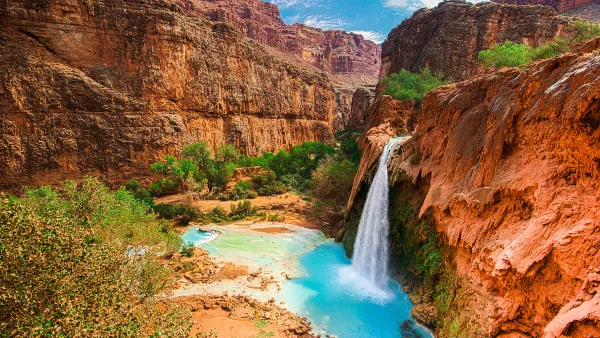
Biden Announces New National Monument on Havasu 'Baaja Land
Almost 1 million acres of land near the Grand Canyon will now be protected from mining and extraction as part of the country’s newest national monument.
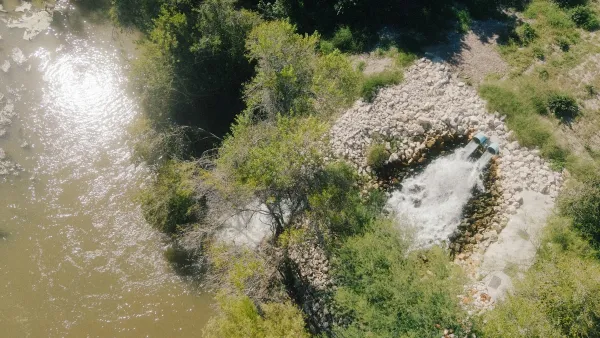
Corpus Christi drilled wells at 'lightning speed,' leaving neighbors fearing for their water supply
Underground water became a critical fix through the worst of Corpus Christi’s drought. But experts warn against depending on wells for too long.

Washington state to charge fee to drivers with fuel-efficient cars
Revenue from the fee will go towards supporting the state’s highways.

Illinois considers spending $1 billion in taxpayer money on data center
A quantum computing campus and data center are currently under construction in Chicago.

Trump to blast ‘hydrocarbon highway’ through ‘world’s longest art gallery’
Environmental and historic preservation groups are suing to stop the project.

NYC, state sue feds over mixed-immigration-status housing assistance rule
The state’s lawsuit argues that the rule change violates the Administrative Procedure Act.

Michigan to turn neighborhood into virtual power plant
Residents will soon be able to divert their excess energy to the grid in exchange for compensation.

Data center, mining project swarm to long-awaited Alaska railroad line
The state-owned railroad approved final plans for the spur line this week; the project is expected to cost $311 million, mostly funded by the federal government

FREE Course: Walkable City 1: Why Walkability?
After describing his path towards focusing on walkability as the essence of good planning, Jeff Speck marches through his five principal reasons for making more walkable places.
Reinventing Malls: Planning Alchemy—Turning Gray Fields Into Gold
The course focuses on the opportunities and imperatives that shape reinvention of mall sites.

City of Charlotte
City of Rosemead
Rutgers University, Edward J. Bloustein School of Planning and Public Policy
University of Michigan School for Environment and Sustainability (SEAS)
Hunter College, City University of New York (CUNY)
The Architects Foundation
University District Partnership