City Council hopes the new limits will improve public safety.


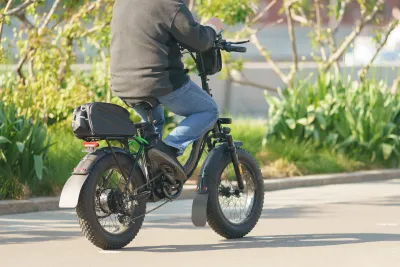
In a unanimous vote, Berkley, Michigan City Council passed an ordinance restricting the use of e-bikes on sidewalks and in public parks.
Council members in the northern Detroit suburb said the ordinance does not reflect an opposition to e-bikes, but is intended to prevent injuries and protect public places. E-bikes remain permitted on streets and in bike lanes.
“The ordinance comes as communities across Metro Detroit continue to navigate the growing popularity of electric bikes and the question of how they should be regulated,” writes Hannah Mcllree for CBS News. While some residents supported the ban, others said it went too far, particularly in restricting usage in parks.
The restrictions also apply to motorized scooters, skateboards, moped devices, and regular bikes.
Read the full story, below.
Editor's note: this story was changed on August 19 to reflect that the ordinance was passed in Berkley, Michigan, not Berkeley. On August 20 we replaced an image that depicted a bike lane in Berkeley, California.
Read the full story: Berkley City Council passes ordinance to prohibit e-bikes on sidewalks, in public parks
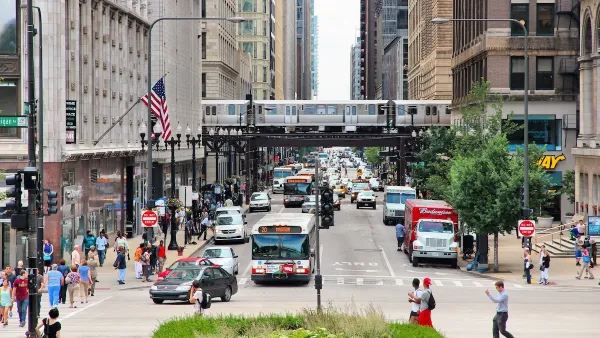
Chicago city vehicles are on the hunt for illegally-parked cars
Cameras on the vehicles can automatically issue tickets to drivers who park their cars in bus or bike lanes.
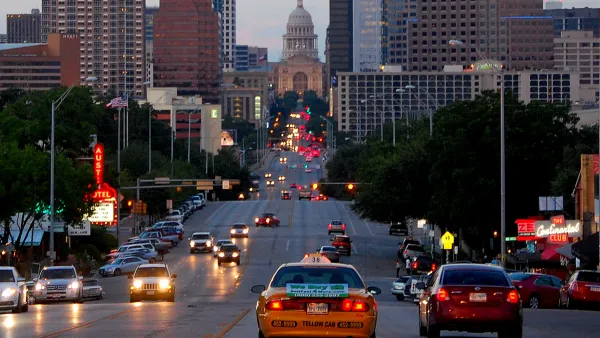
'Texas' Main Street' gets a multimodal glow-up
Congress Avenue in Austin is undergoing a major renovation to receive bike lanes and upgraded pedestrian infrastructure.

Berkeley promised to build supportive housing in People's Park. Where is it?
More than two years after People's Park was cordoned off, there is no word on a timeline for a promised affordable housing project.

Planetizen Federal Action Tracker
A weekly monitor of how Trump’s orders and actions are impacting planners and planning in America.

Washington state to charge fee to drivers with fuel-efficient cars
Revenue from the fee will go towards supporting the state’s highways.

Study reveals best places in the U.S. for cycling, walking
New research from Streetlight Data examines bicycle and pedestrian miles per capita in the 100 largest U.S. cities by population.

Mamdani unveils his ‘most ambitious bus lane project’ so far
The city has added two new bus lanes, which it expects to speed up tens of thousands of bus riders’ commutes.

New Jersey and New York suggest $10.3 billion budget for transit
Some of the budget is dedicated to replacing Manhattan's Midtown Bus Terminal.

States split over EPA’s proposal to drop greenhouse gas rules for power plants
The proposed rule drew over 165K comments, including from officials, health and environmental groups, and private citizens.

FREE Course: Walkable City 1: Why Walkability?
After describing his path towards focusing on walkability as the essence of good planning, Jeff Speck marches through his five principal reasons for making more walkable places.
Reinventing Malls: Planning Alchemy—Turning Gray Fields Into Gold
The course focuses on the opportunities and imperatives that shape reinvention of mall sites.

City of Charlotte
City of Rosemead
Rutgers University, Edward J. Bloustein School of Planning and Public Policy
University of Michigan School for Environment and Sustainability (SEAS)
Hunter College, City University of New York (CUNY)
The Architects Foundation
University District Partnership
City of Cambridge
The Pocatello Development Authority