"Waymo, city officials, and urbanists have common cause."


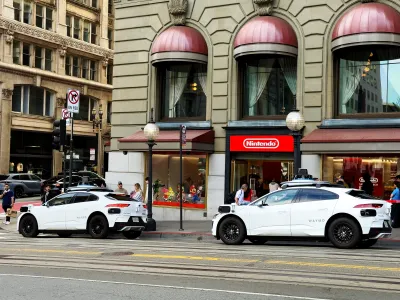
Amidst a tsunami of tepid coverage of Waymo's glitchy country-wide rollout and fears that circling empty robotaxis will skyrocket vehicle miles travelled, a Waymo employee is speaking out — on the urbanist activism site Streetsblog, no less.
A recent Streetsblog op-ed from Arielle Fleisher, policy development and research manager at Waymo, makes the case that Waymo and urbanists want the same thing: safer streets, and fewer vehicle miles travelled.
"A recent study from Open Plans and the Transportation Research Program at Hunter College argued that AVs will generate excessive 'deadheading,' or empty vehicle miles, in New York City. The concern is fair, but the conclusion was based on a false equivalence: it treats the density of California as directly comparable to New York City. The literature is clear that deadheading depends on demand density. There are fewer empty miles when cars don’t have to travel far to find their next passenger," Fleisher writes.
She goes on to assert that her personal activism in cycling and active transportation is precisely what brought her to work at Waymo in the first place, claiming that the fleet operator is just as incentivized as activists to keep empty miles down.
"Cities become more delightful when there are fewer cars circling and less curb space devoted to vehicle storage. Right now, roughly 40 percent of ride-hailing miles are empty, a figure that generally holds for AV fleets. But as a fleet operator, Waymo is incentivized to minimize deadheading because we bear the cost of every single empty mile driven. Every unnecessary mile means additional operating costs, energy consumption, vehicle wear, and risk exposure. Traditional ride-hailing platforms don’t internalize these costs; they are pushed onto the drivers. Waymo, like cities, wants to reduce empty miles as much as possible."
Her op-ed explores solutions to deadheading and implores closer collaboration with urbanists, claiming that "Waymo, city officials, and urbanists have common cause, and we don’t have to wait to start having these conversations."
Read her full argument at the link below.
Read the full story: Waymo Speaks: We Have More In Common With Urbanists Than You Might Think
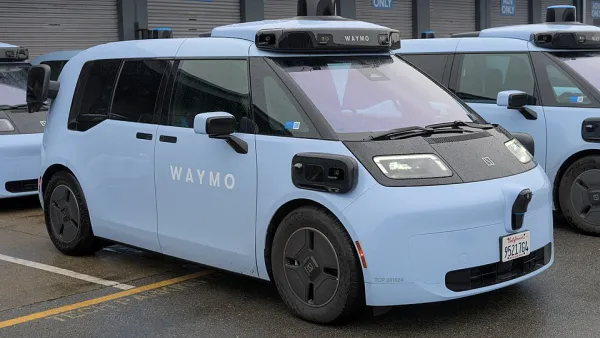
Waymo’s Ojai robotaxis from China now able to pick up all riders
Steep tariffs and tight federal laws haven’t stopped Waymo from purchasing over 3,200 vehicles from Zeekr, a Chinese manufacturer.
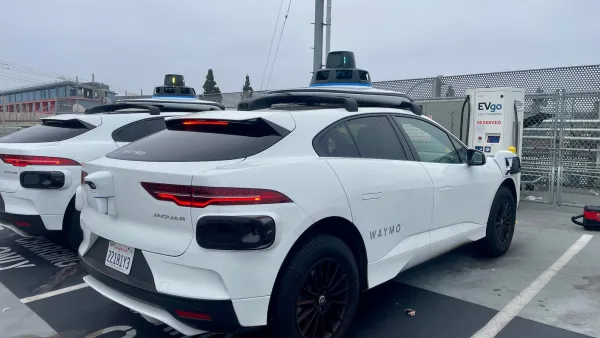
Judge orders Waymo to stop using 2 Santa Monica charging stations after noise complaints
Neighbors have asked the city to ban the company from using charging stations in residential areas between 11pm and 6am.
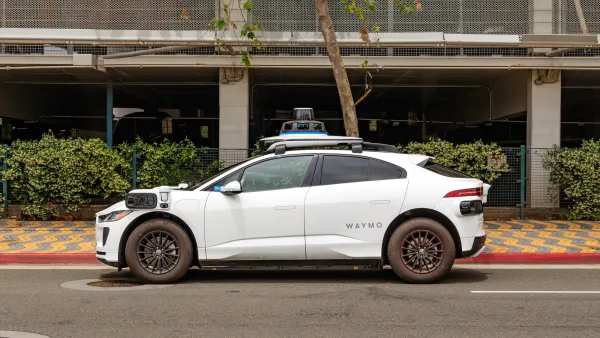
Austin Waymos rack up nearly $10k in parking tickets
The robotaxis have been cited for parking in tow zones and double parking, among other violations.

Planetizen Federal Action Tracker
A weekly monitor of how Trump’s orders and actions are impacting planners and planning in America.

Washington state to charge fee to drivers with fuel-efficient cars
Revenue from the fee will go towards supporting the state’s highways.

Trump to blast ‘hydrocarbon highway’ through ‘world’s longest art gallery’
Environmental and historic preservation groups are suing to stop the project.

MBTA Green Line project moved to next phrase of CIG program
The modernization effort will cost $4.08 billion.

22-mile pedestrian and bike path to encircle Atlanta by 2030
The project will also support affordable housing.

Army detonates nearly 5 tons of lead in Iowa
The detonation comes after days of delays and public outcry.

FREE Course: Walkable City 1: Why Walkability?
After describing his path towards focusing on walkability as the essence of good planning, Jeff Speck marches through his five principal reasons for making more walkable places.
Reinventing Malls: Planning Alchemy—Turning Gray Fields Into Gold
The course focuses on the opportunities and imperatives that shape reinvention of mall sites.

City of Charlotte
City of Rosemead
Rutgers University, Edward J. Bloustein School of Planning and Public Policy
University of Michigan School for Environment and Sustainability (SEAS)
Hunter College, City University of New York (CUNY)
The Architects Foundation
University District Partnership