Advocates argue that exempting thousands of parcels from Senate Bill 79 is an "egregious example of the city flouting state law."


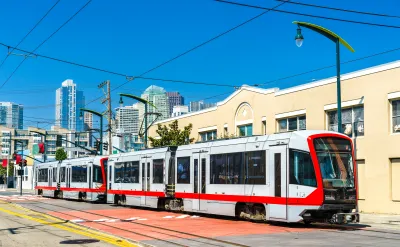
San Francisco housing advocates are suing both the city and the state of California for overriding a bill intended to increase housing supply.
On July 1, California Senate Bill 79, titled the Abundant and Affordable Homes Near Transit Act, took effect to override local zoning limitations and allow greater heights and densities for residential development near transit stops. In response, San Francisco issued a local ordinance permanently excluding nearly 1,900 parcels in parts of its SoMa, Bayview and Bayshore neighborhoods from the bill, arguing that they are primarily industrial, a move California housing officials approved.
Now residents are suing both the city and the state, arguing the move was illegal.
The San Francisco Chronicle reports that the bill provides narrow exemptions for land that is already zoned to prohibit housing, something the lawsuit claims San Francisco has never done.
"One argument for exempting parts of SoMa from SB 79 is that the neighborhood has already absorbed a disproportionate share of San Francisco’s recent housing growth — the state law would concentrate even more development in the same parts of San Francisco, particularly given the Muni routes that would otherwise make them prime targets for additional housing," Laura Waxmann writes for the Chronicle.
"The housing groups argue that is the exact reason why SoMa, where much of the city’s supportive and affordable housing stock is located, shouldn’t be exempt, given that the area includes parcels where housing is permitted. They described SoMa’s designation as an employment hub as a particularly 'egregious example of the city flouting state law.'"
Full story below.
Read the full story: Exclusive: S.F. exempted 1,900 parcels from a housing law. YIMBYs are suing the city to reverse it
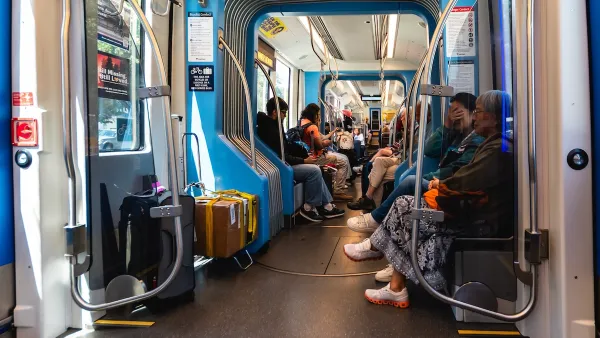
Voters choose public transit, approve $31 billion in funding
Approved projects include $101,000 for reduced-cost transit in a Michigan town and $14 billion for regional transit in the San Francisco Bay Area.

Bay area voters pass ‘crucial lifeline’ for transit
Proposition RTM, which will fund Bay Area transit, has approval from 61% of voters as of 9:45 p.m. on Nov. 3.
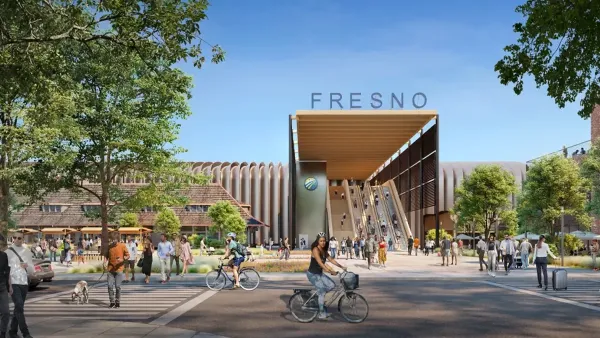
California High-Speed Rail Authority picks trainset manufacturer
The California High-Speed Rail Authority aims to start servicing passengers by 2033.

Planetizen Federal Action Tracker
A weekly monitor of how Trump’s orders and actions are impacting planners and planning in America.

Eastern Nebraska is running out of electricity
Data centers and electrification are straining eastern Nebraska’s grid, throttling economic development.

Study reveals best places in the U.S. for cycling, walking
New research from Streetlight Data examines bicycle and pedestrian miles per capita in the 100 largest U.S. cities by population.

Officials look to alter BART extension as price goes through the roof
Tariffs and the war with Iran are behind the rising cost.

To power data centers, Utah company may build hundreds of nuclear reactors on state land
In its permit application, Valar asked for the county to confirm that changes within its outlined plan would still be covered by the permit.

San Antonio is using environmental review to stall ICE detention center
San Antonio sued last month to pause work on the new detention center until the federal government studied its effect on the surrounding area.

FREE Course: Walkable City 1: Why Walkability?
After describing his path towards focusing on walkability as the essence of good planning, Jeff Speck marches through his five principal reasons for making more walkable places.
Reinventing Malls: Planning Alchemy—Turning Gray Fields Into Gold
The course focuses on the opportunities and imperatives that shape reinvention of mall sites.

City of Charlotte
City of Rosemead
Rutgers University, Edward J. Bloustein School of Planning and Public Policy
University of Michigan School for Environment and Sustainability (SEAS)
Hunter College, City University of New York (CUNY)
The Architects Foundation
City of Cambridge
The Pocatello Development Authority
The Urban Renewal Agency of the City of Pocatello