The action marks a drastic shift in wildlife management policy for the Yellowstone-adjacent bison herd.


The Trump administration has ordered the removal of over 900 bison from federal land in Montana, citing concerns about disease transmission to cattle and property damage.
According to an article by Ben Ryder in Outdoor Hub, "The removal process typically involves capturing bison through specialized facilities and either relocating them to tribal lands, transferring them to conservation herds, or culling the animals. Montana has long grappled with managing bison populations that leave the protected boundaries of Yellowstone, where the largest wild bison herd in the United States resides. These animals represent descendants of the few hundred bison that survived near-extinction in the late 1800s."
The directive drew "immediate opposition" from conservationists and Indigenous leaders. "Multiple conservation organizations have signaled their intent to contest the decision through legal channels, arguing that the removal lacks scientific justification and undermines decades of collaborative wildlife management efforts." Critics of the plan say that native bison provide ecological benefits that grazing cattle don't. Moreover, "Large-scale removals can affect the genetic diversity and age structure of the remaining population, particularly when targeting specific groups or locations."
According to Ryder, "The long-term implications of this decision will depend on whether it represents an isolated management action or the beginning of a broader policy pattern affecting wildlife conservation on federal lands."
Read the full story: More than 900 Montana bison face removal from federal land after Trump administration decision
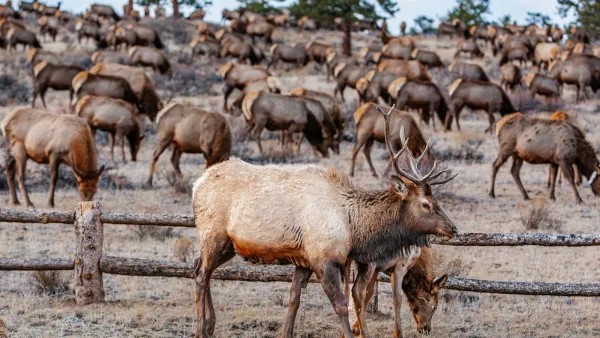
Colorado oil and gas land lease on public land could imperil nation's largest elk herd
The federal government approved the largest land lease to oil and gas interests in Colorado history.

Colorado creates wildlife crossings fund
Residents will have the option to add $5 to their car registration to fund infrastructure that prevents wildlife-vehicle collisions.
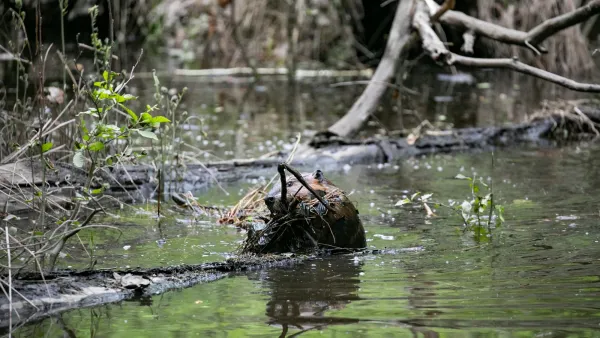
Two years after California reintroduced beavers, they are transforming the landscape into a 'climate-resilient powerhouse'
A beaver restoration program is proving that ancient solutions can help solve modern problems.

Planetizen Federal Action Tracker
A weekly monitor of how Trump’s orders and actions are impacting planners and planning in America.

Eastern Nebraska is running out of electricity
Data centers and electrification are straining eastern Nebraska’s grid, throttling economic development.

California High-Speed Rail Authority picks trainset manufacturer
The California High-Speed Rail Authority aims to start servicing passengers by 2033.

Massachusetts bogs generate both power, and cranberries
Putting solar panels above farmland is one way Massachusetts is advancing toward its goal of net-zero carbon emissions by 2050.

What could the future of LA transit look like under Raman?
The mayor-elect views broken sidewalks and potholes as crises that can be fixed with better governance.

States are counting on battery farms. Some towns don’t want them.
While fire safety has improved, some communities are still wary.

FREE Course: Walkable City 1: Why Walkability?
After describing his path towards focusing on walkability as the essence of good planning, Jeff Speck marches through his five principal reasons for making more walkable places.
Reinventing Malls: Planning Alchemy—Turning Gray Fields Into Gold
The course focuses on the opportunities and imperatives that shape reinvention of mall sites.

City of Rosemead
Rutgers University, Edward J. Bloustein School of Planning and Public Policy
One Hundred Miles
University of Michigan School for Environment and Sustainability (SEAS)
Hunter College, City University of New York (CUNY)
The Architects Foundation
City of Cambridge
The Pocatello Development Authority
The Urban Renewal Agency of the City of Pocatello