Smaller households are more prevalent than ever, but most homes in the state are still designed for larger families.


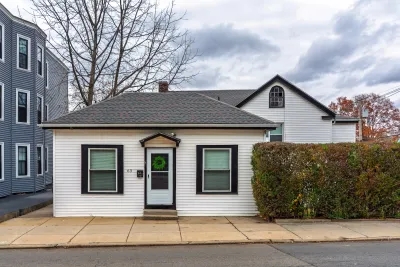
A report from the Pioneer Institute suggests that while household sizes in Massachusetts are shrinking, the homes being built don't reflect this need for smaller housing units.
As Jennifer Smith notes in an article in News From The States, "In 2024, 63 percent of Massachusetts households had one or two people, but just 44 percent of occupied housing units had two or fewer bedrooms, according to the report."
According to report author Andrew Mikula, barriers to building smaller homes include a "cornucopia of regulations, and bureaucratic processes, and land values rising, and other trends that make it very difficult to build new homes that are small and low-cost in the same way that a ranch style home or bungalow would have been 50 years ago." Mikula is proposing a ballot measure that would prevent cities from imposing minimum lot sizes greater than 5,000 square feet or more than 50 feet of frontage for single-family homes.
As Smith explains, "The report offers a suite of policy recommendations to encourage more starter home construction, including, but going beyond, similar zoning changes to the ballot question. These range from zoning changes, to boosting the state’s accessory dwelling unit law, to allowing denser construction in certain areas."
Read the full story: New report urges state to think small on housing crisis
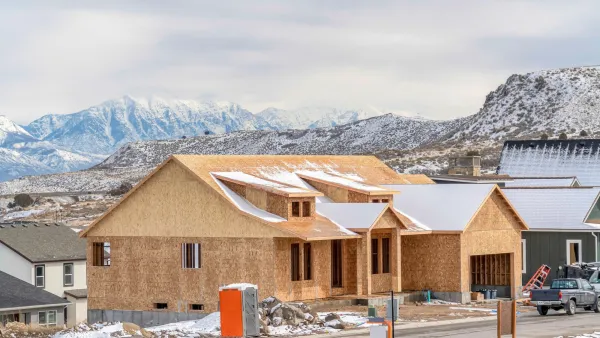
Southern Utah tackles housing crisis with smaller homes, career support for construction workers
St. George and other communities are feeling the strain of a rapidly growing population.
Americans are Fleeing Blue States, Even When Politics Misalign. The Culprit? Housing Affordability.
Will the blue state starter home ever return?
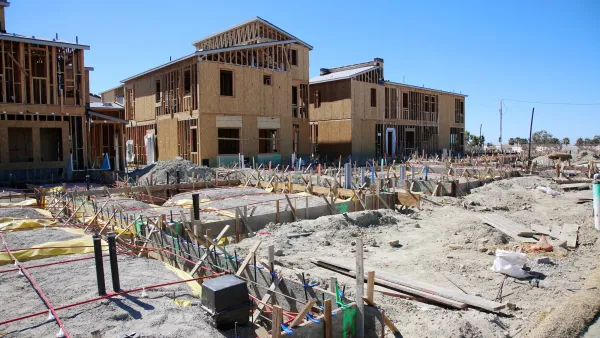
Less than 6% of California cities are building enough housing for very low-income households
Only five jurisdictions are on track to meet their housing goals for all income brackets.

Planetizen Federal Action Tracker
A weekly monitor of how Trump’s orders and actions are impacting planners and planning in America.

California plans to bury El Niño’s downpour
If the state plays its cards right, it may be able to store a billion acre-feet of El Niño’s water in aquifers.

Desperate measures: Advocates weigh draining Lake Powell to fill Colorado River
Draining the reservoir could reduce evaporation losses by a couple hundred thousand acre-feet.

Mamdani’s pied-à-terre tax survives legal challenge
A panel of judges found that the plaintiffs failed to demonstrate injury as a result of New York City's implementation of the tax.

Eastern Nebraska is running out of electricity
Data centers and electrification are straining eastern Nebraska’s grid, throttling economic development.

Seattle passes record-breaking transit services expansion
Proposition 1 will double the city’s transit tax to add 95,000 more bus trips and preserve 180,000 bus trips annually.

FREE Course: Walkable City 1: Why Walkability?
After describing his path towards focusing on walkability as the essence of good planning, Jeff Speck marches through his five principal reasons for making more walkable places.
Reinventing Malls: Planning Alchemy—Turning Gray Fields Into Gold
The course focuses on the opportunities and imperatives that shape reinvention of mall sites.

City of Rosemead
Rutgers University, Edward J. Bloustein School of Planning and Public Policy
One Hundred Miles
Hunter College, City University of New York (CUNY)
The Architects Foundation
University of Cincinnati Online
City of Cambridge
Montrose County
The Pocatello Development Authority