Crashes that occur in parking lots, driveways, and other non-roadway locations kill a significant number of Americans — including dozens of children — each year.


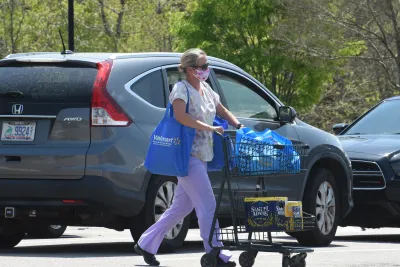
Although transportation professionals and advocates tend to focus on the high number of roadway deaths that occur on U.S. streets and highways every year, a significant number of deaths and serious injuries also occur in what the National Highway Traffic Safety Administration calls "non-traffic" or "non-roadway" locations, such as parking lots and driveways.
As Kiran Menon explains in Jalopnik, data on parking lot deaths is hard to come by because, unlike roadway deaths, there is no government mandate to count them. The last time the NHTSA addressed the issue, a 2024 report noted that an estimated 3,990 people died and 64,838 were injured in non-traffic car crashes in 2021 alone.
Menon notes that the primary culprit for these crashes is distraction, but that modern car designs also have thicker pillars — meaning larger blind spots — for the protection of passengers. "Although all-around parking sensors, cameras, and crash-avoidance systems are available to mitigate blind spot issues to some extent, the false sense of security that often comes with driving slowly through a parking lot can still lead to incidents, even when those failsafes are in place."
Drivers in parking lots are also less likely to obey right-of-way rules and exercise less caution around pedestrians. "Improperly maintained lots with unclear signs, pavement markings, and insufficient lighting can also lead to mishaps."
FULL STORY: Why So Many Accidents Happen In Parking Lots

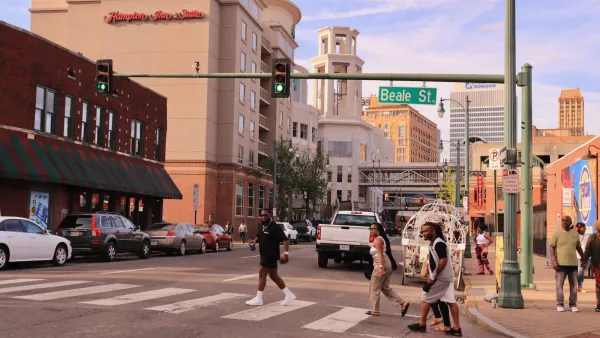
Memphis is the nation's most dangerous city for pedestrians
Memphis had the highest rate of traffic deaths for people walking in the US for two years in a row.
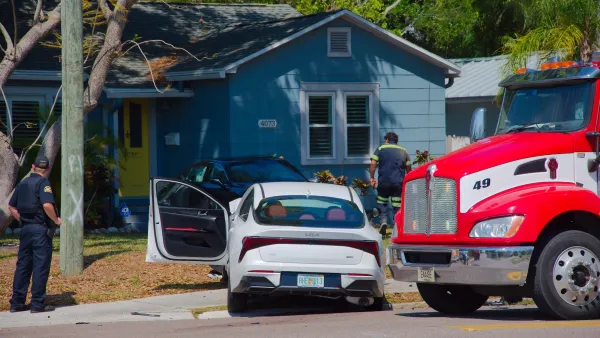
Federal road safety plan focuses on enforcement, driver behavior
A new initiative from the NHTSA calls for the increased use of tech to combat risky driving.
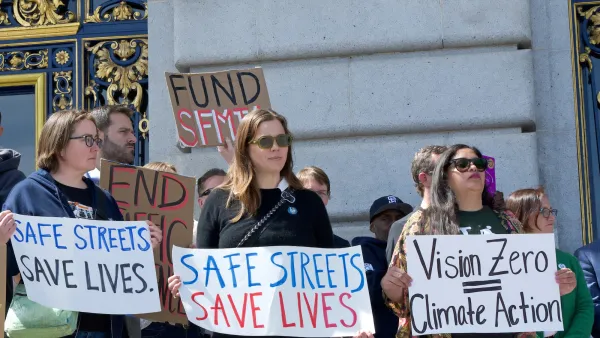
San Francisco Cut Traffic Deaths Almost in Half in 2025
The city credits its Vision Zero strategy and new traffic cameras for reducing the number of deaths and serious injuries on its roads.

Planetizen Federal Action Tracker
A weekly monitor of how Trump’s orders and actions are impacting planners and planning in America.

The state-sanctioned urbicide of Austin
People don’t kill cities. Freeways do.

US to reduce Colorado River water deliveries to Mexico
A new Colorado Treaty amendment reduces Mexico’s Colorado River water allocation by 250,000 acre feet.

5 New England states march closer to 800 megawatt wind energy project
Securing federal approval for the project may be complicated under the Trump administration, which has historically been hostile towards domestic wind power.

Baltimore to break ground on $50 million Transit Priority Project
The project will bring faster bus trips, safer streets and better bike connections to Baltimore.

Airbnb launches $250 million 'last-dollar financing' housing accelerator, makes first investment in Austin
The company will put $6.4 million towards affordable housing development in Texas’ capital.

FREE Course: Walkable City 1: Why Walkability?
After describing his path towards focusing on walkability as the essence of good planning, Jeff Speck marches through his five principal reasons for making more walkable places.
Reinventing Malls: Planning Alchemy—Turning Gray Fields Into Gold
The course focuses on the opportunities and imperatives that shape reinvention of mall sites.

Eagle County Government
Harvard University Graduate School of Design
Nashville Planning Department
The Architects Foundation
University of Cincinnati Online
The Pocatello Development Authority
The Urban Renewal Agency of the City of Pocatello
Journal of the American Planning Association