The move comes on the heels of the state's 2023 building code reform to allow single-stair apartments.


Slender, light-filled buildings might soon be a feature of the Washington state skyline thanks to House Bill 2228, which reforms the state's building code to allow "scissor stairs" in apartment buildings — a first in the nation.
The Sightline Institute explains, "Scissor stairs are a design feature common in other countries but rare in most US cities. They help save more of a building’s interior square footage for homes, while still providing two fire-safe staircases for residents and emergency responders. What’s more, scissor stairs make it possible to design for more light and cross-breeze in every apartment, plus accommodate narrow or oddly shaped lots for more infill opportunities."
Scissor stairs comprise two interlocking stairways with two separate exits, enclosed and separated by fire-resistance rated walls, and help buildings fit onto smaller lots.
Sightline's report details — and visually illustrates — exactly how scissor stairs work to simultaneously save floor space and maintain fire safety measures. Check it out at the link below.
FULL STORY: Washington Passes First Statewide Scissor Stair Reform

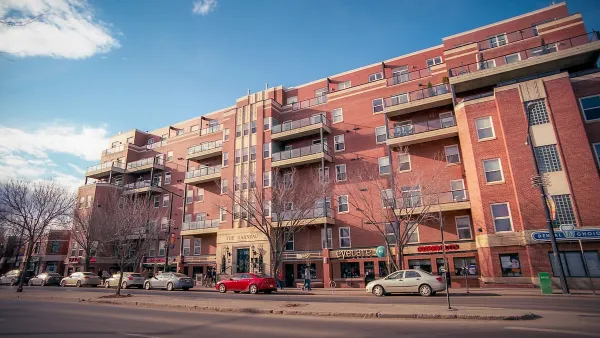
Even Edmonton Wants Single Staircase Buildings
Canada's second most affordable major city joins those angling to nix the requirement for two staircases in multi-family buildings.
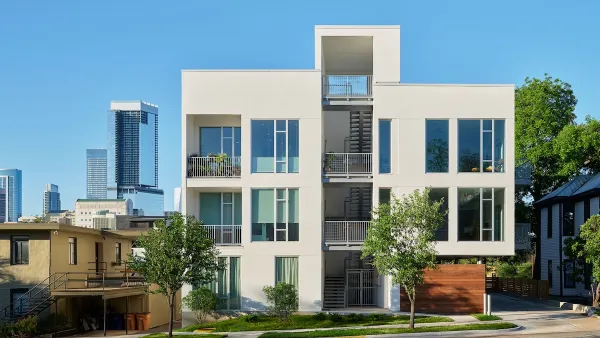
Austin's First Single Stair Apartment Building is Officially Underway
Eliminating the requirement for two staircases in multi-story residential buildings lets developers use smaller lots and more flexible designs to create denser housing.

Study: Single-Staircase Buildings Pose No Additional Risks
Zoning codes have long prohibited single-stair residential buildings due to safety concerns, but changing that could lower the cost of construction and allow for more flexible housing designs.

Planetizen Federal Action Tracker
A weekly monitor of how Trump’s orders and actions are impacting planners and planning in America.

The state-sanctioned urbicide of Austin
People don’t kill cities. Freeways do.

US to reduce Colorado River water deliveries to Mexico
A new Colorado Treaty amendment reduces Mexico’s Colorado River water allocation by 250,000 acre feet.

5 New England states march closer to 800 megawatt wind energy project
Securing federal approval for the project may be complicated under the Trump administration, which has historically been hostile towards domestic wind power.

Baltimore to break ground on $50 million Transit Priority Project
The project will bring faster bus trips, safer streets and better bike connections to Baltimore.

Airbnb launches $250 million 'last-dollar financing' housing accelerator, makes first investment in Austin
The company will put $6.4 million towards affordable housing development in Texas’ capital.

FREE Course: Walkable City 1: Why Walkability?
After describing his path towards focusing on walkability as the essence of good planning, Jeff Speck marches through his five principal reasons for making more walkable places.
Reinventing Malls: Planning Alchemy—Turning Gray Fields Into Gold
The course focuses on the opportunities and imperatives that shape reinvention of mall sites.

Eagle County Government
Harvard University Graduate School of Design
Nashville Planning Department
The Architects Foundation
University of Cincinnati Online
The Pocatello Development Authority
The Urban Renewal Agency of the City of Pocatello
Journal of the American Planning Association