Insurance Institute for Highway Safety data shows that phone usage while driving increases 12% for every 5 mph drivers go over the speed limit.


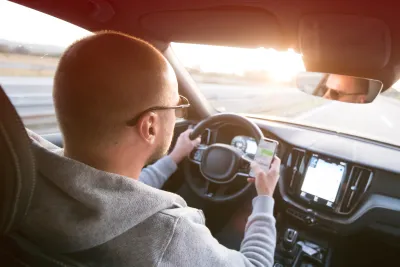
A new study by the Insurance Institute for Highway Safety shows alarming results: that the drivers who speed more are also more likely to be using their phones while driving.
“Until now, safety experts believed drivers used their cellphones most at slower speeds,” Carrier Management reported IIHS President David Harkey saying. “But data from insurance companies’ safe-driving apps show that, in free-flowing traffic, the opposite is true.”
The nationwide analysis showed that excluding time stopped, in traffic, or on neighborhood streets, the more drivers exceeded the speed limit, the more they handled their phones — an increase of about 12% for every 5 mph drivers went over the speed limit.
Even more alarming, Carrier Management reports, is that the cell phone handling behavior increased substantially more on roads with higher speed limits.
The study cites several potential factors influencing the behavior, from correlations in risk-taking behaviors to stress.
“Speeding and distracted driving together are especially dangerous,” Harkey said. “This research shows the risk is greater than we once thought, but it also points to an opportunity to address both problems at the same time.”
Read the full story below.
FULL STORY: Speeding Drivers On Cell Phones More: IIHS Study

Traffic deaths rise by 15% on major album release days
Enjoy those new tracks, but don't forget to keep your eyes on the road.
StreetVision tool pinpoints likely crash sites using mobile phone data
The tool can help cities quickly identify high-risk intersections and corridors and make an evidence-based case for safety interventions.
USDOT Launches Unfunded 'SAFE ROADS' Program
The program targets “distractions” and “political messages or artwork,” and paves the way for autonomous vehicles.

Planetizen Federal Action Tracker
A weekly monitor of how Trump’s orders and actions are impacting planners and planning in America.

The state-sanctioned urbicide of Austin
People don’t kill cities. Freeways do.

US to reduce Colorado River water deliveries to Mexico
A new Colorado Treaty amendment reduces Mexico’s Colorado River water allocation by 250,000 acre feet.

5 New England states march closer to 800 megawatt wind energy project
Securing federal approval for the project may be complicated under the Trump administration, which has historically been hostile towards domestic wind power.

Baltimore to break ground on $50 million Transit Priority Project
The project will bring faster bus trips, safer streets and better bike connections to Baltimore.

Airbnb launches $250 million 'last-dollar financing' housing accelerator, makes first investment in Austin
The company will put $6.4 million towards affordable housing development in Texas’ capital.

FREE Course: Walkable City 1: Why Walkability?
After describing his path towards focusing on walkability as the essence of good planning, Jeff Speck marches through his five principal reasons for making more walkable places.
Reinventing Malls: Planning Alchemy—Turning Gray Fields Into Gold
The course focuses on the opportunities and imperatives that shape reinvention of mall sites.

Eagle County Government
Harvard University Graduate School of Design
Nashville Planning Department
The Architects Foundation
University of Cincinnati Online
The Pocatello Development Authority
The Urban Renewal Agency of the City of Pocatello
Journal of the American Planning Association