The dam's turbines provide power to Nevada, Arizona and California, including Las Vegas and Los Angeles


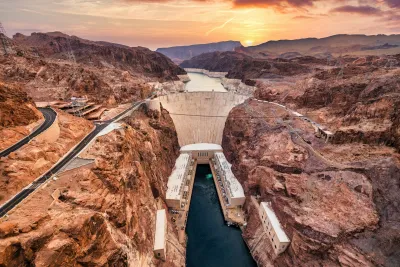
Federal and state officials are scrambling to reduce water outflow from lakes in the Colorado River basin that flow downstream to the Hoover Dam, potentially reducing its power output by up to 40% by autumn, The Independent reports. Io Dodds writes that long term drought has already reduced the river system’s capacity to 36%. That, combined with historically low snowpack and hot spring temperatures, has driven the watershed to the brink.
“Lake Mead reached a record low in 2022, but it's now predicted to fall more than 8 feet lower in the next two years, due in part to the flow reductions at Lake Powell. That will exacerbate an ongoing issue with Hoover Dam's 17 turbines. The lower waterline means that only five of them can currently generate power, and one of them is undergoing repairs. Less power from the dam will force Las Vegas and other areas that depend on it to buy electricity on the open market, often at a higher price,” The Independent reported.
Read the full story below.
Read the full story: Hoover Dam’s power output could drop 40 percent this year under new plans to balance out record low snowpack

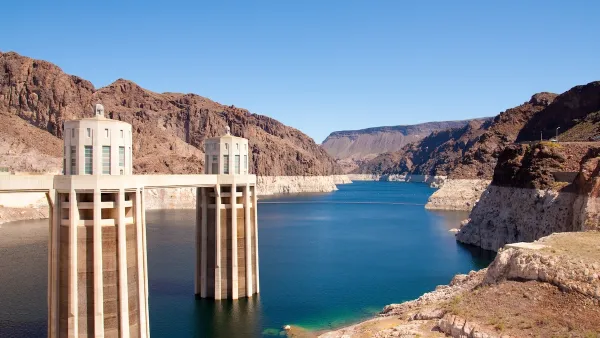
Western States Face New Round of Water Cuts
In Nevada, efforts to conserve water include a ban on ornamental grass and regulations on swimming pool sizes.
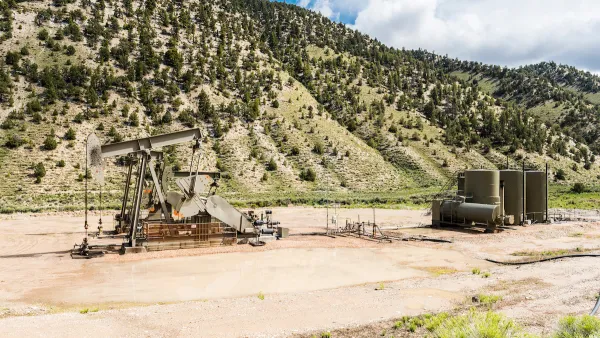
Utah Oil Shale Extraction Dealt Major Setback
The Surface Transportation Board's approval in 2021 of a proposed 85-mile Uinta Basin Railway in Utah that would have enabled increased extraction of the world's largest source of oil shale was partially vacated by a federal appeals court last month.

Planetizen Federal Action Tracker
A weekly monitor of how Trump’s orders and actions are impacting planners and planning in America.

California plans to bury El Niño’s downpour
If the state plays its cards right, it may be able to store a billion acre-feet of El Niño’s water in aquifers.

Chicago breaks ground on $3 billion megadevelopment
The new neighborhood, titled Foundry Park, will one day host 3,700 residences.

Satanic Place Names
From streams and lakes to valleys and canyons, I mapped more than 1,000 places named after the Devil.

California High-Speed Rail Authority CEO resigns after $600,000 scandal
Under Ian Choudri, the authority used taxpayer dollars to fund first class flights and trips to nightclubs.

Want to study the Missouri River? Soon, you may need unanimous approval from 10 states
Legislation would require 10 governors’ permission to study or build projects moving water outside the basin.

FREE Course: Walkable City 1: Why Walkability?
After describing his path towards focusing on walkability as the essence of good planning, Jeff Speck marches through his five principal reasons for making more walkable places.
Reinventing Malls: Planning Alchemy—Turning Gray Fields Into Gold
The course focuses on the opportunities and imperatives that shape reinvention of mall sites.

City of Rosemead
Rutgers University, Edward J. Bloustein School of Planning and Public Policy
One Hundred Miles
Hunter College, City University of New York (CUNY)
The Architects Foundation
University of Cincinnati Online
City of Cambridge
Montrose County
The Pocatello Development Authority