The tax applies to homes worth over $5 million whose owners have other primary residences.


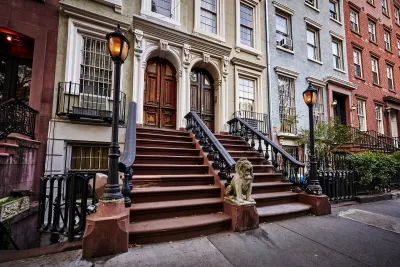
New York Mayor Zohran Mamdani and Governor Kathy Hochul announced a new "pied-à-terre tax" on homes worth more than $5 million if the owners have a primary residence outside New York City, reports Daniel Jonas Roche in The Architect's Newspaper.
The tax is common in global cities where many luxury housing units have absentee owners and sit vacant for much of the year. "The tax is supported by 93 percent of New Yorkers, and opposed by the real estate lobby. City Council Speaker Julie Menin, who consistently disagrees with Mamdani on policy issues, supports the tax and said it is 'a smart, sensible proposal.'"
According to Roche, "After the tax was announced, on April 16, New York City Comptroller Mark Levine shared a new commitment to invest $4 billion in pension fund capital toward affordable housing, as part of a new program called the NYC Housing Investment Initiative."
Read the full story: New York City announces pied-à-terre tax and a $4 billion commitment to affordable housing with pension fund capital

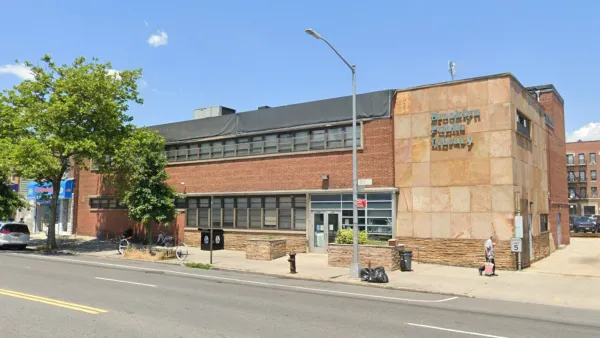
Mayor Mamdani unveils map of 100 public lots that could become housing
The city identified properties that could be available for new housing development.
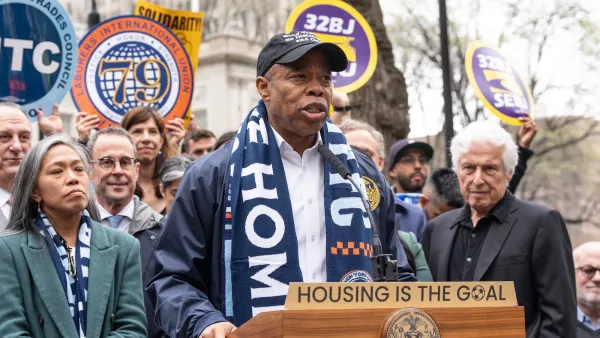
What Actually Got Built Under Eric Adams’ ‘Pro-Housing’ Administration
The outgoing mayor claims credit for hundreds of thousands of new homes. The truth is more complicated.

Upzoning Could Bring 15K New Homes to Queens
A rezoning plan for Long Island City opens up prime waterfront land for residential development, but some critics say new housing could be prone to flooding and should be built farther inland.

Planetizen Federal Action Tracker
A weekly monitor of how Trump’s orders and actions are impacting planners and planning in America.

California plans to bury El Niño’s downpour
If the state plays its cards right, it may be able to store a billion acre-feet of El Niño’s water in aquifers.

Chicago breaks ground on $3 billion megadevelopment
The new neighborhood, titled Foundry Park, will one day host 3,700 residences.

Satanic Place Names
From streams and lakes to valleys and canyons, I mapped more than 1,000 places named after the Devil.

California High-Speed Rail Authority CEO resigns after $600,000 scandal
Under Ian Choudri, the authority used taxpayer dollars to fund first class flights and trips to nightclubs.

Want to study the Missouri River? Soon, you may need unanimous approval from 10 states
Legislation would require 10 governors’ permission to study or build projects moving water outside the basin.

FREE Course: Walkable City 1: Why Walkability?
After describing his path towards focusing on walkability as the essence of good planning, Jeff Speck marches through his five principal reasons for making more walkable places.
Reinventing Malls: Planning Alchemy—Turning Gray Fields Into Gold
The course focuses on the opportunities and imperatives that shape reinvention of mall sites.

City of Rosemead
Rutgers University, Edward J. Bloustein School of Planning and Public Policy
One Hundred Miles
Hunter College, City University of New York (CUNY)
The Architects Foundation
University of Cincinnati Online
City of Cambridge
Montrose County
The Pocatello Development Authority