One journalist's experience with a utility shutoff led them to look more closely at who provides their city’s power. It turns out there's a push for the city to buy out the investor-owned utility and create a public one.


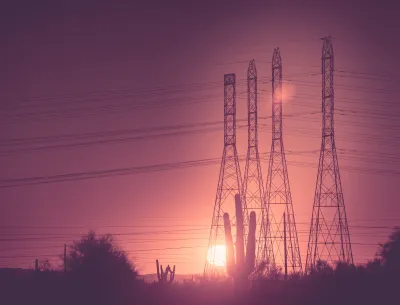
When a journalist’s power was shut off in January 2025 — despite months of pending federal energy assistance — it set them on a path to investigating whether Tucson should own its own electric utility.
With Tucson Electric Power’s 25-year franchise agreement expiring, the city faces a pivotal choice: renew the contract, pursue a multi-billion-dollar buyout, or build a competing public system from scratch. A city-commissioned feasibility study projects residents could save up to $1,077 per year by years 16–20 of public ownership — but legal battles, upfront costs, and complicated data on shutoff rates make this anything but simple.
Shelterforce examines the full picture, from the human cost of utility shutoffs to the national movement toward municipal power.
Read the full story: Will Tucson Take Back Its Power—Literally?

Utilities Spending Less on Energy Efficiency Despite Higher Fuel Prices
A survey of major utilities reveals a link between states with strict efficiency standards and incentive programs and efforts to improve efficiency on the part of utilities.
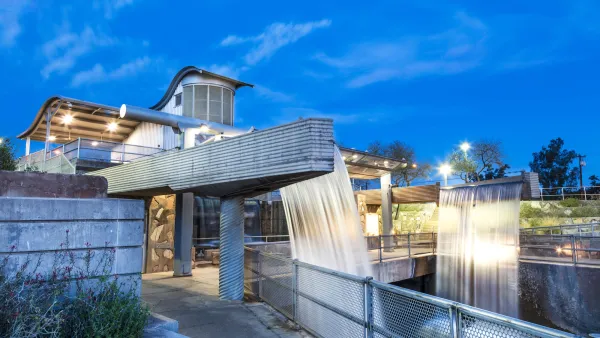
Phoenix and Tucson create emergency water reserve, anticipating Colorado River cuts
The Secure Water Arizona Program will allow participating cities to use a reserve of water or make agreements to buy it from other jurisdictions.
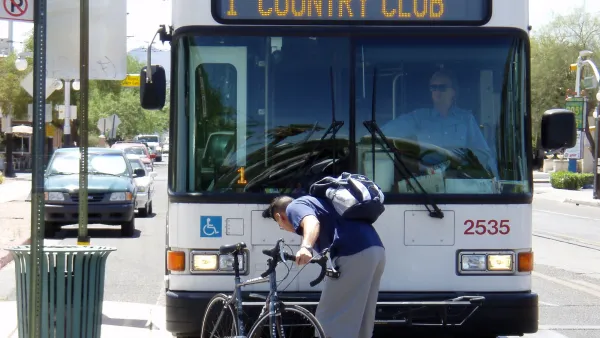
Tucson plans to keep free transit despite budget shortfall
Tucson's buses have been fare-free since March 2020.

Planetizen Federal Action Tracker
A weekly monitor of how Trump’s orders and actions are impacting planners and planning in America.

Amtrak, CN end decades-long dispute with eight-year agreement
The new operating agreement establishes an updated framework for the companies to work together, including processes to resolve disputes.
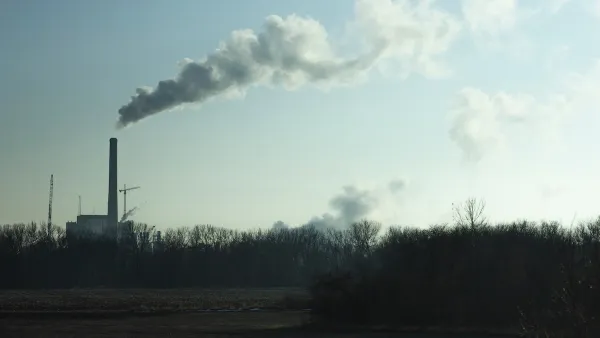
Nation's most wind-powered state turns to coal as data centers increase energy demand
For the first time in decades, Iowa has increased its generation of coal power.

Alabama scores up to $2.5 billion federal loan for largest infrastructure project in state’s history
The Mobile River Bridge and Bayway Project aims to ease congestion at Alabama’s worst bottleneck.

Trump is considering data centers on 6 states' public land — some state officials say they had no idea
If the administration approves the proposed projects, data center and data center-related developments will cover 17,600 acres of public land.

Despite court ruling, Trump is keeping nearly all wind projects in the US on hold
At least 110 wind energy projects have not heard from the government since a federal judge ruled that the Trump administration's freeze on wind turbine clearances was likely illegal.

FREE Course: Walkable City 1: Why Walkability?
After describing his path towards focusing on walkability as the essence of good planning, Jeff Speck marches through his five principal reasons for making more walkable places.
Reinventing Malls: Planning Alchemy—Turning Gray Fields Into Gold
The course focuses on the opportunities and imperatives that shape reinvention of mall sites.

KFH Group Inc.
Greater Baltimore Committee
Eagle County Government
The Architects Foundation
University of Cincinnati Online
The Pocatello Development Authority
The Urban Renewal Agency of the City of Pocatello