The plan requires an agreement with BNSF, which owns the tracks, and Amtrak, which will likely operate the service.


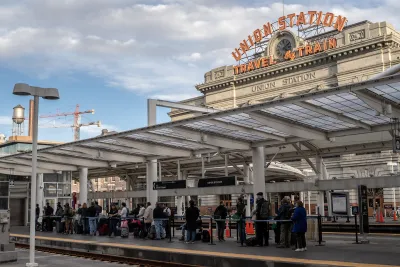
Colorado officials took a major step toward launching passenger train service between Denver and Fort Collins, reports Chase Woodruff in Colorado Newsline.
State officials announced a "joint service" plan between the Regional Transportation District and the Front Range Passenger Rail District on tracks owned by BNSF, a freight company.
According to Woodruff, "RTD and the state, through the Colorado Transportation Investment Office, would split the estimated $333 million in one-time capital costs required to launch the service, as well as the roughly $30 million in annual operating costs." The BNSF-owned rails require infrastructure upgrades and stations that are not currently necessary for freight operations.
Officials will begin negotiations with Amtrak over operating costs later this year, and service could start as early as 2029.
FULL STORY: Colorado reaches agreement with BNSF for Denver-Fort Collins passenger trains

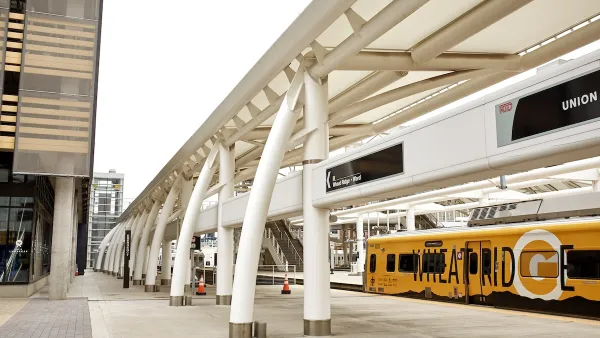
Colorado Officials Plan Denver-Fort Collins Rail Service by 2029
About $40 million a year in state funding from new transportation fees could be the key to getting a short passenger rail line from Denver to Fort Collins up and running in the next four years, Colorado officials said last week.
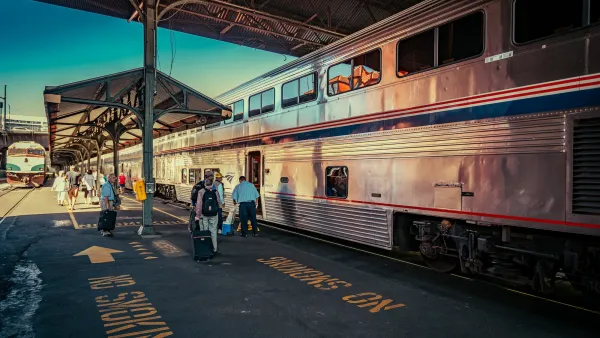
Amtrak unveils proposal to restructure, split into 3 divisions
Agency officials say the new structure would offer more transparency and accountability.
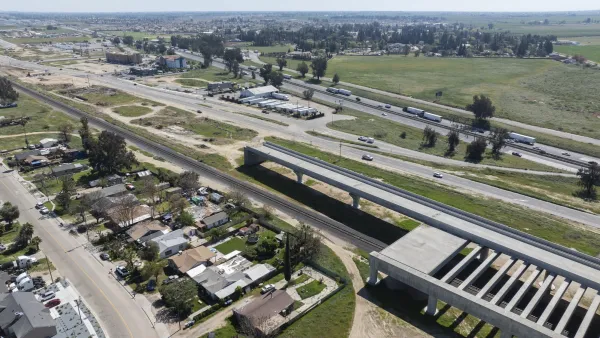
California rail builders sign MOU advancing statewide high-speed network
The agreement aims to create an interconnected high-speed rail network and bring down the cost of construction.

Planetizen Federal Action Tracker
A weekly monitor of how Trump’s orders and actions are impacting planners and planning in America.

The state-sanctioned urbicide of Austin
People don’t kill cities. Freeways do.

US to reduce Colorado River water deliveries to Mexico
A new Colorado Treaty amendment reduces Mexico’s Colorado River water allocation by 250,000 acre feet.

5 New England states march closer to 800 megawatt wind energy project
Securing federal approval for the project may be complicated under the Trump administration, which has historically been hostile towards domestic wind power.

Baltimore to break ground on $50 million Transit Priority Project
The project will bring faster bus trips, safer streets and better bike connections to Baltimore.

Airbnb launches $250 million 'last-dollar financing' housing accelerator, makes first investment in Austin
The company will put $6.4 million towards affordable housing development in Texas’ capital.

FREE Course: Walkable City 1: Why Walkability?
After describing his path towards focusing on walkability as the essence of good planning, Jeff Speck marches through his five principal reasons for making more walkable places.
Reinventing Malls: Planning Alchemy—Turning Gray Fields Into Gold
The course focuses on the opportunities and imperatives that shape reinvention of mall sites.

Eagle County Government
Harvard University Graduate School of Design
Nashville Planning Department
The Architects Foundation
University of Cincinnati Online
The Pocatello Development Authority
The Urban Renewal Agency of the City of Pocatello
Journal of the American Planning Association