There are at least 10 data center proposals in the pipeline in southeast Ohio.


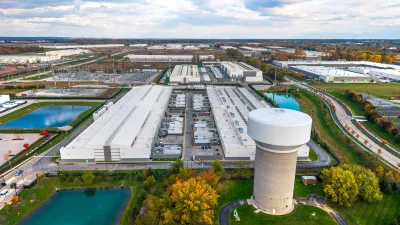
Residents of rural Ohio communities are growing more concerned about the dizzying growth of data centers in their state. As Amanda Pirani explains in WOUB, “There are nine counties in southeast Ohio that have one or more data center proposals. In most cases, information about the potential developments is limited.”
Residents, some of whom are being offered a buyout to sell their homes to data center developers, worry about what their communities will look like and impacts on water and power supplies. Rural Ohio has historically eschewed zoning, but now some are wondering if new restrictions are necessary to rein in the changes. “Without the need for local approvals or permits, the companies behind data center developments may not feel the need to engage with or inform the community of their project.”
Some Ohio counties are passing moratoriums on data centers until they can establish zoning ordinances tailored to their needs.
Read the full story: In Ohio’s rural areas, zoning is sometimes a four letter word. Data centers could change that.

Planning Trends for 2026: States and Cities Take Initiative, Passenger Rail Gains Steam, and the Costs of AI Revealed
With federal funding for everything from transportation projects to housing assistance under threat, city and state governments are poised to take a stronger role in building strong, resilient local economies and public services.

New York State pauses all new data center projects
An executive order from Gov. Hochul prohibits new data center permits until the state finalizes an environmental review of their impacts.

Jersey City bans stand-alone data centers
The city updated its land use ordinance to exclude data centers as an acceptable use in the industrial district.

Planetizen Federal Action Tracker
A weekly monitor of how Trump’s orders and actions are impacting planners and planning in America.

California plans to bury El Niño’s downpour
If the state plays its cards right, it may be able to store a billion acre-feet of El Niño’s water in aquifers.

Desperate measures: Advocates weigh draining Lake Powell to fill Colorado River
Draining the reservoir could reduce evaporation losses by a couple hundred thousand acre-feet.

Chicago Avenue bridge construction delays enrages city leaders
The bridge has been closed since 2025. The city originally aimed to re-open it in December, and now expects to finish construction in 2027.

NYC bus network redesign speeds up Queens buses
Rush routes have seen a 4.6% speed increase after the redesign.

California High-Speed Rail Authority picks trainset manufacturer
The California High-Speed Rail Authority aims to start servicing passengers by 2033.

FREE Course: Walkable City 1: Why Walkability?
After describing his path towards focusing on walkability as the essence of good planning, Jeff Speck marches through his five principal reasons for making more walkable places.
Reinventing Malls: Planning Alchemy—Turning Gray Fields Into Gold
The course focuses on the opportunities and imperatives that shape reinvention of mall sites.

City of Rosemead
Rutgers University, Edward J. Bloustein School of Planning and Public Policy
One Hundred Miles
Hunter College, City University of New York (CUNY)
The Architects Foundation
University of Cincinnati Online
City of Cambridge
Montrose County
The Pocatello Development Authority