A city report criticizes short-term rental regulations as ‘flawed,’ calling for less punitive enforcement.



An investigation from the Portland Ombudsman reveals that the city’s policies and enforcement on short-term rentals are far more punitive than in comparable cities.
As Jennifer Singh explains for KATU, “An investigation was sparked after a short-term rental operator contacted the Ombudsman in late 2024, reporting they had been fined $115,823 for 18 violations of short-term rental rules, despite it being the operator’s first offense.” The resulting report found that only a first-time violation was warranted and voided most of the penalties.
According to the investigation, “the maximum fine for a first-time violator in Portland is at least 27 times higher than any comparable city, and short-term retinal operators are not warned before they are fined or given a chance to come into compliance.”
The report noted that people in minority groups may have been disproportionately affected by the policies due to Portland’s complaint-based enforcement system: 40 percent of operators who were fined at least $10,000 identified as non-white, recent immigrants, or LGBTQ+, but the percentage may be even higher.
The report also calls the city’s rules flawed. “The City’s permit rules appear to be encouraging operators to take out the cheaper of two permit options and then violate the permit’s guest and room limit,” says the report. “The Ombudsman is recommending the bureau issue warnings before fines, reduce the fine cap for first-time violations, apply the new cap retroactively, shift from a complaint-driven enforcement model to a proactive one, and simplify rules.”
FULL STORY: Report finds Portland’s short-term rental rules more punitive than comparable cities


Over 4,000 Maui Short-Term Rentals in Limbo as County Weighs Next Steps
A new bill will phase out roughly 7,000 vacation rentals, but a proposal to exempt as many as 4,500 stalled in the county council.

Spain Fines Airbnb $75 Million After Crackdown on Unlicensed Rentals
The government took action after residents in tourist centers protested, blaming tourist rentals for a growing housing crisis.
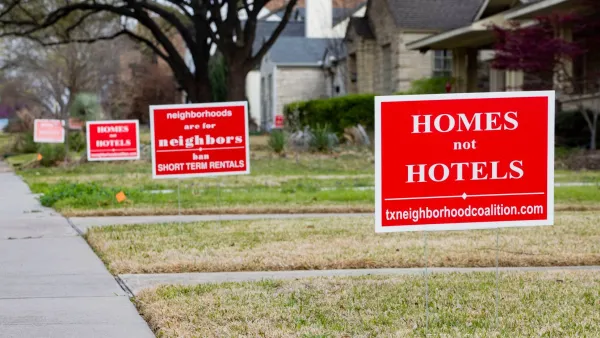
Dallas Pleads with Supreme Court to Allow Short-term Rental Ban During World Cup
The city wants the state’s Supreme Court to reverse a decision by a lower court that prevents the city from enforcing a 2023 ban on short-term rentals.

The state-sanctioned urbicide of Austin
People don’t kill cities. Freeways do.

US to reduce Colorado River water deliveries to Mexico
A new Colorado Treaty amendment reduces Mexico’s Colorado River water allocation by 250,000 acre feet.

New Jersey’s second-largest city bans standalone data centers
Jersey City will continue to allow co-location facilities, such as those meant for research institutions that store their own data.

Amtrak not solely to blame for New Jersey commuter rail's unreliability, report finds
A new study from the Garden State Initiative found that NJ Transit’s budget grew 20% across a 4 year period, but reliability declined significantly over the same period.

EPA erases limits on planet-warming pollution from power plants
Under Monday’s plan, power plants would still have some limits on how much mercury, arsenic and other contaminants they can emit.

Phoenix announces new on-demand transit service, more frequent RAPID buses
Both new services will launch in October, and are part of Phoenix's Project Effective Access Solutions for Easing Congestion.

FREE Course: Walkable City 1: Why Walkability?
After describing his path towards focusing on walkability as the essence of good planning, Jeff Speck marches through his five principal reasons for making more walkable places.
Reinventing Malls: Planning Alchemy—Turning Gray Fields Into Gold
The course focuses on the opportunities and imperatives that shape reinvention of mall sites.

Eagle County Government
Harvard University Graduate School of Design
Nashville Planning Department
The Architects Foundation
University of Cincinnati Online
The Pocatello Development Authority
The Urban Renewal Agency of the City of Pocatello
Journal of the American Planning Association