The Massachusetts law requires cities to rezone appropriate neighborhoods for denser housing.


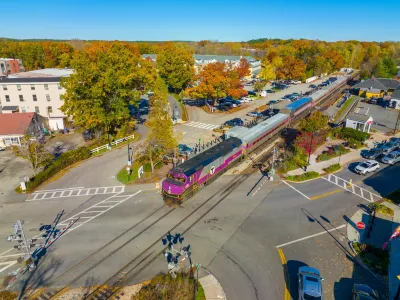
The MBTA Communities Act, passed five years ago to encourage Massachusetts towns to rezone for more housing near transit, is yielding “real but modest benefits,” according to an analysis from Boston Indicators.
As Sam Drysdale explains in the Commonwealth Beacon, “The Boston Indicators report found that nearly 7,000 housing units are now in the permitting, construction or occupancy pipeline across more than 100 projects in 34 eastern Massachusetts communities as a direct result of zoning changes adopted under the 2021 law.”
Report author Amy Dain says the law’s impacts, in some places, have been modest compared to the overwhelming need. “While the MBTA Communities Act was designed in part to steer housing growth toward transit, the report shows that only about 30 percent of the units in the current pipeline are located within a half-mile of train stations.”
According to the report, production is heavily concentrated in a small number of large developments. “Just 19 projects with more than 100 units each account for roughly three-quarters of all MBTA Communities housing in the pipeline.”
FULL STORY: Researchers find MBTA housing law benefits ‘modest’ so far

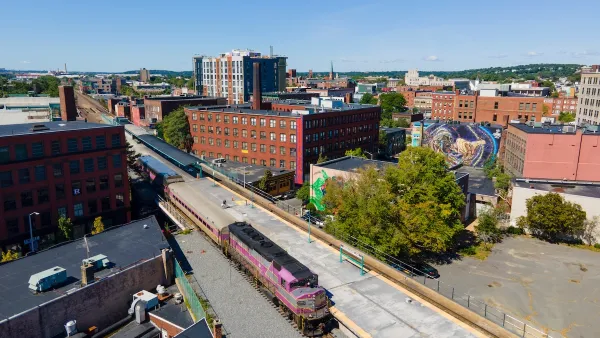
Judge Rules in Favor of Massachusetts TOD Law
The court rejected an argument that the MBTA Communities law, which requires zoning for multifamily housing, is an “unfunded mandate.”
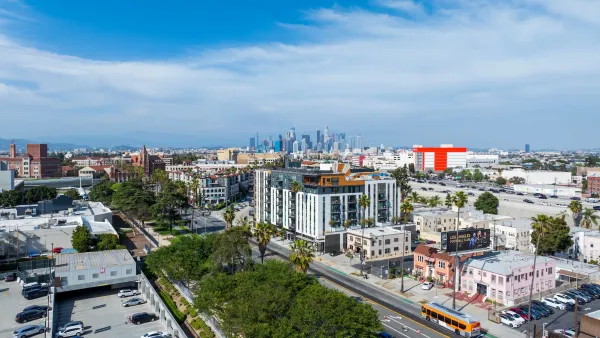
LA delays state housing mandate with 'low-rise ordinance'
The new ordinance allows the city to delay implementing SB 79, a state law requiring more density near transit.
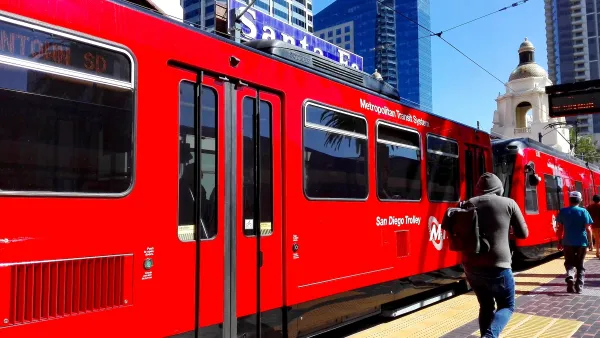
San Diego wants to limit upzoning law to just 16% of transit-adjacent parcels
The city's planning director says some areas are unfit for immediate upzoning due to a lack of resources or hazards such as wildfire risk.

Planetizen Federal Action Tracker
A weekly monitor of how Trump’s orders and actions are impacting planners and planning in America.

The state-sanctioned urbicide of Austin
People don’t kill cities. Freeways do.

US to reduce Colorado River water deliveries to Mexico
A new Colorado Treaty amendment reduces Mexico’s Colorado River water allocation by 250,000 acre feet.

Airbnb launches $250 million 'last-dollar financing' housing accelerator, makes first investment in Austin
The company will put $6.4 million towards affordable housing development in Texas’ capital.

Guerilla urbanists are building DIY bus stop benches in Chicago
A before-and-after of one of the bus stops with a new bench. The new benches are not officially sanctioned or permitted, but the residents who placed them hope they will be the start of a network of DIY benches across the city.

Mamdani overhauls NYC's Vision Zero plan with 100 new policy goals
The overhaul aims to reduce traffic deaths and make streets safer for pedestrians, cyclists and drivers through lower speed limits, new safety infrastructure and more.

FREE Course: Walkable City 1: Why Walkability?
After describing his path towards focusing on walkability as the essence of good planning, Jeff Speck marches through his five principal reasons for making more walkable places.
Reinventing Malls: Planning Alchemy—Turning Gray Fields Into Gold
The course focuses on the opportunities and imperatives that shape reinvention of mall sites.

Eagle County Government
Harvard University Graduate School of Design
Nashville Planning Department
The Architects Foundation
University of Cincinnati Online
The Pocatello Development Authority
The Urban Renewal Agency of the City of Pocatello
Journal of the American Planning Association