The 24-home Stone Canyon development goes beyond California’s building code for fire-resistant individual homes to include neighborhood-level fire resilience standards.


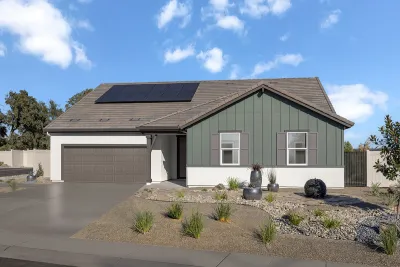
A new 24-lot community 30 miles east of Sacramento is northern California’s first certified fire-resistant neighborhood, according to an article by Tyler Williams in The Builder’s Daily.
Stone Canyon, built by KB Homes in Cameron Park, includes 24 lots and meets the Insurance Institute for Business & Home Safety (IBHS) home- and neighborhood-level wildfire resilience standards. These standards go above and beyond even California’s stringent fire building standards, requiring Class A fire-rated roofs, higher-quality windows and doors, noncombustible gutters, a noncombustible buffer around structures, and ember- and flame-resistant vents.
Unlike California’s state code, the IBHS standards extend beyond individual homes to “incorporate neighborhood-level design, including separating most of the community’s structures by at least 10 feet, using fire-resistant materials like all-metal fencing and reducing combustible fuels throughout the community.”
KB Homes built another 64-home community that meets IBHS standards in Escondido, near San Diego.
FULL STORY: KB Home opens new wildfire-resilient community in NorCal hills


Don't Cement Our Future: Rethinking LA’s Landscape After Fire (and Floods)
A call for regenerative approaches to rebuilding that work with nature rather than against it.
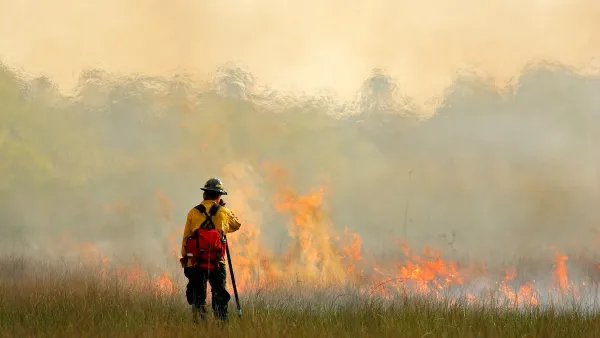
Federal Funding Cuts Spark Concern Among Wildland Firefighters
Federal firefighting forces, already underresourced, are being slashed even as wildfires become a year-round problem.
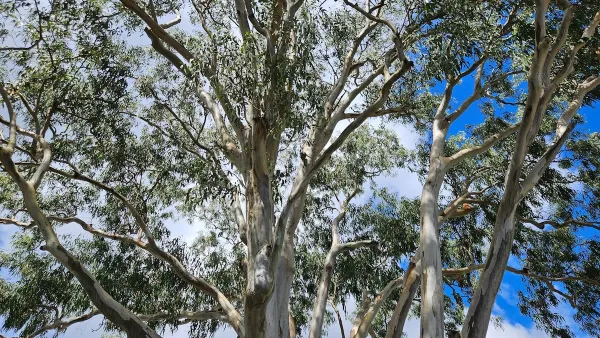
Rethinking Fire-Resistant Landscaping: Which Trees Should We Plant?
Fire experts emphasize the need to replace highly flammable trees like Mexican fan palms and eucalyptus with fire-resistant species such as oak, sycamore, and toyon, while also strengthening home fire defenses to reduce wildfire risks in California.

Planetizen Federal Action Tracker
A weekly monitor of how Trump’s orders and actions are impacting planners and planning in America.

The state-sanctioned urbicide of Austin
People don’t kill cities. Freeways do.

US to reduce Colorado River water deliveries to Mexico
A new Colorado Treaty amendment reduces Mexico’s Colorado River water allocation by 250,000 acre feet.

Baltimore to break ground on $50 million Transit Priority Project
The project will bring faster bus trips, safer streets and better bike connections to Baltimore.

Airbnb launches $250 million 'last-dollar financing' housing accelerator, makes first investment in Austin
The company will put $6.4 million towards affordable housing development in Texas’ capital.

Guerilla urbanists are building DIY bus stop benches in Chicago
A before-and-after of one of the bus stops with a new bench. The new benches are not officially sanctioned or permitted, but the residents who placed them hope they will be the start of a network of DIY benches across the city.

FREE Course: Walkable City 1: Why Walkability?
After describing his path towards focusing on walkability as the essence of good planning, Jeff Speck marches through his five principal reasons for making more walkable places.
Reinventing Malls: Planning Alchemy—Turning Gray Fields Into Gold
The course focuses on the opportunities and imperatives that shape reinvention of mall sites.

Eagle County Government
Harvard University Graduate School of Design
Nashville Planning Department
The Architects Foundation
University of Cincinnati Online
The Pocatello Development Authority
The Urban Renewal Agency of the City of Pocatello
Journal of the American Planning Association