The Trump administration continues its crackdown on undocumented immigrants, claiming it is “rooting out abuse of taxpayer-funded resources.”


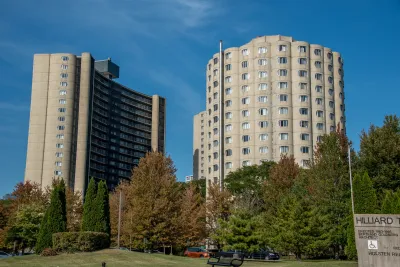
The Department of Housing and Urban Development (HUD) is ordering local housing authorities to ramp up their verification of citizenship status for residents of public housing, reports Chris Cameron for The New York Times.
HUD says an internal audit found “nearly 200,000 tenants who had not been explicitly verified as eligible for housing assistance, as well as ‘nearly 6,000 ineligible non-American tenants.’” Cameron notes that it is unclear whether these residents were ineligible for reasons other than citizenship, such as income limits.
According to Cameron, the agency did not specify what information it is requiring from agencies and did not provide the results of the audit to reporters. “In a letter sent to public housing authorities and property owners last month, HUD reminded them to perform routine checks to verify tenants’ immigration status and income, saying that they “may be subject to sanctions” if they did not perform the checks.”
FULL STORY: HUD demands public housing officials check for immigrants

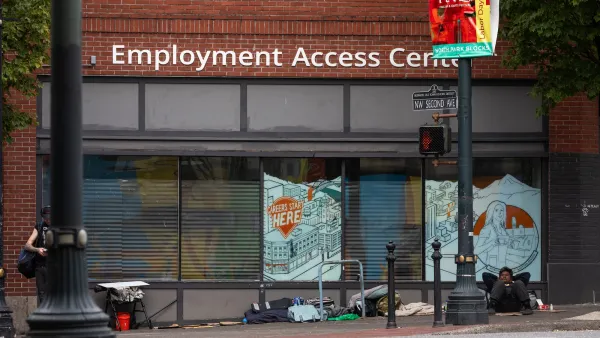
Judge: HUD acted illegally in changing homelessness grant rules
A Rhode Island judge struck down 'partisan' Trump restrictions on Continuum of Care Build grants.

Judge Blocks HUD Changes to Key Homelessness Grant Program
The Continuum of Care Program, the federal government’s biggest pool of funds for housing homeless people, will continue with its original funding plan — pending a final decision from the courts.

Federal cuts to voucher program put 9,000 New Yorkers at risk of homelessness
The Emergency Housing Voucher program is ending years ahead of schedule, forcing housing agencies to find new ways to support roughly 70,000 households nationwide.

The state-sanctioned urbicide of Austin
People don’t kill cities. Freeways do.

US to reduce Colorado River water deliveries to Mexico
A new Colorado Treaty amendment reduces Mexico’s Colorado River water allocation by 250,000 acre feet.

New Jersey’s second-largest city bans standalone data centers
Jersey City will continue to allow co-location facilities, such as those meant for research institutions that store their own data.

Amtrak not solely to blame for New Jersey commuter rail's unreliability, report finds
A new study from the Garden State Initiative found that NJ Transit’s budget grew 20% across a 4 year period, but reliability declined significantly over the same period.

EPA erases limits on planet-warming pollution from power plants
Under Monday’s plan, power plants would still have some limits on how much mercury, arsenic and other contaminants they can emit.

Phoenix announces new on-demand transit service, more frequent RAPID buses
Both new services will launch in October, and are part of Phoenix's Project Effective Access Solutions for Easing Congestion.

FREE Course: Walkable City 1: Why Walkability?
After describing his path towards focusing on walkability as the essence of good planning, Jeff Speck marches through his five principal reasons for making more walkable places.
Reinventing Malls: Planning Alchemy—Turning Gray Fields Into Gold
The course focuses on the opportunities and imperatives that shape reinvention of mall sites.

Eagle County Government
Harvard University Graduate School of Design
Nashville Planning Department
The Architects Foundation
University of Cincinnati Online
The Pocatello Development Authority
The Urban Renewal Agency of the City of Pocatello
Journal of the American Planning Association