The Continuum of Care Program, the federal government’s biggest pool of funds for housing homeless people, will continue with its original funding plan — pending a final decision from the courts.


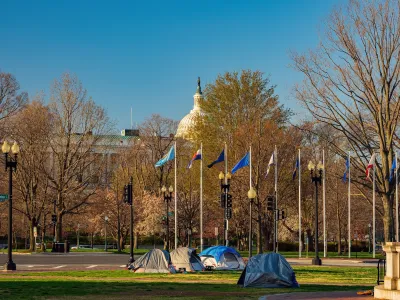
A federal judge has temporarily blocked the U.S. Department of Housing and Urban Development from implementing sweeping changes to the Continuum of Care Program, the nation’s largest source of funding for homelessness services.
The proposed changes would have redirected funding away from permanent supportive housing, increased agency discretion over grants, and imposed requirements that providers say would have encouraged criminalization and discrimination. Legal challenges from states, cities, and national housing advocates argued the changes violated federal law and threatened tens of thousands of people with homelessness. The ruling reinstates the original funding rules for now, but uncertainty remains as litigation continues.
FULL STORY: Judge Blocks HUD’s Effort to Overhaul Federal Funding for Homeless Services

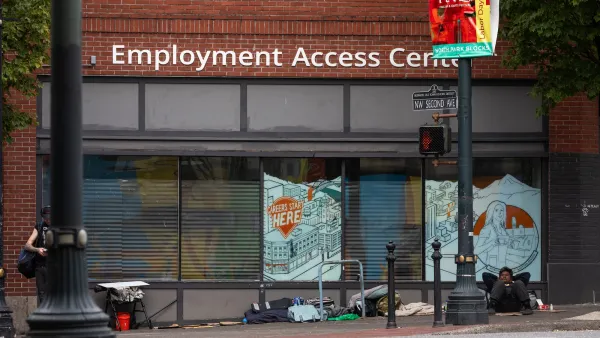
Judge: HUD acted illegally in changing homelessness grant rules
A Rhode Island judge struck down 'partisan' Trump restrictions on Continuum of Care Build grants.

Housing Groups Sue HUD Over “Unconstitutional and Unlawful” Grant Requirements
The lawsuit claims HUD cannot restrict funding based on political alignment that is out of the control of housing agencies.

Federal cuts to voucher program put 9,000 New Yorkers at risk of homelessness
The Emergency Housing Voucher program is ending years ahead of schedule, forcing housing agencies to find new ways to support roughly 70,000 households nationwide.

Planetizen Federal Action Tracker
A weekly monitor of how Trump’s orders and actions are impacting planners and planning in America.

The state-sanctioned urbicide of Austin
People don’t kill cities. Freeways do.

US to reduce Colorado River water deliveries to Mexico
A new Colorado Treaty amendment reduces Mexico’s Colorado River water allocation by 250,000 acre feet.

Mamdani overhauls NYC's Vision Zero plan with 100 new policy goals
The overhaul aims to reduce traffic deaths and make streets safer for pedestrians, cyclists and drivers through lower speed limits, new safety infrastructure and more.

Amtrak not solely to blame for New Jersey commuter rail's unreliability, report finds
A new study from the Garden State Initiative found that NJ Transit’s budget grew 20% across a 4 year period, but reliability declined significantly over the same period.

EPA erases limits on planet-warming pollution from power plants
Under Monday’s plan, power plants would still have some limits on how much mercury, arsenic and other contaminants they can emit.

FREE Course: Walkable City 1: Why Walkability?
After describing his path towards focusing on walkability as the essence of good planning, Jeff Speck marches through his five principal reasons for making more walkable places.
Reinventing Malls: Planning Alchemy—Turning Gray Fields Into Gold
The course focuses on the opportunities and imperatives that shape reinvention of mall sites.

Eagle County Government
Harvard University Graduate School of Design
Nashville Planning Department
The Architects Foundation
University of Cincinnati Online
The Pocatello Development Authority
The Urban Renewal Agency of the City of Pocatello
Journal of the American Planning Association