The self-driving car service has logged over 127 miles in other U.S. markets.


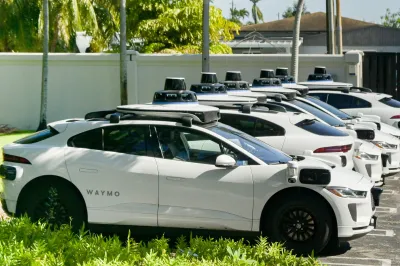
Waymo launched its autonomous taxi service in Miami last week in a service area spanning roughly 60 square miles.
According to a report by Jordan Kissane, Patrick Chalvire, and Kevin Boulandier for WSVN Miami, “Waymo said nearly 10,000 Miami-area residents have already signed up, and new riders will be invited on a rolling basis as the service scales up.”
Waymo has logged over 127 million miles of fully autonomous rides in other U.S. markets to date, but the company has faced recalls and high-profile snafus when its vehicles have blocked emergency operations or stalled during a power blackout.
According to the article, “Waymo said it is working with local organizations to address roadway safety and accessibility needs as the service expands. They add that first responders, senior riders and riders with special needs are the forefront of their push for safety.”
Read the full story: Waymo opens fully autonomous ride-hailing service to public in Miami

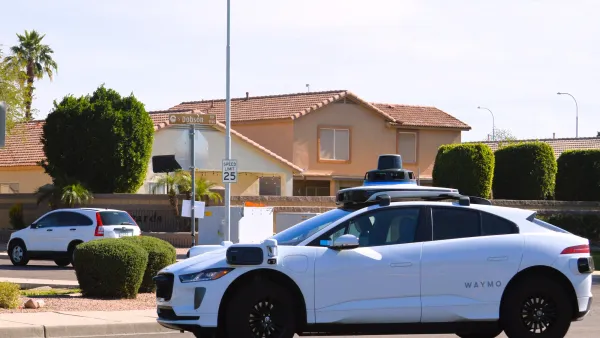
Uber and Waymo part ways in Phoenix
The companies ended a three-year pilot program, with Waymo saying it plans to keep its Phoenix robotaxi fleet available through its own app.
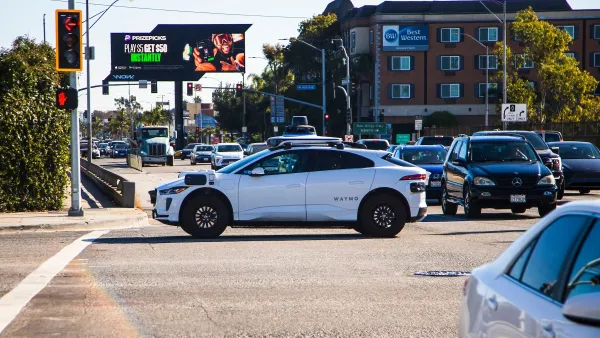
MIT study confirms robotaxis don't reduce traffic
Waymo data reveals that the cars spend close to half of their time 'deadheading' — driving around with no passengers.

Waymo's troubles with emergency vehicles are getting worse
In one case, first responders waited 53 minutes to reach a Waymo support representative during an emergency.

Planetizen Federal Action Tracker
A weekly monitor of how Trump’s orders and actions are impacting planners and planning in America.

‘Going backwards:’ Baltimore mayor, students rally against state's transit funding plan
Maryland's proposed six-year plan provides no funding for Baltimore’s BMORE bus program and reduces its road maintenance funding.

Detroit to transform waterfront with $2.2 billion investment
Developers will convert about 18 acres of unused parking lot space into civic spaces.

HUD modernizes 50-year-old manufactured housing framework
The Next Generation Manufactured Housing Action Plan establishes new energy-efficiency standards for manufactured homes, and new guidelines for anchoring them.

New CA housing laws tear down development red tape
Recently-signed legislation makes building starter homes and ADUs cheaper and faster in California.

Metrolink finishes first expansion in 20 years
The transit agency is now one of very few in the United States to connect two major airports.

FREE Course: Walkable City 1: Why Walkability?
After describing his path towards focusing on walkability as the essence of good planning, Jeff Speck marches through his five principal reasons for making more walkable places.
Reinventing Malls: Planning Alchemy—Turning Gray Fields Into Gold
The course focuses on the opportunities and imperatives that shape reinvention of mall sites.

One Hundred Miles
County of Mendocino
planning NEXT
The Architects Foundation
University of Cincinnati Online
Montrose County
Northern Illinois Transit Authority (NITA)
The Pocatello Development Authority