Three events likely to occur in the first 90 days of the year will have major impacts on U.S. train travel.


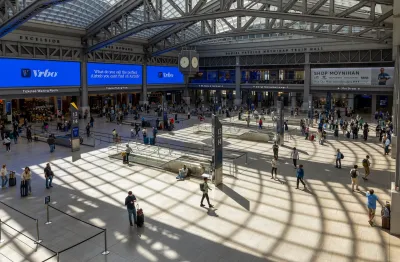
According to a piece by Jim Mathews in Streetsblog USA, “decisions being made in the first ninety days of 2026 in three different areas really could change everything we know about passenger rail in America.”
The first of these is a proposed mega-merger between Union Pacific and Norfolk Southern, which together host 25 of Amtrak’s 44 state-supported and long-distance routes. “The harsh truth is that if you care about Amtrak trains running on time, going where you want to go, and adding the service that you need, a combined UP-NS will effectively have veto power over all of that.”
A potential government shutdown could delay permitting for rail projects, driving up the cost of building. “Even a couple of weeks’ delay could ripple through and lose passenger-rail another year of important progress.”
“The third area for advocates to watch, of course, is the work to replace the 2021 Infrastructure Investment and Jobs Act.” If Congress manages to pass a five-year surface transportation bill, its contents could dramatically shape investment — or lack thereof — in rail and transit.
FULL STORY: Passenger Rail Is Headed for a Reckoning — and the First 90 Days of 2026 Will Decide It

Why are America's trains so slow?
A brief historical inquiry.
Who owns US railroad tracks?
Nearly three-quarters of Amtrak's trains operate on tracks owned by private companies. What does this mean for U.S. passenger rail?
Opinion: Prioritize Amtrak, but Don’t Demonize Freight
A proposed bill would tighten enforcement of a 1973 law that gives passenger trains priority over freight shipments.

The state-sanctioned urbicide of Austin
People don’t kill cities. Freeways do.

US to reduce Colorado River water deliveries to Mexico
A new Colorado Treaty amendment reduces Mexico’s Colorado River water allocation by 250,000 acre feet.

New Jersey’s second-largest city bans standalone data centers
Jersey City will continue to allow co-location facilities, such as those meant for research institutions that store their own data.

Amtrak not solely to blame for New Jersey commuter rail's unreliability, report finds
A new study from the Garden State Initiative found that NJ Transit’s budget grew 20% across a 4 year period, but reliability declined significantly over the same period.

EPA erases limits on planet-warming pollution from power plants
Under Monday’s plan, power plants would still have some limits on how much mercury, arsenic and other contaminants they can emit.

Phoenix announces new on-demand transit service, more frequent RAPID buses
Both new services will launch in October, and are part of Phoenix's Project Effective Access Solutions for Easing Congestion.

FREE Course: Walkable City 1: Why Walkability?
After describing his path towards focusing on walkability as the essence of good planning, Jeff Speck marches through his five principal reasons for making more walkable places.
Reinventing Malls: Planning Alchemy—Turning Gray Fields Into Gold
The course focuses on the opportunities and imperatives that shape reinvention of mall sites.

Eagle County Government
Harvard University Graduate School of Design
Nashville Planning Department
The Architects Foundation
University of Cincinnati Online
The Pocatello Development Authority
The Urban Renewal Agency of the City of Pocatello
Journal of the American Planning Association