Massachusetts municipalities have until December 31 to adjust their zoning codes or face the potential loss of state funding.


The December 31 deadline for 177 Massachusetts cities and towns to update their zoning codes to allow more density near transit is approaching, reports Tréa Lavery in Mass Live.
The municipalities have until the end of the year to comply with the 2021 MBTA Communities Act, which requires cities to “have at least one zoning district where multifamily housing is allowed by right.” As of last week, over 90 percent of the cities and towns have been certified as compliant or conditionally compliant.
While some cities oppose the law, others have embraced it. “According to EOHLC, at least 6,000 homes are in development or under construction in zoning districts that were created under the MBTA Communities law.”
After January 1, the state will need to decide how to deal with noncompliant towns, which could lose state funding. “A spokesperson for the Executive Office of Housing and Livable Communities said the office is working with noncompliant towns to help them reach compliance.”
Read the full story: Deadline to reshape Mass. housing is almost here. Map shows where towns stand

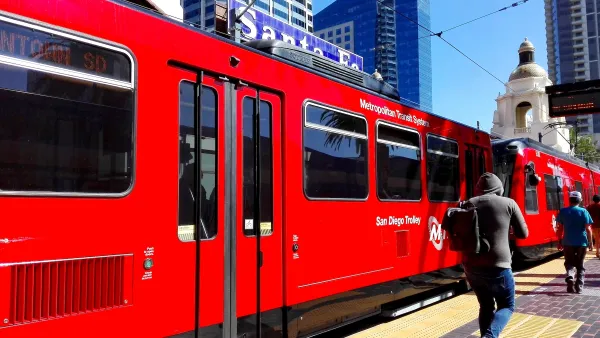
San Diego wants to limit upzoning law to just 16% of transit-adjacent parcels
The city's planning director says some areas are unfit for immediate upzoning due to a lack of resources or hazards such as wildfire risk.
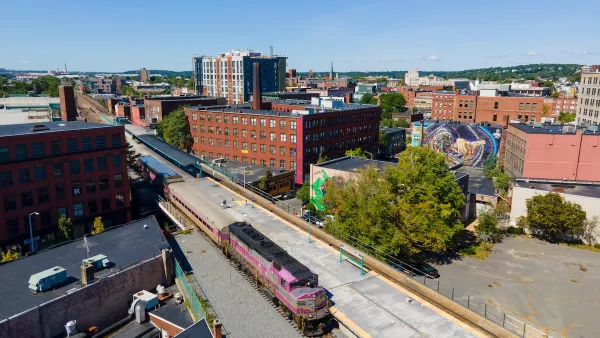
Judge Rules in Favor of Massachusetts TOD Law
The court rejected an argument that the MBTA Communities law, which requires zoning for multifamily housing, is an “unfunded mandate.”

California Bill Aims to Boost TOD
A bill proposed by Sen. Scott Wiener would exempt transit agencies from zoning rules near ‘high-quality’ transit stops and allow denser transit-oriented development.

Planetizen Federal Action Tracker
A weekly monitor of how Trump’s orders and actions are impacting planners and planning in America.

California plans to bury El Niño’s downpour
If the state plays its cards right, it may be able to store a billion acre-feet of El Niño’s water in aquifers.

Chicago breaks ground on $3 billion megadevelopment
The new neighborhood, titled Foundry Park, will one day host 3,700 residences.

Satanic Place Names
From streams and lakes to valleys and canyons, I mapped more than 1,000 places named after the Devil.

California High-Speed Rail Authority CEO resigns after $600,000 scandal
Under Ian Choudri, the authority used taxpayer dollars to fund first class flights and trips to nightclubs.

Want to study the Missouri River? Soon, you may need unanimous approval from 10 states
Legislation would require 10 governors’ permission to study or build projects moving water outside the basin.

FREE Course: Walkable City 1: Why Walkability?
After describing his path towards focusing on walkability as the essence of good planning, Jeff Speck marches through his five principal reasons for making more walkable places.
Reinventing Malls: Planning Alchemy—Turning Gray Fields Into Gold
The course focuses on the opportunities and imperatives that shape reinvention of mall sites.

City of Rosemead
Rutgers University, Edward J. Bloustein School of Planning and Public Policy
One Hundred Miles
Hunter College, City University of New York (CUNY)
The Architects Foundation
University of Cincinnati Online
City of Cambridge
Montrose County
The Pocatello Development Authority