Boston could join other major cities in eliminating outdated parking regulations that drive up the cost of housing.


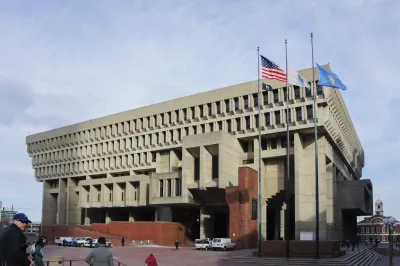
The Boston City Council held a meeting to discuss eliminating minimum parking requirements in an effort to more closely align development with modern parking needs and reduce the cost of building new housing.
As Christian MilNeil explains in Streetsblog Mass, Boston’s outdated parking rules mean the city approves thousands of largely unneeded new parking spots every year. “Frequently, the number of new parking spaces exceeds the number of new apartments and homes that developers build within the city limits – an imbalance of investment and real estate that exacerbates the city's housing shortage and congestion problems.”
According to MilNeil, “In 2023 alone, Boston's planning agency approved 69 large development proposals that would build enough parking to store up to 8,053 more cars into the city – enough to fill all eight lanes of the Southeast Expressway (I-93) with bumper-to-bumper traffic from the Neponset River to downtown Boston.”
An article in Boston Business Journal notes that the city reduced parking requirements for affordable housing in 2021. At Tuesday’s meeting, the council heard public testimony on the issue, though a vote is “not imminent.”
Read the full story: Boston City Council Hosts Hearing Tuesday On City’s Dated Parking Rules

Chicago Eliminates Parking Minimums Near Transit
Changes to a city ordinance make it easier to build ‘by-right’ car-free developments near train stations and pave the way for more affordable housing.
Colorado Bill Would End Minimum Parking Requirements
Supporters of the bill say eliminating parking mandates would make housing more affordable and reduce carbon emissions.
Montgomery County Moves to Eliminate Parking Mandates
The council unanimously supported a proposal to remove minimum parking requirements near for developments near transit.

Planetizen Federal Action Tracker
A weekly monitor of how Trump’s orders and actions are impacting planners and planning in America.

California plans to bury El Niño’s downpour
If the state plays its cards right, it may be able to store a billion acre-feet of El Niño’s water in aquifers.

Chicago breaks ground on $3 billion megadevelopment
The new neighborhood, titled Foundry Park, will one day host 3,700 residences.

Satanic place names
From streams and lakes to valleys and canyons, I mapped more than 1,000 places named after the Devil.

California High-Speed Rail Authority CEO resigns after $600,000 scandal
Under Ian Choudri, the authority used taxpayer dollars to fund first class flights and trips to nightclubs.

Want to study the Missouri River? Soon, you may need unanimous approval from 10 states
Legislation would require 10 governors’ permission to study or build projects moving water outside the basin.

FREE Course: Walkable City 1: Why Walkability?
After describing his path towards focusing on walkability as the essence of good planning, Jeff Speck marches through his five principal reasons for making more walkable places.
Reinventing Malls: Planning Alchemy—Turning Gray Fields Into Gold
The course focuses on the opportunities and imperatives that shape reinvention of mall sites.

City of Rosemead
Rutgers University, Edward J. Bloustein School of Planning and Public Policy
One Hundred Miles
Hunter College, City University of New York (CUNY)
The Architects Foundation
University of Cincinnati Online
City of Cambridge
Montrose County
The Pocatello Development Authority