A two-year free fare pilot program has reduced driving by 1.8 million miles.


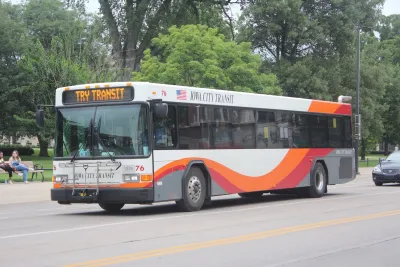
Since Iowa City eliminated transit fares in August 2023, the city has seen an 18 percent growth in bus ridership since 2019, reports Cara Buckley in The New York Times. The city also registered 1.8 million fewer miles driven, amounting to an estimated 24,000 fewer metric tons of carbon dioxide emissions per year. Thanks to the streamlined boarding process, on-time arrivals have also increased by 13 percent.
The City Council voted to begin the two-year fare-free pilot using Covid-19 relief funds. “Darian Nagle-Gamm, the city’s transportation director, said that the unknowns in federal and state funding, along with proposed property-tax changes, meant that the city would most likely have to review the program every year. But there was eagerness for fare-free buses to stay, she said.”
FULL STORY: Iowa City Made Its Buses Free. Traffic Cleared, and So Did the Air.

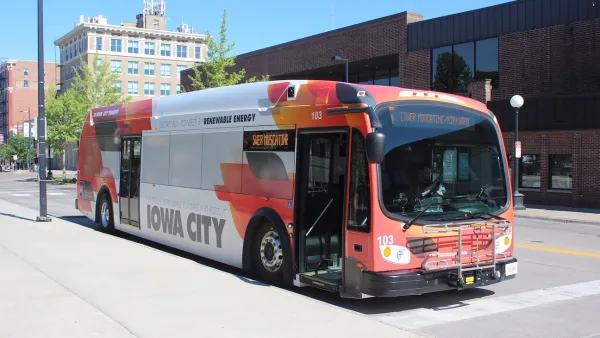
Iowa City's free bus program made ridership spike by 68%. Now, it could go away.
The bus system gained roughly 700,000 new riders since it launched free service in 2023.
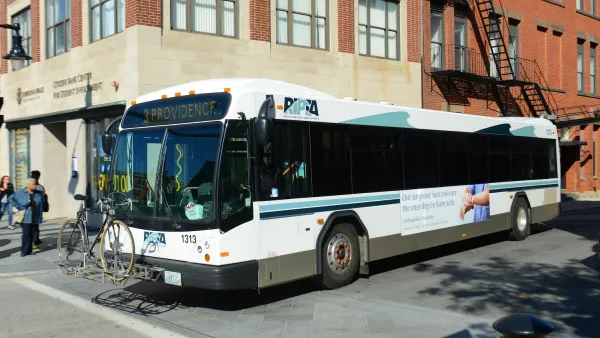
Rhode Island Transit Offers Landlords Free Holiday Transit Passes for Tenants
A pilot program from RIPTA will distribute free monthly passes for December and January.

Albuquerque Remains Committed to Free Transit
Ridership on the city’s transit system has gone up by 20 percent since they eliminated bus fares in 2022.

The state-sanctioned urbicide of Austin
People don’t kill cities. Freeways do.

US to reduce Colorado River water deliveries to Mexico
A new Colorado Treaty amendment reduces Mexico’s Colorado River water allocation by 250,000 acre feet.

New Jersey’s second-largest city bans standalone data centers
Jersey City will continue to allow co-location facilities, such as those meant for research institutions that store their own data.

Amtrak not solely to blame for New Jersey commuter rail's unreliability, report finds
A new study from the Garden State Initiative found that NJ Transit’s budget grew 20% across a 4 year period, but reliability declined significantly over the same period.

EPA erases limits on planet-warming pollution from power plants
Under Monday’s plan, power plants would still have some limits on how much mercury, arsenic and other contaminants they can emit.

Phoenix announces new on-demand transit service, more frequent RAPID buses
Both new services will launch in October, and are part of Phoenix's Project Effective Access Solutions for Easing Congestion.

FREE Course: Walkable City 1: Why Walkability?
After describing his path towards focusing on walkability as the essence of good planning, Jeff Speck marches through his five principal reasons for making more walkable places.
Reinventing Malls: Planning Alchemy—Turning Gray Fields Into Gold
The course focuses on the opportunities and imperatives that shape reinvention of mall sites.


Eagle County Government
Harvard University Graduate School of Design
Nashville Planning Department
The Architects Foundation
University of Cincinnati Online
The Pocatello Development Authority
The Urban Renewal Agency of the City of Pocatello
Journal of the American Planning Association