Scott Doyon unpacks why blending uses in urban design is less about urban/suburban typologies and more about walkable, flexible environments that evolve with community needs. Think neighborhood, not just project.


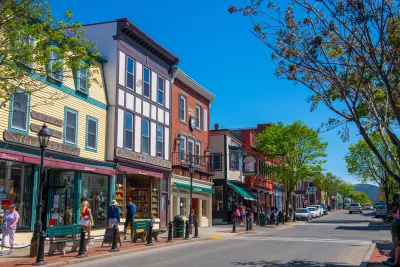
Mixed-use isn’t a building. It’s a pattern. That’s the key message in PlaceMakers’ latest blog post, where Scott Doyon argues that mixed-use should be seen as the DNA of human settlement, not just “shops below, homes above.”
“It’s not a buzzword. It’s the default operating system of human civilization,” he writes.
The piece urges planners and developers to stop thinking of mixed-use as a trendy product and start seeing it as a timeless approach to walkability, flexibility, and everyday life.
As Doyon puts it, “If that feels unfamiliar or threatening, it’s only because our 20th-century deviation lasted longer than the memory of what cities and towns actually are.”
For communities seeking connection over convenience, this is a must-read mindset shift. Starting with the mural pictured below from Atlanta’s BeltLine that "manages, in a single frame, to pack in just about every misunderstanding plaguing 21st-century urbanism."
Read the full story: Mixed-Use: It's not a building type, it's the DNA of human settlement


Planetizen Federal Action Tracker
A weekly monitor of how Trump’s orders and actions are impacting planners and planning in America.

The state-sanctioned urbicide of Austin
People don’t kill cities. Freeways do.

US to reduce Colorado River water deliveries to Mexico
A new Colorado Treaty amendment reduces Mexico’s Colorado River water allocation by 250,000 acre feet.

Nation's most wind-powered state turns to coal as data centers increase energy demand
For the first time in decades, Iowa has increased its generation of coal power.

NYC cools commuters with city's first rain garden above a bus stop
New York City officials say the plants in the rain garden can absorb 16 gallons of rainwater during heavy storms.

Brightline West’s future may rely on $6 billion federal loan
The company has until Nov. 2 to make a $400 million equity investment into its proposed high-speed rail line.

FREE Course: Walkable City 1: Why Walkability?
After describing his path towards focusing on walkability as the essence of good planning, Jeff Speck marches through his five principal reasons for making more walkable places.
Reinventing Malls: Planning Alchemy—Turning Gray Fields Into Gold
The course focuses on the opportunities and imperatives that shape reinvention of mall sites.

Eagle County Government
Harvard University Graduate School of Design
Nashville Planning Department
The Architects Foundation
University of Cincinnati Online
The Pocatello Development Authority
The Urban Renewal Agency of the City of Pocatello
Journal of the American Planning Association