The state’s utility grid operator is scrambling to adjust its planning processes to meet a skyrocketing number of interconnection requests.


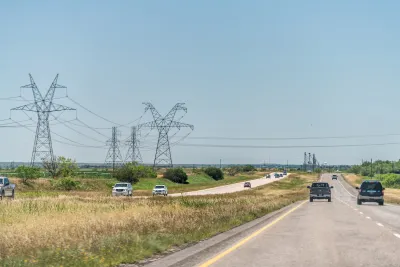
The Electricity Reliability Council of Texas, the state’s grid operator, says the rapid growth of data centers is straining the state’s electricity supply and infrastructure.
As Arcelia Martin reports in an article for The Texas Tribune and Inside Climate News, new factories and commercial facilities created a predictable rise in demand for electric grids. “The grid had to maintain only a minimal transmission capacity buffer to absorb changes while balancing costs to ratepayers.” Now, the volume of demand from data centers is changing that equation, forcing utilities to change their processes to keep the grid reliable.
“In September 2024, ERCOT was tracking 56 gigawatts in large load interconnection requests. Now, that number has almost quadrupled to 205 gigawatts.” Of that, more than 70 percent of requests are from data centers, and 10 percent are from cryptocurrency operations. Although the requests do not necessarily equal true demand, ERCOT has to plan for it to reach peak levels and see demand spike in specific locations rather than being distributed across the state.
ERCOT is trying to address these issues by incentivizing companies to reduce their electric demand particularly during peak hours and install onsite power plants or backup generators, as well as changing its planning procedures by evaluating multiple proposed projects in one study to speed up interconection.
FULL STORY: Explosion of data centers causes planning struggles for Texas power grid

Planning Trends for 2026: States and Cities Take Initiative, Passenger Rail Gains Steam, and the Costs of AI Revealed
With federal funding for everything from transportation projects to housing assistance under threat, city and state governments are poised to take a stronger role in building strong, resilient local economies and public services.

US May Have 100 Times More Blackouts by 2030
Rising demand driven by AI data centers and uncertain energy sources could lead to a surge in power outages by the end of the decade.
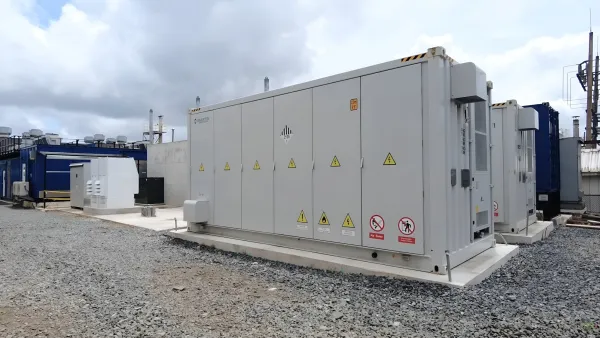
Texas is Counting on Battery Systems to Limit Power Outages This Winter
ERCOT says new battery storage and other systems set in place after 2021’s devastating winter storm will help prevent an energy emergency this winter.

Planetizen Federal Action Tracker
A weekly monitor of how Trump’s orders and actions are impacting planners and planning in America.

The state-sanctioned urbicide of Austin
People don’t kill cities. Freeways do.

US to reduce Colorado River water deliveries to Mexico
A new Colorado Treaty amendment reduces Mexico’s Colorado River water allocation by 250,000 acre feet.

5 New England states march closer to 800 megawatt wind energy project
Securing federal approval for the project may be complicated under the Trump administration, which has historically been hostile towards domestic wind power.

Baltimore to break ground on $50 million Transit Priority Project
The project will bring faster bus trips, safer streets and better bike connections to Baltimore.

Airbnb launches $250 million 'last-dollar financing' housing accelerator, makes first investment in Austin
The company will put $6.4 million towards affordable housing development in Texas’ capital.

FREE Course: Walkable City 1: Why Walkability?
After describing his path towards focusing on walkability as the essence of good planning, Jeff Speck marches through his five principal reasons for making more walkable places.
Reinventing Malls: Planning Alchemy—Turning Gray Fields Into Gold
The course focuses on the opportunities and imperatives that shape reinvention of mall sites.

Eagle County Government
Harvard University Graduate School of Design
Nashville Planning Department
The Architects Foundation
University of Cincinnati Online
The Pocatello Development Authority
The Urban Renewal Agency of the City of Pocatello
Journal of the American Planning Association