Corporate buyers are putting homeownership out of reach for more regular households, forcing more people into renting and raising the cost of homeownership.


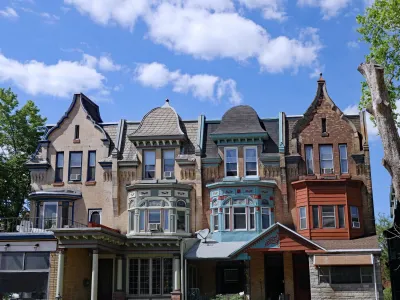
A report from the Reinvestment Fund highlights the growing influence of corporate investors in Philadelphia’s housing market, where roughly one quarter of single-family homes were sold to corporate buyers since 2017, reports Aaron Moselle in The Philadelphia Tribune.
Emily Dowdall, president of policy solutions at the nonprofit, said the data highlights the potential pitfalls of these purchases, which accounted for about a quarter of all single-family home sales. This includes the potential for decreased affordability and “crowding out” first-time and lower-income homebuyers.
According to Moselle, this is the first report to identify corporate investors and detail what they are doing with the properties they buy. “The research, conducted in partnership with Rutgers Law School, found that large and small investors were more likely to have code violations than homeowners. Large corporate investors were also more likely to file for an eviction compared to smaller investors.”
Housing advocates worry this will reduce affordability for prospective homebuyers and renters, driving them out of gentrifying neighborhoods. Corporate landlords also have a lower stake in the community and are less likely to make building improvements or respond to tenant complaints in rental properties.
The report recommends legislation to require more transparency about corporate-owned properties as well as enhanced enforcement of rental licenses and prioritizing individual buyers and nonprofits at sheriff auctions.

Home Prices, Demand on Downward Trajectory
The once-overheated housing market continues to cool as rising interest rates reduce demand.

Zillow's 'iBuying' Algorithms Overpaid For Homes
After investing more than $1 billion in buying homes over the last few years, Zillow has ended its 'iBuying' experiment as anticipated profits fail to materialize.
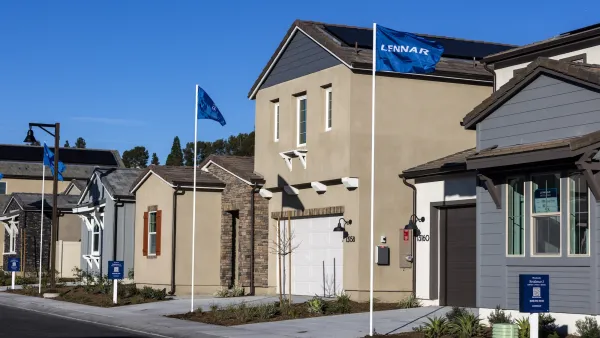
Just 17% of San Diego households can afford the city's $1M+ median home prices
The city is becoming increasingly unaffordable to prospective homebuyers.

Planetizen Federal Action Tracker
A weekly monitor of how Trump’s orders and actions are impacting planners and planning in America.

The state-sanctioned urbicide of Austin
People don’t kill cities. Freeways do.

US to reduce Colorado River water deliveries to Mexico
A new Colorado Treaty amendment reduces Mexico’s Colorado River water allocation by 250,000 acre feet.

LA Metro’s ultimatum: no extra buses for LA28 if federal funding isn’t imminently secured
If Metro does not provide additional buses, LA28 organizers will have to find a new way to manage Olympic traffic. LA28’s budget does not include a line item for transit.

Colorado’s Largest Data Center Could Rise Next to Homes — Without a Public Hearing
The proposed campus would consume 11 times the power of Denver International Airport; as it has across the country, opposition mounts.

5 New England states march closer to 800 megawatt wind energy project
Securing federal approval for the project may be complicated under the Trump administration, which has historically been hostile towards domestic wind power.

FREE Course: Walkable City 1: Why Walkability?
After describing his path towards focusing on walkability as the essence of good planning, Jeff Speck marches through his five principal reasons for making more walkable places.
Reinventing Malls: Planning Alchemy—Turning Gray Fields Into Gold
The course focuses on the opportunities and imperatives that shape reinvention of mall sites.

Eagle County Government
Harvard University Graduate School of Design
Nashville Planning Department
The Architects Foundation
University of Cincinnati Online
The Pocatello Development Authority
The Urban Renewal Agency of the City of Pocatello
Journal of the American Planning Association