The city plans to eliminate multiple blocks of public streets as part of an expansion project that some residents say didn’t take into account local connectivity.


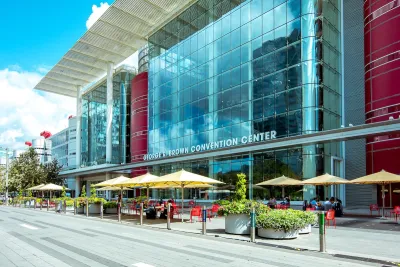
The Houston City Council has approved a plan to close off and “abandon” several city streets as part of the expansion plan for the George R. Brown Convention Center, a move that local residents have criticized as out of step with their needs.
As Faith Bugenhagen explains in the Houston Chronicle, “The street closure, which Houston First officials have stated is necessary to construct a contiguous south-building addition to the convention center, passed with near unanimous approval.” The street, along with portions of others, will be sold to Houston First, the organization that operates the convention center, which says the expansion will bring new jobs and economic development to the neighborhood.
However, community members say the city did not engage in a robust enough public process and that the change will hinder connectivity in the area. “Opponents, including members of a group called People for Polk, urged the city to complete the required appraisals, release a timeline, and plan for a two-way Leeland Street alternative if Polk is closed.”
The city council will take another vote to finalize the sale and formal abandonment of the streets.
FULL STORY: Houston pushes through $2B convention center expansion amid uproar

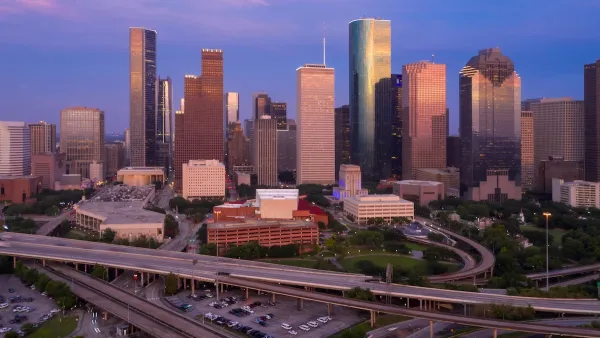
Reimagining the Space Beneath Houston’s Freeways
Opportunities abound for Houston to capitalize on otherwise unused space beneath its wide network of freeways.

How Street Configuration Impacts Equity
With urban pollution and traffic violence disproportionately affecting communities of color, better management of public space and streets could improve equity in cities.
Convention Center Arms Race Heats Up in Texas
Four major cities in Texas are either considering or constructing convention center upgrades.

Planetizen Federal Action Tracker
A weekly monitor of how Trump’s orders and actions are impacting planners and planning in America.

The state-sanctioned urbicide of Austin
People don’t kill cities. Freeways do.

US to reduce Colorado River water deliveries to Mexico
A new Colorado Treaty amendment reduces Mexico’s Colorado River water allocation by 250,000 acre feet.

Amtrak not solely to blame for New Jersey commuter rail's unreliability, report finds
A new study from the Garden State initiative found that NJ Transit’s budget grew 20% across a 4 year period, but reliability declined significantly over the same period.

EPA erases limits on planet-warming pollution from power plants
Under Monday’s plan, power plants would still have some limits on how much mercury, arsenic and other contaminants they can emit.

Phoenix announces new on-demand transit service, more frequent RAPID buses
Both new services will launch in October, and are part of Phoenix's Project Effective Access Solutions for Easing Congestion.

FREE Course: Walkable City 1: Why Walkability?
After describing his path towards focusing on walkability as the essence of good planning, Jeff Speck marches through his five principal reasons for making more walkable places.
Reinventing Malls: Planning Alchemy—Turning Gray Fields Into Gold
The course focuses on the opportunities and imperatives that shape reinvention of mall sites.

Eagle County Government
Harvard University Graduate School of Design
Nashville Planning Department
The Architects Foundation
University of Cincinnati Online
The Pocatello Development Authority
The Urban Renewal Agency of the City of Pocatello
Journal of the American Planning Association