Passengers who harass or assault other riders could face permanent bans from the system per a new Rider Code of Conduct.


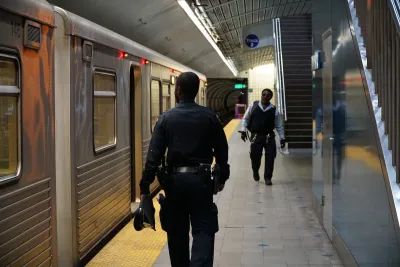
The Maryland Transit Administration (MTA) announced it will begin suspending or banning passengers who violate the agency’s code of conduct by harassing or assaulting other passengers, reports Daniel Zawodny in The Banner.
“The new policy, which goes into effect Oct. 1, comes alongside an updated ‘Rider Code of Conduct’ that formally prohibits many commonsense prohibited behaviors on MTA vehicles and at stations like smoking, stealing and unlawful possession of a firearm.” The code is part of an effort to increase safety on transit.
Agency officials say the goal of the policy is deterrence, not surveillance, and that “The agency is developing a mobile app that riders can use to discreetly report prohibited behavior to MTA police.”
According to the agency, the rate of serious incidents on MTA vehicles has fallen by roughly 56 percent over the past decade, with 159 such incidents reported last year.
Read the full story: Violators of MTA code of conduct soon could be banned from the transit system, agency says
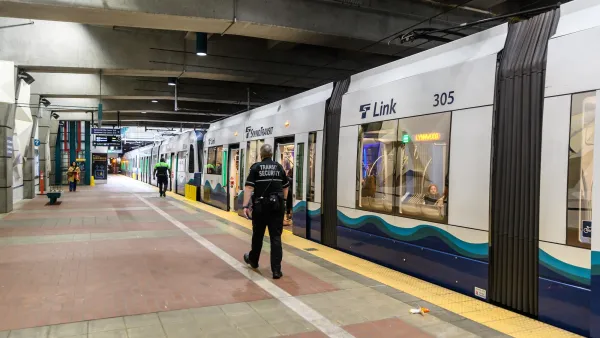
Perception vs. reality: NYC transit crime declined by 14% since 2019
In spite of popular perceptions, crime on many US transit systems is steadily dropping.
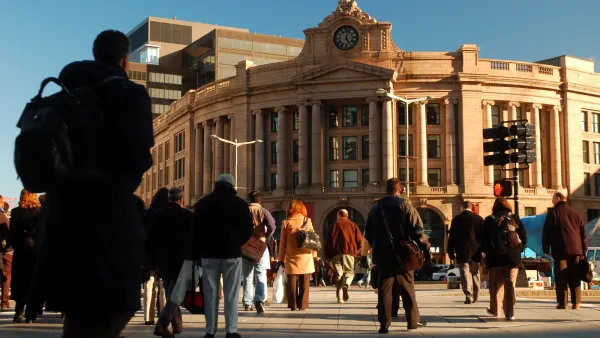
MBTA threatens to use eminent domain to pedestrianize Boston streets during World Cup
Boston city hall has been unusually reluctant to align with MassDOT and MBTA's proposed crowd management plans.
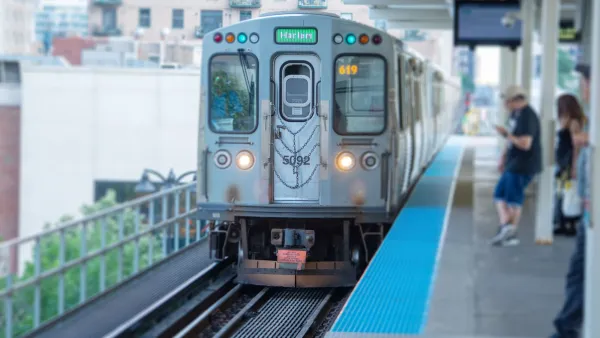
Chicago Transit Authority to Boost Policing Hours by 75%
In December, federal officials tasked the CTA to develop an enhanced security plan or risk losing federal funding.

Planetizen Federal Action Tracker
A weekly monitor of how Trump’s orders and actions are impacting planners and planning in America.

California plans to bury El Niño’s downpour
If the state plays its cards right, it may be able to store a billion acre-feet of El Niño’s water in aquifers.

Desperate measures: Advocates weigh draining Lake Powell to fill Colorado River
Draining the reservoir could reduce evaporation losses by a couple hundred thousand acre-feet.

Housing is the top priority of Seattle’s sole new councilmember
Jenks campaigned on building 1,000 new units of affordable housing.

New tax cuts may slash $1.5 billion in funding for Miami transit, public parks
Amendment 3 will save Miami-Dade homeowners $2,700 in 2028.

Arizona, Wisconsin, Pennsylvania hope to finally advance climate goals post-midterms
The three states have spent years under Republican or divided control.

FREE Course: Walkable City 1: Why Walkability?
After describing his path towards focusing on walkability as the essence of good planning, Jeff Speck marches through his five principal reasons for making more walkable places.
Reinventing Malls: Planning Alchemy—Turning Gray Fields Into Gold
The course focuses on the opportunities and imperatives that shape reinvention of mall sites.

City of Rosemead
Rutgers University, Edward J. Bloustein School of Planning and Public Policy
One Hundred Miles
University of Michigan School for Environment and Sustainability (SEAS)
Hunter College, City University of New York (CUNY)
The Architects Foundation
City of Cambridge
Montrose County
The Pocatello Development Authority