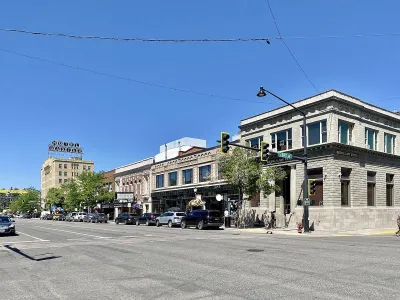
The Gallatin County Commission last week approved an ordinance banning camping on public property and within public rights-of-way.


This article by Jordan Hansen was originally published in Daily Montanan.
Like other communities in Montana, Gallatin County and the Bozeman area have struggled with rising housing prices and homelessness during the last decade.
A 2023 report by the U.S. Department of Housing and Urban Development found Montana experienced an 89% increase in homelessness from 2007 to 2023, the second-largest increase among states. Bozeman saw a 63.5% increase from 2019 to 2022, according to data from the Montana Coalition to Solve Homelessness.
The new Gallatin County ordinance puts a penalty of up to $500 and/or 10 days in jail for breaking the law.
“The intention here is to have the enforcement tool if needed and when needed,” Gallatin County Sheriff Dan Springer told the commission during a July 1 discussion on the ordinance.
The hope, commissioners said, is that citations are only given as a last resort.
“This doesn’t necessarily appear as the most compassionate approach, right? And I kind of struggled with that feeling as well, and yet I also feel the balance between connecting people to resources and protecting the health and safety of everyone in our community is really important,” Commissioner Jennifer Boyer said on July 15. “And you know this, this mechanism, although likely to be used very rarely, does allow a way to ensure sanitation and public health and safety.”
The commissioners expect to get data from law enforcement surrounding the issue, Boyer said. Officials called the move “proactive.”
Bozeman passed its own urban camping law late last year. Missoula, often a focal point when discussing homeless Montanans, has struggled with urban camping near the Clark Fork, leading to closures of public land and cleanups.
Adding to the issue, a shelter on Johnson Street in Missoula funded by American Rescue Plan Act dollars was recently closed.
FULL STORY: Gallatin County passes ban on public camping

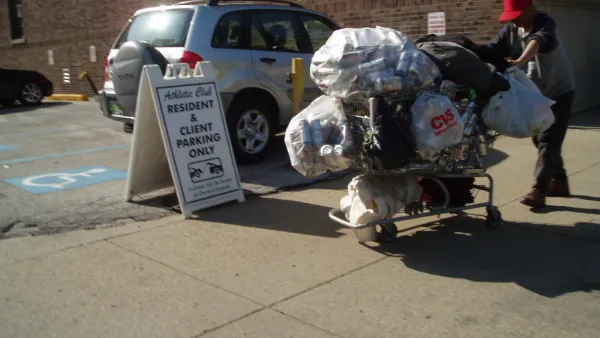
Indiana bans public homelessness
A new law prohibits sleeping or camping on public property.
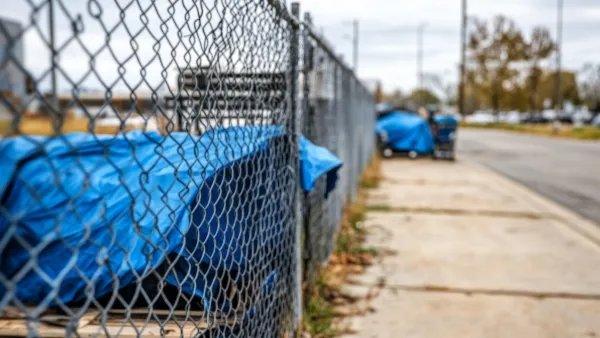
Camping Bans Proliferate After Supreme Court Ruling
A Supreme Court ruling in the case of Grants Pass v. Johnson has led over 100 cities to pass or step up enforcement of camping bans that criminalize unhoused residents.
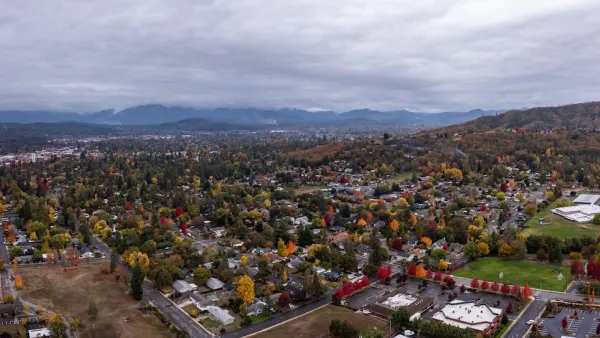
Grants Pass Bans Outdoor Sleeping, Creates Designated Camping Areas
The Oregon city was at the heart of a controversial Supreme Court case that paves the way for the criminalization of homelessness.

Planetizen Federal Action Tracker
A weekly monitor of how Trump’s orders and actions are impacting planners and planning in America.

The state-sanctioned urbicide of Austin
People don’t kill cities. Freeways do.

US to reduce Colorado River water deliveries to Mexico
A new Colorado Treaty amendment reduces Mexico’s Colorado River water allocation by 250,000 acre feet.

5 New England states march closer to 800 megawatt wind energy project
Securing federal approval for the project may be complicated under the Trump administration, which has historically been hostile towards domestic wind power.

Baltimore to break ground on $50 million Transit Priority Project
The project will bring faster bus trips, safer streets and better bike connections to Baltimore.

Airbnb launches $250 million 'last-dollar financing' housing accelerator, makes first investment in Austin
The company will put $6.4 million towards affordable housing development in Texas’ capital.

FREE Course: Walkable City 1: Why Walkability?
After describing his path towards focusing on walkability as the essence of good planning, Jeff Speck marches through his five principal reasons for making more walkable places.
Reinventing Malls: Planning Alchemy—Turning Gray Fields Into Gold
The course focuses on the opportunities and imperatives that shape reinvention of mall sites.


Eagle County Government
Harvard University Graduate School of Design
Nashville Planning Department
The Architects Foundation
University of Cincinnati Online
The Pocatello Development Authority
The Urban Renewal Agency of the City of Pocatello
Journal of the American Planning Association