The change in the timeline from five to 10 days could offer a lifeline for tenants who often lack easy access to legal aid.


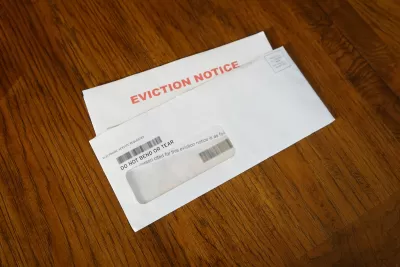
A new California law taking effect January 1 will offer renters at risk of eviction some respite, reports Felicia Mello for CALmatters.
Researchers estimate that roughly 40 percent of California tenants who face eviction lose their cases for not responding quickly enough. “The law doubles the time tenants have to respond after receiving an eviction notice from five business days to ten. Lawyers who work with renters say that what may seem like a minor procedural change could make a big difference in allowing people to stay in their homes.”
As Mello explains, “Access to legal services varies widely across California. San Francisco guarantees legal representation to any tenant facing eviction, and in other cities like Oakland and Los Angeles, robust networks of pro-bono lawyers help renters file responses. But Californians who live in so-called ‘legal deserts’ – often in rural areas – must travel many miles to meet with an attorney.” Nationwide, less than 5 percent of renters facing eviction have legal aid. Meanwhile, roughly 80 percent of landlords have legal representation.
FULL STORY: New law could help tenants facing eviction stay in their homes


Rochester Approves Tenant Protections
The city adopted the strictest possible version of New York state’s ‘Good Cause’ eviction protections, which cap rent increases at 10 percent.
Maryland Housing Laws Address Housing Shortage, Establish Renter Protections
An ambitious housing package establishes a Renters Bill of Rights and removes barriers to increased housing production.

LA’s Laws Against Rent Gouging are Going Unused — Not Because it’s not Happening
The county has not fined anyone under new laws passed after last year’s wildfires.

Planetizen Federal Action Tracker
A weekly monitor of how Trump’s orders and actions are impacting planners and planning in America.

The state-sanctioned urbicide of Austin
People don’t kill cities. Freeways do.

US to reduce Colorado River water deliveries to Mexico
A new Colorado Treaty amendment reduces Mexico’s Colorado River water allocation by 250,000 acre feet.

5 New England states march closer to 800 megawatt wind energy project
Securing federal approval for the project may be complicated under the Trump administration, which has historically been hostile towards domestic wind power.

Baltimore to break ground on $50 million Transit Priority Project
The project will bring faster bus trips, safer streets and better bike connections to Baltimore.

Airbnb launches $250 million 'last-dollar financing' housing accelerator, makes first investment in Austin
The company will put $6.4 million towards affordable housing development in Texas’ capital.

FREE Course: Walkable City 1: Why Walkability?
After describing his path towards focusing on walkability as the essence of good planning, Jeff Speck marches through his five principal reasons for making more walkable places.
Reinventing Malls: Planning Alchemy—Turning Gray Fields Into Gold
The course focuses on the opportunities and imperatives that shape reinvention of mall sites.

Eagle County Government
Harvard University Graduate School of Design
Nashville Planning Department
The Architects Foundation
University of Cincinnati Online
The Pocatello Development Authority
The Urban Renewal Agency of the City of Pocatello
Journal of the American Planning Association