How tracking housing status at time of death can help policymakers identify when people are most vulnerable.


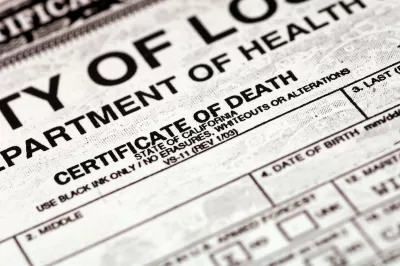
Writing in the Maine Morning Star, AnnMarie Hilton explains how a movement to mandate the inclusion of housing status on death certificates is helping to shed light on the causes of death and risk factors for homeless residents.
While Maine doesn’t mandate such reporting, Hilton points out that other states, like Oregon, do. “Having a uniform reporting system for homeless deaths was important for data collection around leading causes of death for homeless residents and addressing the homelessness crisis, according to legislative documents” in that state.
In Maine, “Advocates have warned that sweeping encampments puts unhoused people at risk of dying. A lack of available, low-barrier shelter beds has also spurred this concern during the cold winter months. That fear came to fruition at the end of November when three people died in tents — two as a result of tent fires, one that is still under investigation.”
Read the full story: Maine death certificates don’t track housing status, but other states are starting to

Study: Unhoused People at Much Higher Risk of Death
The mortality rate among people experiencing homelessness jumped by 203 percent between 2011 and 2020.
Study: Homeless People Face Higher Mortality Risk
Unhoused adults are more than three times as likely to die in any given year as their housed counterparts, research shows.
More Unhoused New Yorkers Died in 2021 Than in any Prior Year
New York City saw its deadliest year for people living in shelters or public spaces, with the pandemic and a rise in deadly overdoses fueling a fatal epidemic.

Planetizen Federal Action Tracker
A weekly monitor of how Trump’s orders and actions are impacting planners and planning in America.

California plans to bury El Niño’s downpour
If the state plays its cards right, it may be able to store a billion acre-feet of El Niño’s water in aquifers.

Desperate measures: Advocates weigh draining Lake Powell to fill Colorado River
Draining the reservoir could reduce evaporation losses by a couple hundred thousand acre-feet.

How a Chicago-sized wind farm beat the odds and powered on
The project spanned five presidential administrations and a standoff with a U.S. military base.

MTA gives itself 30 days to transform pit into basketball court
The site has been under construction since 2022; the city originally estimated it would finish the court in 2024.

Non-stop party: Chicago voters weigh permanent festival grounds
A stable place for bleachers, stages and drainage may streamline the setup and teardown of large events.

FREE Course: Walkable City 1: Why Walkability?
After describing his path towards focusing on walkability as the essence of good planning, Jeff Speck marches through his five principal reasons for making more walkable places.
Reinventing Malls: Planning Alchemy—Turning Gray Fields Into Gold
The course focuses on the opportunities and imperatives that shape reinvention of mall sites.

City of Rosemead
Rutgers University, Edward J. Bloustein School of Planning and Public Policy
One Hundred Miles
Hunter College, City University of New York (CUNY)
The Architects Foundation
University of Cincinnati Online
City of Cambridge
Montrose County
The Pocatello Development Authority