To advance the state's "Outdoors for All" initiative, the park agency is providing funding to 125 low-income urban and rural communities.


California is home to 280 state park units, 340+ miles of coastline, 970 miles of lake and river frontage, 15,000 campsites, and 4,500 miles of trails. However, not everyone has access to these wonderful attractions. According to California State Parks, four of every ten Californians have no access to open space within walking distance of their home and six of every 10 Californians live in park-poor neighborhoods.
To expand outdoor access, the California Department of Parks and Recreation (State Parks) offers the Outdoors Equity Grants Program to establish hubs for local activities and trips to natural areas for underserved communities. Also, the program empowers youth and families with outdoor leadership education, career pathways, environmental justice engagement, and access to nature. Specifically, State Parks will be providing $57 million in grant funding to 125 communities to help advance the “Outdoor Access for All” initiative championed by Governor Gavin Newsom, First Partner Jennifer Siebel Newsom, and the Natural Resources Agency’s “Outdoors for All” initiative. This effort expands outdoor access to all Californians through focused investments in open space infrastructure, outdoor programming, and improvements to permit applications, with a priority to expanding access in underserved communities.
Read the full story: State Parks Awards $57 Million in Outdoor Equity Program Grants to Advance California’s “Outdoors for All” Initiative
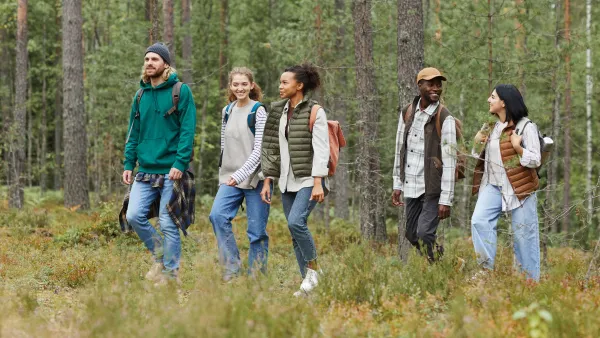
Who Is Enjoying the Great Outdoors?
Findings from the 2023 Annual Outdoor Participation Trends Report reveals the “who, how, and where” in participation in outdoor recreation.

Desperate measures: Advocates weigh draining Lake Powell to fill Colorado River
Draining the reservoir could reduce evaporation losses by a couple hundred thousand acre-feet.

Eastern Nebraska is running out of electricity
Data centers and electrification are straining eastern Nebraska’s grid, throttling economic development.

Move over, LA: St. Louis gears up for Olympics, invests millions in downtown redevelopment
The Missouri city will host the 2028 Olympic soccer group stage and knockout matches.

MTA sends Dem leaders a wish list to mend Trump’s damages
Requests include exempting new train and bus components from tariffs and increasing transit security funding.

Mass. votes against statewide minimum lot size for single-family homes
Over 2 million residents voted on Question 7; it was decided by just over 30,000 votes.

Maryland’s $15 billion bridge project gains key approval
The Maryland Transit Authority said the project will create over 60,000 jobs and add $23 billion to the local economy.

FREE Course: Walkable City 1: Why Walkability?
After describing his path towards focusing on walkability as the essence of good planning, Jeff Speck marches through his five principal reasons for making more walkable places.
Reinventing Malls: Planning Alchemy—Turning Gray Fields Into Gold
The course focuses on the opportunities and imperatives that shape reinvention of mall sites.


City of Rosemead
Rutgers University, Edward J. Bloustein School of Planning and Public Policy
One Hundred Miles
University of Michigan School for Environment and Sustainability (SEAS)
Hunter College, City University of New York (CUNY)
The Architects Foundation
City of Cambridge
The Pocatello Development Authority
The Urban Renewal Agency of the City of Pocatello