The pandemic has spurred a sharp spike in land sales in the Houston area as more people look to buy homes and developers buy land for industrial uses.


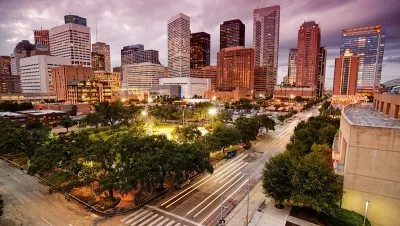
"Some 17,000 acres of tracts greater than about 250 acres have sold across the Houston area since the pandemic began in early 2020, and an additional 19,000 acres are under contract, said veteran land brokers Kirk Laguarta and Duane Heckman of Land Advisors Organization, a brokerage and advisory services company," a sharp increase from the 6,000 acres sold in 2018, reports Katherine Fesser. Demand for land is at its highest in 30 years, with builders starting construction on close to 37,000 new homes in 2020. "Next year, starts are projected to total 35,000 to 40,000."
"Houston’s growth has pushed farther out as roads such as the Grand Parkway and Texas 249 have been constructed. The Houston metropolitan area has grown from 4 million in 1980 to more than 7 million in 2020, or about 100,000 people a year." But "[j]ob losses in sectors that were already troubled before the pandemic such as construction, manufacturing and energy will hinder Houston’s recovery."
Developers are also "buying large tracts for grand-scale industrial buildings along major freeways, as the pandemic pushed more people to shop online." In a city with little land use regulation, industrial uses are now competing with what used to be single-family land.
FULL STORY: COVID spurs 'white hot' market for land across Houston region

Office Landlords Luring Tenants Back With Incentives
Landlords are offering generous incentives in an effort to prop up the struggling U.S. office market.
Signs of Financial Distress Among Office Properties
The foreclosure risk facing a pair of high-profile office buildings highlight the debt difficulties facing the office sector as it deals with the fallout of the pandemic. The trend could be on the verge of picking up steam.
White-Hot Real Estate Market Starting to Cool
The housing frenzy brought on by the pandemic is easing up, with slower growth of median home prices and fewer offers.

Planetizen Federal Action Tracker
A weekly monitor of how Trump’s orders and actions are impacting planners and planning in America.

The state-sanctioned urbicide of Austin
People don’t kill cities. Freeways do.

US to reduce Colorado River water deliveries to Mexico
A new Colorado Treaty amendment reduces Mexico’s Colorado River water allocation by 250,000 acre feet.

5 New England states march closer to 800 megawatt wind energy project
Securing federal approval for the project may be complicated under the Trump administration, which has historically been hostile towards domestic wind power.

Baltimore to break ground on $50 million Transit Priority Project
The project will bring faster bus trips, safer streets and better bike connections to Baltimore.

Airbnb launches $250 million 'last-dollar financing' housing accelerator, makes first investment in Austin
The company will put $6.4 million towards affordable housing development in Texas’ capital.

FREE Course: Walkable City 1: Why Walkability?
After describing his path towards focusing on walkability as the essence of good planning, Jeff Speck marches through his five principal reasons for making more walkable places.
Reinventing Malls: Planning Alchemy—Turning Gray Fields Into Gold
The course focuses on the opportunities and imperatives that shape reinvention of mall sites.

Eagle County Government
Harvard University Graduate School of Design
Nashville Planning Department
The Architects Foundation
University of Cincinnati Online
The Pocatello Development Authority
The Urban Renewal Agency of the City of Pocatello
Journal of the American Planning Association