A design competition focuses on the many tiny and often irregularly shaped vacant lots of New York City.


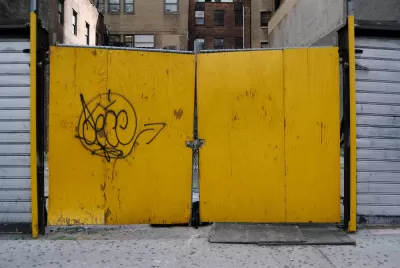
Earlier this year, the New York City Department of Housing Preservation and Development and the New York chapter of the American Institute of Architects teamed up to sponsor the Big Ideas for Small Lots NYC housing design competition. The goal was to design buildings that could take advantage of the city’s more than 10,000 small lots, where lot size and requirements for air, natural light, stairs, and elevators are major challenges.
The competition site was a lot in Harlem that is 17 feet wide and 100 feet deep, reports Diana Budds. "The entries explore experimental building techniques, like mass timber; unconventional layouts, like micro units and split-level studios; and innovative details, like movable walls and communal gardens, that push the boundaries of what HPD typically develops."
The designs provide insight into the possibilities for new and creative ways to build affordable housing, says Budds. "The next challenge—and it’s a big one—is moving these ideas from paper into the real world. Let’s hope the the city’s will to build is as strong as the ideas presented."
FULL STORY: Can small, vacant lots alleviate NYC’s housing crisis?


NYC creates fast track court for tenants in unsafe housing
Owners of buildings with vacate orders or major safety problems will have five days to answer the complaints in court.
Mayor Mamdani unveils map of 100 public lots that could become housing
The city identified properties that could be available for new housing development.
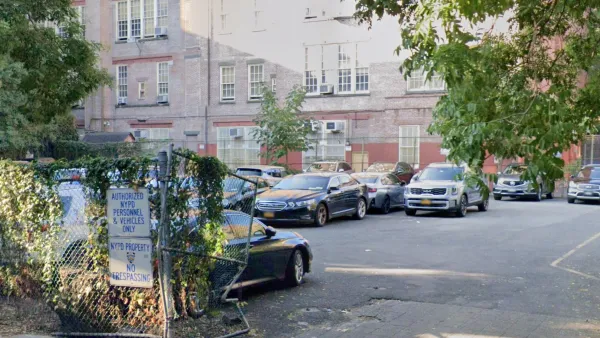
NYPD parking lot to become affordable housing as part of Mamdani's Block by Block initiative
The city awarded the lot to a group of developers to build a mixed-use project with 131 housing units.

Planetizen Federal Action Tracker
A weekly monitor of how Trump’s orders and actions are impacting planners and planning in America.

The state-sanctioned urbicide of Austin
People don’t kill cities. Freeways do.

US to reduce Colorado River water deliveries to Mexico
A new Colorado Treaty amendment reduces Mexico’s Colorado River water allocation by 250,000 acre feet.

5 New England states march closer to 800 megawatt wind energy project
Securing federal approval for the project may be complicated under the Trump administration, which has historically been hostile towards domestic wind power.

Baltimore to break ground on $50 million Transit Priority Project
The project will bring faster bus trips, safer streets and better bike connections to Baltimore.

Airbnb launches $250 million 'last-dollar financing' housing accelerator, makes first investment in Austin
The company will put $6.4 million towards affordable housing development in Texas’ capital.

FREE Course: Walkable City 1: Why Walkability?
After describing his path towards focusing on walkability as the essence of good planning, Jeff Speck marches through his five principal reasons for making more walkable places.
Reinventing Malls: Planning Alchemy—Turning Gray Fields Into Gold
The course focuses on the opportunities and imperatives that shape reinvention of mall sites.

Eagle County Government
Harvard University Graduate School of Design
Nashville Planning Department
The Architects Foundation
University of Cincinnati Online
The Pocatello Development Authority
The Urban Renewal Agency of the City of Pocatello
Journal of the American Planning Association