The story of the success of American cities is more complicated when we look at the details.


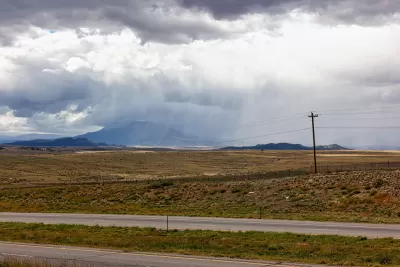
On a county-by-county level, the highest wages tend to be in urban counties, but that's not the whole story. On average, counties that are part of large metro areas have the highest wages, while rural counties have to lowest salaries, but rural counties have the edge in wage growth. "Rural communities have seen significantly faster growth in wages and salaries than their urban counterparts," Richard Florida writes in CityLab. When it comes to the fastest wage growth, "Nearly 275 rural counties are in this top 10 percent (including more than 100 small rural counties that are not adjacent to metro areas), compared to just 41 urban counties," Florida reports.
Read the full story: Wages Are Higher in Urban Areas, But Growing Faster in Rural Ones
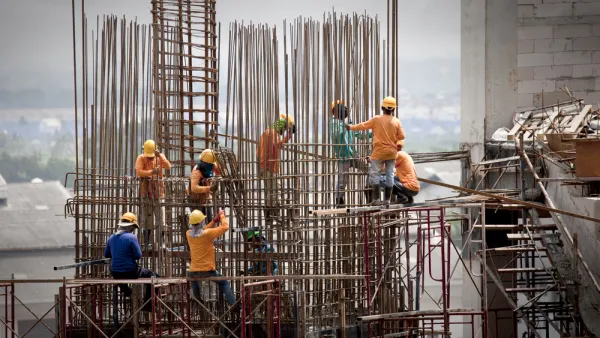
Dense Cities Have Less to Offer Low-Skilled Workers Than They Once Did
A study from economist David Autor finds that the higher wages once offered workers without college degrees or special skills are mostly gone. Workers in cities often earn what they would in rural areas.

Low Pay, High Housing Costs: Not a Good Equation for Teachers
The rising cost of housing, along with the pandemic, has transformed the lack of housing affordable to teachers in expensive parts of California from bad to worse. Solutions so far only address half the problem or don’t go far enough.
Could Inflation Spur an Urban Rebound?
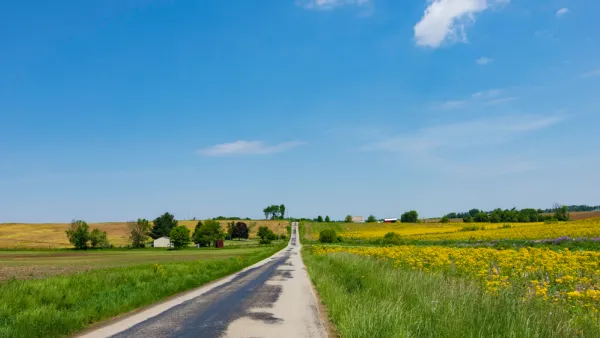
Inflation is hitting rural areas particularly hard. One expert sees the possibility of rural residents reconsidering cities as a place to avoid higher costs associated with rural mobility and to make more money.

Planetizen Federal Action Tracker
A weekly monitor of how Trump’s orders and actions are impacting planners and planning in America.

California plans to bury El Niño’s downpour
If the state plays its cards right, it may be able to store a billion acre-feet of El Niño’s water in aquifers.

Desperate measures: Advocates weigh draining Lake Powell to fill Colorado River
Draining the reservoir could reduce evaporation losses by a couple hundred thousand acre-feet.

Mamdani’s pied-à-terre tax survives legal challenge
A panel of judges found that the plaintiffs failed to demonstrate injury as a result of New York City's implementation of the tax.

Eastern Nebraska is running out of electricity
Data centers and electrification are straining eastern Nebraska’s grid, throttling economic development.

Seattle passes record-breaking transit services expansion
Proposition 1 will double the city’s transit tax to add 95,000 more bus trips and preserve 180,000 bus trips annually.

FREE Course: Walkable City 1: Why Walkability?
After describing his path towards focusing on walkability as the essence of good planning, Jeff Speck marches through his five principal reasons for making more walkable places.
Reinventing Malls: Planning Alchemy—Turning Gray Fields Into Gold
The course focuses on the opportunities and imperatives that shape reinvention of mall sites.

City of Rosemead
Rutgers University, Edward J. Bloustein School of Planning and Public Policy
One Hundred Miles
University of Michigan School for Environment and Sustainability (SEAS)
Hunter College, City University of New York (CUNY)
The Architects Foundation
City of Cambridge
Montrose County
The Pocatello Development Authority