Richard Florida provides a geographic analysis of the athlete representing the United States at the 2018 Winter Olympics.


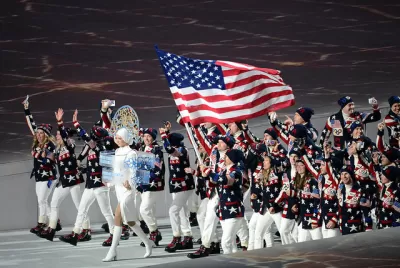
"Two hundred and forty-four American Olympians made their way from the United States to Pyeongchang, South Korea, for this year’s Olympics," writes Richard Florida. "Given that these are the Winter Games, you might expect a majority of America’s Olympians to hail from cold, snowy mountaintop places and winter sports locales. But that’s not exactly the case."
In fact, Florida notes that the U.S. Winter Olympic team "is actually far less unequal, spatially, than most other aspects of American society."
Florida breaks down the representation by metropolitan areas, also controlling for population. There's plenty of unsurprising revelations here, but a few surprises still, and plenty to celebrate in the name of athletics and international goodwill.
FULL STORY: The Geography of the U.S. Olympic Team

As Flames Dies, Olympic Costs Pile Up for Vancouver
The Olympics have ended in Vancouver, but their costs live on.
Outside Vancouver, Smaller Towns Skeptical About Olympic Benefits
Locals in some of the smaller towns of British Columbia are skeptical that they will see the economic benefits of the this year's Winter Olympics in Vancouver.

Dallas area transit prepares for World Cup, asks locals to drive
DART is adding a special shuttle service and creating back-up mechanisms to ensure it can serve all of this summer's World Cup attendees.

The state-sanctioned urbicide of Austin
People don’t kill cities. Freeways do.

US to reduce Colorado River water deliveries to Mexico
A new Colorado Treaty amendment reduces Mexico’s Colorado River water allocation by 250,000 acre feet.

New Jersey’s second-largest city bans standalone data centers
Jersey City will continue to allow co-location facilities, such as those meant for research institutions that store their own data.

Amtrak not solely to blame for New Jersey commuter rail's unreliability, report finds
A new study from the Garden State Initiative found that NJ Transit’s budget grew 20% across a 4 year period, but reliability declined significantly over the same period.

EPA erases limits on planet-warming pollution from power plants
Under Monday’s plan, power plants would still have some limits on how much mercury, arsenic and other contaminants they can emit.

Phoenix announces new on-demand transit service, more frequent RAPID buses
Both new services will launch in October, and are part of Phoenix's Project Effective Access Solutions for Easing Congestion.

FREE Course: Walkable City 1: Why Walkability?
After describing his path towards focusing on walkability as the essence of good planning, Jeff Speck marches through his five principal reasons for making more walkable places.
Reinventing Malls: Planning Alchemy—Turning Gray Fields Into Gold
The course focuses on the opportunities and imperatives that shape reinvention of mall sites.

Eagle County Government
Harvard University Graduate School of Design
Nashville Planning Department
The Architects Foundation
University of Cincinnati Online
The Pocatello Development Authority
The Urban Renewal Agency of the City of Pocatello
Journal of the American Planning Association